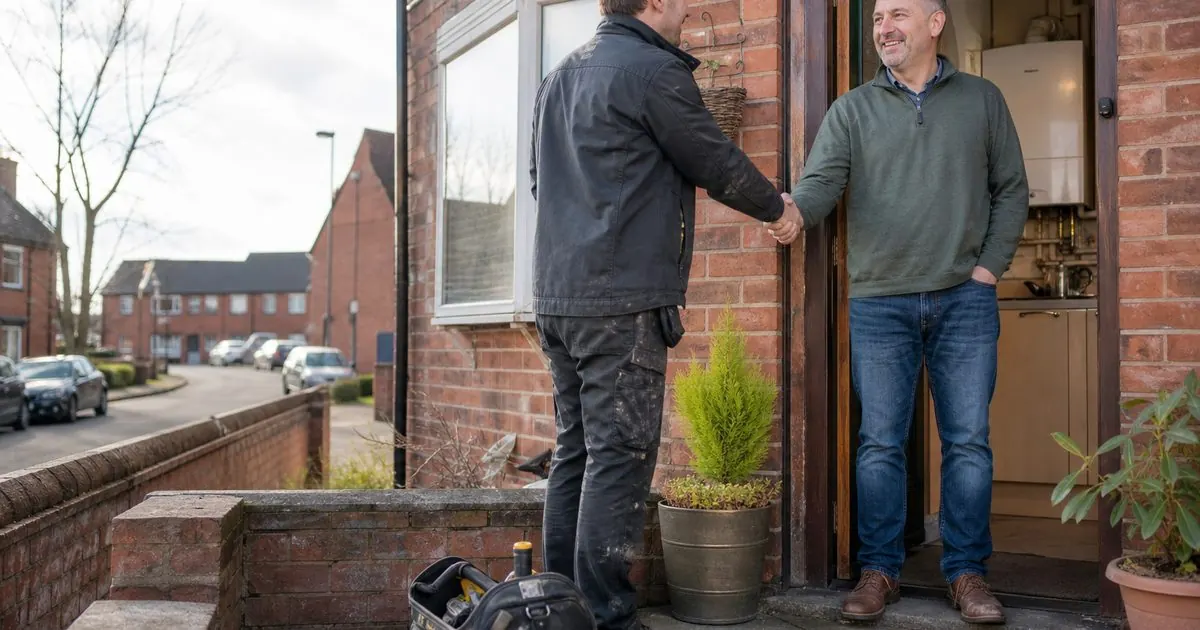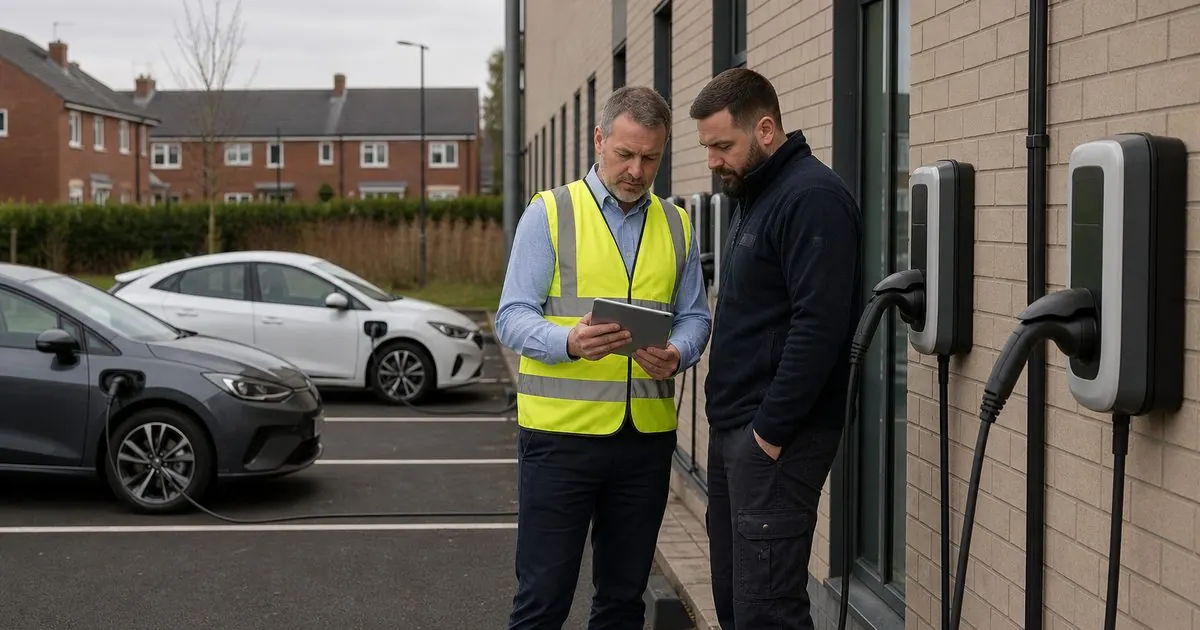
An EV charger customer has just told you more about themselves than almost any other lead you will get. They own the property. They have off-street parking. Their electricity use is about to jump. And they have already trusted you to work on their electrics.
That is close to a perfect solar and battery prospect. Yet a lot of installers fit the charger, take the payment and never speak to the customer again. This article sets out how to turn charger jobs into solar and battery work without being pushy about it.
Why EV owners are strong solar and battery prospects
The reasons are practical, and they are the same reasons your follow-up messages should use:
- More electricity use. Charging at home adds a significant load. Whatever they paid for electricity before, they will now be buying more of it.
- They already think about tariffs. Under the smart charge point regulations, home chargers sold in Great Britain must come with default charging hours set to off-peak times. EV owners quickly learn the difference between peak and off-peak.
- A battery fits that thinking. Storing cheaper or self-generated electricity to use later is the same idea as charging the car off-peak.
- Daytime charging. Customers who work from home or are retired can charge partly from their own panels during the day.
Do not over-promise. How much they save depends on their roof, their usage and their tariff. But the logic is easy for an EV owner to follow.
The money: grants, VAT and loans (as of November 2026)
These are the facts worth knowing before you build the follow-up:
- 0% VAT applies to installing solar panels and batteries in homes until 31 March 2027, then reverts to 5% from 1 April 2027 (HMRC VAT Notice 708/6). That is a real, honest deadline.
- Warm Homes loans can fund solar panels and battery storage, with caps of £15,000 each. The scheme rules say an EV chargepoint is an eligible ancillary cost as part of a solar or battery installation, but not on its own. The chargepoint and installer must be OZEV approved, and a chargepoint that has already had an OZEV grant cannot also be loan funded.
- Chargepoint grants of up to £500 are available for renters and flat owners with off-street parking, and for households with only on-street parking who use a cross-pavement solution, until 31 March 2027.
The Warm Homes loan point matters for how you package things. A customer who wants solar, a battery and a charger can potentially put all three into a single loan application with a participating lender. A customer who only wants a charger cannot. Be careful how you describe the loan in your marketing: see advertising the Warm Homes Plan as an installer.
You need the right certification
To sell and fit solar and batteries under these schemes, the work needs an MCS-certified installer. If you are an electrician who fits chargers but is not MCS certified for solar, you have two options:
- Get certified and add solar and batteries to your own services.
- Partner with an MCS-certified solar installer and refer your charger customers to them, with a clear agreement on how leads are handled and how the customer is told.
Either way, the follow-up below still applies.
Collect the right details on the charger job
Add a few questions to your charger survey or booking form. They take seconds and make the later conversation easy:
- What car do you drive, and roughly how many miles a year?
- Do you work from home or are you out most days?
- Which electricity tariff are you on?
- Do you already have solar panels? (If yes, they may be a battery retrofit prospect: see battery retrofit campaigns.)
- Which way does the main roof face? (A photo is better.)
Store the answers in your CRM against the customer. Tag them by likely fit: "solar and battery", "battery only", "not suitable".
The follow-up sequence
Spread it out. The goal is to be helpful, not to pounce.
| When | Message |
|---|---|
| Install day | Thank you, how to use the charger and off-peak settings, how to reach you |
| Day 3 | Review request, while the job is fresh |
| Week 4 | "How's the charging going?" plus one line on how solar and a battery can work with an EV |
| Week 8 | Short video of a customer with panels, a battery and an EV, explaining how they use it |
| Month 3 | Offer a free solar and battery assessment, using the roof photo you already have |
| Before 31 March 2027 | The VAT change, stated plainly, for those who showed interest |
Each message should have one clear action: reply, watch, or book. Stop the sequence the moment someone says "not for us". Anyone who says "maybe later" goes into a slower track with a check-in every few months. The wider approach to past customers is in past customers.
Make it easy to say yes
A few things that help the conversion:
- Use what you already know. "We already have your roof photo and your consumer unit details from the charger job" removes half the hassle of a new survey.
- Give a price range early. A rough figure for a typical system on a house like theirs, with VAT at 0% while it lasts.
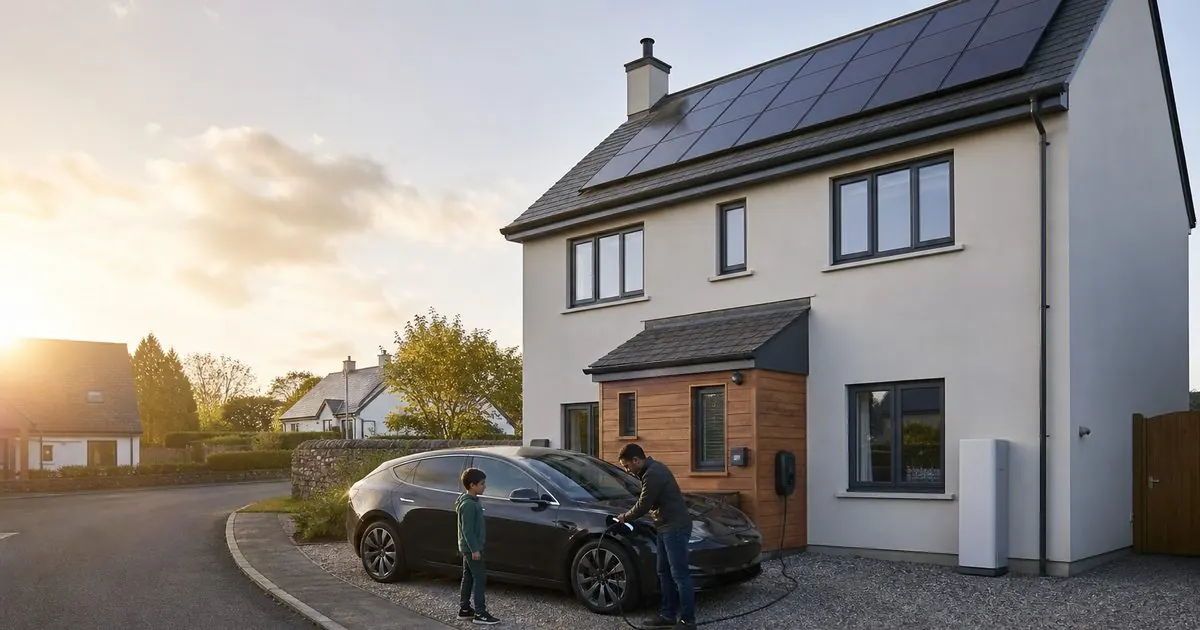
- Film the combination. A customer with panels, a battery and an EV on the drive is a clear, believable story.
- Have a human follow up warm replies. Automation finds the interested people. A person closes them.
Measure it
Track, for every charger customer:
- tagged as a solar or battery prospect
- replied to the follow-up
- assessment booked
- sold
Even a small share converting changes the economics of the charger work. It also changes what you can afford to pay for charger leads in the first place, which we cover in EV charger leads and margin.
How we help
We have no published EV charging results, so we will not claim any. What we do have is the system our solar and battery clients run on: CRM, automated follow-up by WhatsApp and email, filmed customer stories and dashboards. If you fit chargers and want those customers to come back for bigger work, book a video call with Tom. We will show you how AI follow-up and the Installer Flow CRM would run it.
Sources
- Warm Homes Loan Scheme: scheme rules, September 2026 (GOV.UK)
- Warm Homes Loan Scheme factsheet (GOV.UK)
- Warm Homes Loan Scheme: eligibility (GOV.UK)
- VAT on energy-saving materials and heating equipment, Notice 708/6 (HMRC)
- Electric vehicle smart charge points regulations (GOV.UK)
- Electric vehicle chargepoint grants (GOV.UK)
Questions owners ask
Can a Warm Homes loan pay for an EV charger?
Only as part of a solar or battery installation. The Warm Homes Loan Scheme rules (September 2026) say an EV chargepoint is an eligible ancillary cost with solar PV or battery storage, but not a standalone measure. The chargepoint and installer must be OZEV approved, and a chargepoint that already had an OZEV grant cannot also be loan funded.
When should I offer solar to a charger customer?
Ask the qualifying questions at the charger survey, then follow up once they have lived with the car for a month or two and seen a bill. Asking too hard on install day feels like a sales trap. Asking never leaves the bigger job for someone else.