Most solar installers advertise one thing: new panels, usually with a battery. Meanwhile there is a large and growing group of homeowners who already have panels and are quietly wondering whether they should add a battery. They do not click on solar ads, because they think they already have solar sorted. Nobody is talking to them.
The scale is real. The government's Warm Homes Plan notes that MCS accredited the installation of over 18,000 batteries in existing homes in 2024. This post is about how to run campaigns for that retrofit market: who to target, what to say, what to ask, and why your own past customers are the place to start.
Why retrofit needs its own campaign
A homeowner who already has panels is a different buyer from one who does not:
- They already believe in solar. You do not need to convince them that panels work. They have the app and the generation figures.
- Their trigger is different. Usually it is the feeling that they are giving away power in the day and buying it back at night. Sometimes it is a new electric car, a switch to a time-of-use tariff, or a neighbour who has just had a battery fitted.
- Their questions are technical. Will a battery work with my inverter? Do I need a new one? Where does it go? Does it affect any export payments?
- The ticket is smaller. A battery on its own is a smaller sale than a full system, so your cost per sale has to be lower to make sense.
Put this buyer in a generic solar ad and you lose them in the first second. "Get solar panels for your home" is not for them. "Already have solar panels?" is.
The three retrofit audiences
1. Your own past solar customers
The cheapest and warmest audience you will ever have. You know their system size, their inverter, their install date and their address. They already trust you. Most installers have never contacted them since the handover. Start here (more below).
2. Homes with panels fitted by someone else
Older systems in particular, often from installers who have since stopped trading. These owners have nobody to ask, and they are wary because the original company disappeared. Your ads should show that you deal with existing systems from any installer, and your proof should include retrofit jobs, not just new builds.
3. Battery-first households
Since 1 February 2024, HMRC's VAT zero rate has covered standalone batteries as well as batteries added to existing panels, and plenty of homeowners on time-of-use tariffs are looking at a battery with no panels at all. That is a different message again (charging cheaply overnight, using it at peak times) and often a separate campaign.
What the retrofit ad should show
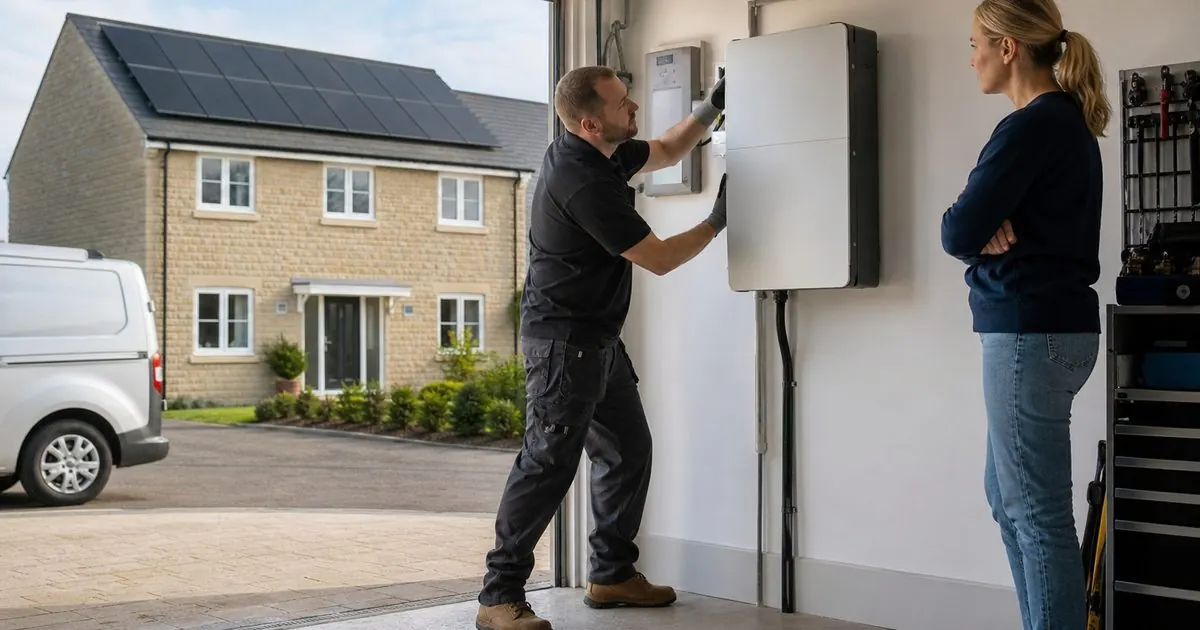
- A battery going onto a house that already has panels. Visually, this is the whole message. Film it on one of your own jobs.
- The app. Customers love showing their battery app. A short clip of a real customer scrolling through their day of charging and discharging does more than any graph.
- A plain-English hook. "You make the power in the day and buy it back at night" lands better than technical language about self-consumption.
- Any make of system. Say clearly that you add batteries to systems you did not install.
Leave payback promises out of the ad. Battery savings depend on usage, tariff and export arrangements, and an ad that promises a number creates a lead who argues about it at survey. We cover how to handle the payback conversation in answering "is a battery worth it?".
What the retrofit landing page should ask
The landing page has to qualify on the technical questions your surveyor would otherwise ask on site:
- Do you already have solar panels? (If no, route to your new-system or battery-first page.)
- Roughly how old is the system, and who installed it?
- Do you know the system size or the inverter make? (A photo upload of the inverter label saves a site visit.)
- Do you get paid for the electricity you export, and on what kind of arrangement?
- Are you on a time-of-use tariff, or do you have, or plan to get, an electric car?
- Where could a battery go: garage, utility room, outside wall?
- Do you own the property, and what is your postcode?
Those answers let you separate a simple add-on from a job that needs an inverter change, and send the lead to the right person. Build it as a short step-by-step form, not one long page. Our sales funnels and landing pages work this way.
Start with your own customer list
Before you spend a pound on ads, work your database:
- Pull every solar customer without a battery from your CRM or old job sheets, with install date and system details.
- Segment them. Recent installs who declined a battery at the time are different from customers from years ago who were never offered one.
- Send a personal message, not a newsletter. A WhatsApp from the company they remember, mentioning their system, gets read. A short video of your team fitting a battery on a similar house helps.
- Offer a check, not a sale. "We'll look at your generation data and tell you honestly whether a battery makes sense" is easy to say yes to.
- Follow up automatically, then hand warm replies to a person.
Doing this over WhatsApp works well because replies come back fast and conversations stay in one thread. Our WhatsApp AI can handle the first replies and book the check. For the wider principles of working past customers and old enquiries, see your past customers are your cheapest leads and reviving old leads with AI follow-up.
There is also a finance angle: standalone batteries are an eligible measure for Warm Homes loans. How to use that with past customers, without overpromising, is covered in Warm Homes loans for battery retrofits.
Measuring a retrofit campaign
Because the job is smaller, the numbers have to be tighter:
- Track retrofit leads separately from new-system leads, all the way to install.
- Watch the share of retrofit enquiries that need an inverter change. It changes the job value, and your quote, a lot.
- Compare cost per sale against average retrofit job value, not against your full-system figures.
- Expect a higher close rate from past customers than from cold ads. If it is not higher, look at the offer.
Timing
The zero rate of VAT on installing energy-saving materials in homes, which covers batteries added to existing panels, runs until 31 March 2027 and then moves to 5% (as of November 2026). That is a legitimate, factual reason to talk to customers now. Use it honestly. See how to market the 0% VAT deadline.
Want a retrofit campaign of your own?
If you have a list of past solar customers and no battery campaign, book a free video call with Tom. We will look at your database and your area, and show you what a retrofit campaign and a reactivation sequence would look like for your business.
Sources
- Warm Homes Plan (GOV.UK)
- VAT on energy-saving materials and heating equipment, VAT Notice 708/6 (GOV.UK)
- Warm Homes Loan Scheme eligibility (GOV.UK)
Questions owners ask
Should battery retrofit ads be separate from my solar ads?
Yes. Someone who already has panels is a different buyer, with a different trigger and different questions. Put them in a solar ad and they scroll past, because it looks like something they already own. A separate ad and landing page lets you speak to the problem they actually have.
Is VAT zero-rated on a battery added to existing solar panels?
As of November 2026, yes for installed batteries in homes. HMRC's VAT Notice 708/6 says batteries retrofitted to existing solar panels, and standalone batteries, qualify for the zero rate from 1 February 2024. The zero rate for energy-saving materials ends on 31 March 2027, when it moves to 5%.