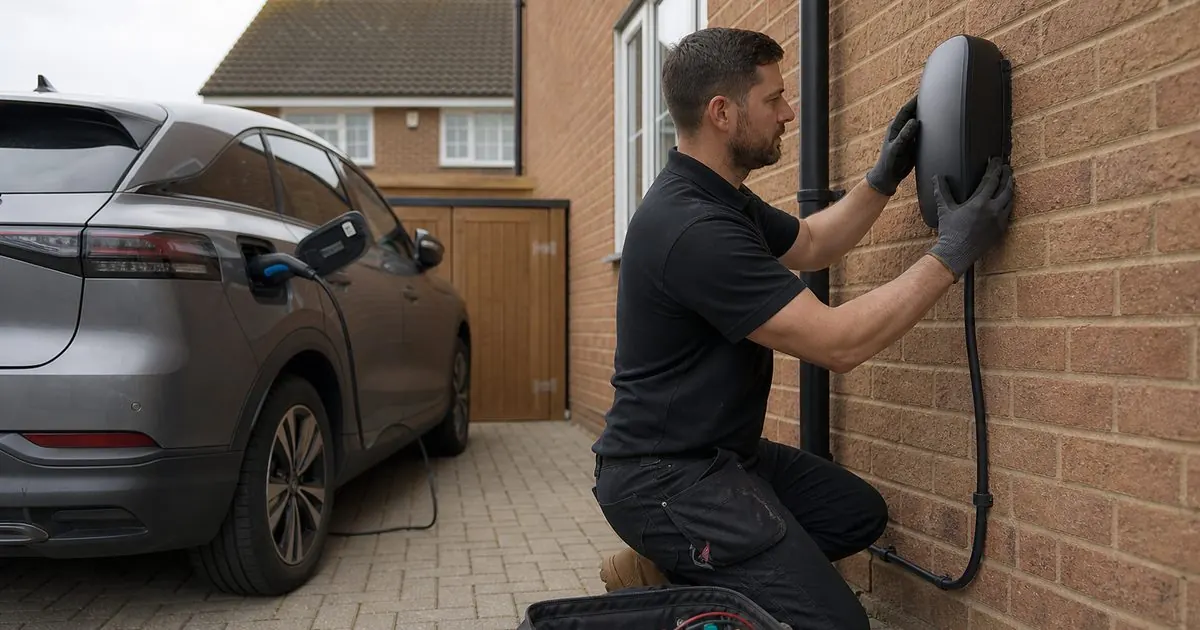
A home EV charger is a tidy job. Half a day on site, a few hundred pounds of margin, a happy customer. The problem is what it costs to find that customer. When an enquiry costs a decent chunk of the job's profit and you only win one in three, you can be busy every day and still not make money from marketing.
This article works through the sums, then sets out the changes that make EV charger marketing pay: cheaper intent, fewer wasted visits, and treating the charger as the start of the customer relationship rather than the end.
Do the maths first
Here is an illustrative example. These are not anyone's real figures, so swap in your own.
| Item | Example |
|---|---|
| Average job value (ex VAT) | £1,000 |
| Gross margin after kit and labour | £400 |
| Cost per lead | £100 |
| Leads needed to win one job | 3 |
| Marketing cost per job | £300 |
| Margin left after marketing | £100 |
Now add a survey visit for every lead, and a couple of quotes that never get answered. That £100 disappears.
The two numbers that matter are cost per lead and leads per job. Most installers only try to push the first one down. The second one is usually where the money is. Halve the leads you need per job and you have halved your marketing cost per job without touching the ad budget. We go deeper on this in tracking every lead to a sale.
1. Go where the intent is cheaper
Not all EV charger leads cost the same. Roughly, from most expensive to cheapest:
- Broad social ads to people who might buy an EV one day. Lots of curiosity, slow to convert.
- Google search for "EV charger installer near me" or "home charger fitted [town]". People with a car on order and a date in mind.
- Your Google Business Profile and website, when they rank. No cost per click.
- Referrals from dealers, lease brokers and past customers. Often the cheapest of all once set up. See dealer and fleet referral partnerships.
Social ads can still work for EV, especially video showing a tidy install, but they need tight targeting and a strong qualifying step. Search should usually carry more of the load.
2. Let customers quote themselves
An EV charger job has a small number of variables: charger model, distance from the consumer unit to the parking spot, wall type, whether the consumer unit needs work, and whether there is a looped supply or earthing issue. Most of these can be captured online.
An instant online quote tool asks those questions, shows a price (or a price range) and lets the customer book. We have built instant online quote tools for EV charger installers for exactly this reason. The benefits stack up:
- people who balk at the price leave before costing you a phone call
- the ones who book have already accepted the price
- you get the details before anyone visits
3. Survey by photo, not by van
For a standard domestic install, many installers can price confidently from photos. Ask for these, by WhatsApp or upload, when the customer books:
- the consumer unit, cover off if they are comfortable, otherwise cover on
- the electricity meter and main fuse
- the wall where the charger will go
- the route from the consumer unit to that wall
- the parking spot and driveway
Only book a site survey when the photos raise a question. Every visit you cut is fuel, time and a slot freed up for an install.
4. Answer in minutes
EV buyers often enquire with two or three installers at once, especially when their car delivery date is close. The first one to reply with a price and a date usually wins. An automated first response with your quote link and install dates can go out within a minute, day or night. The detail on response speed is in missed calls are missed jobs.
5. Group your installs by area
Routing leads by postcode is not only about sales reps. If you can tell a customer "we are in your area on Thursday", you can fill a day with three or four nearby installs instead of crossing the county. It also gives you a real reason for a quick decision.
6. Treat the charger as the first job
The charger customer has just told you three useful things: they own a property, they have off-street parking, and their electricity use is about to go up. That makes them an excellent prospect for solar panels and a battery, and for anything else electrical you do.
If the lifetime value of a charger customer includes a chance of a bigger job later, you can afford to spend more to win the first one. That changes the whole sum above. How to do the follow-up properly is covered in selling solar and batteries to EV charger customers.
Rework the example
Same illustrative numbers, but with an instant quote tool and photo surveys:
| Item | Before | After |
|---|---|---|
| Cost per lead | £100 | £100 |
| Leads per job | 3 | 2 |
| Marketing cost per job | £300 | £200 |
| Survey visits per job | 3 | 1 or fewer |
| Margin left after marketing | £100 | £200 |
Add a share of customers who go on to buy solar or a battery and the case gets stronger still.
Exclusive leads matter more on small jobs
On a £1,000 job you cannot afford a price war. Shared leads sent to four installers at once force exactly that. Leads that come from your own campaigns, your own website and your own referral partners are yours alone. Ours are 100% exclusive and we take one client per area.
We have no published EV charging results to quote you, so we will not pretend otherwise. The same system that works for our solar and heat pump clients (video, a qualifying funnel, CRM, fast follow-up) runs for EV installers, and we have built instant quote tools for them. Book a video call with Tom and we will check your area and go through how the EV charging system and an instant quote funnel would work for you.
Sources
- Electric vehicle chargepoint grants (GOV.UK)
- Electric vehicle smart charge points regulations (GOV.UK)
Questions owners ask
What is a sensible cost per lead for EV charger installs?
There is no single right number. Work backwards from your margin: decide what you can afford to spend to win one job, then divide by how many leads it takes to win one. If you close one in three, a lead is worth a third of your acquisition budget. Improve the close rate and you can afford more per lead.
Should EV charger installers buy leads from lead sites?
Shared leads go to several installers at once, which pushes everyone into a race on price and speed. On a low-ticket job that race usually wipes out the margin. Owned leads from your own search, website and referral partners cost effort to build but are exclusive to you.