Since the Warm Homes Plan started getting coverage, setters have been hearing a new version of an old stall. "We're going to wait for the government grant." "My neighbour said it's free now." "I'll hang on until the Warm Homes thing opens." The customer is not being difficult. They have heard a headline, half understood it, and decided that waiting is the safe option.
The cost to you is a pipeline full of warm leads who are not saying no, just not saying yes. This post covers how to explain the schemes in plain English, the scripts we give setters and closers, and the follow-up that moves stalled deals on.
Why customers are confused
They are mixing up at least four different things, and the names do not help.
| What they heard | What it actually is (as of November 2026) | Who gets it |
|---|---|---|
| Warm Homes Plan | The government's overall programme. GOV.UK puts it at £15 billion, covering grants, loans, the Boiler Upgrade Scheme, heat networks and more | Not a product in itself |
| Warm Homes loan | Credit from a participating lender, with government support that lowers the rate. Some loans are interest free. It must be repaid | Homeowners who pass the lender's credit and affordability checks, for eligible measures |
| Boiler Upgrade Scheme | A grant towards a heat pump: £7,500 for air or ground source, plus £1,500 until March 2027 for homes on oil or LPG with no mains gas. The installer claims it and it comes off the quote | Homes in England and Wales replacing fossil fuel heating, one grant per property |
| Warm Homes: Local Grant | Free upgrades, arranged by local councils, including insulation, heat pumps and solar | Lower-income households in England with an EPC rating of D to G (income usually £36,000 or less) |
Once you lay it out like that, most objections answer themselves. The "free" money exists, but only for lower-income households through their council. For everyone else, the help is a grant on heat pumps and a cheaper loan. Neither is going to get bigger by waiting.
Five objections and what to say
Keep these honest. You are explaining, not pressuring.
1. "I'll wait for the free grant." "That's worth checking, so let's do it now. The free upgrades are the Warm Homes: Local Grant, run by councils for lower-income households in England with a lower EPC rating. If that's you, I'd rather you went that way, and here's the GOV.UK page. If not, the help available is the heat pump grant, which we claim for you and take off the price, and lower-rate loans from banks taking part in the scheme. Those are open now."
2. "Isn't the government paying for it?" "Not for most people. The Warm Homes loan is a loan from a lender, like HomeServe Finance or Tandem Bank, which you repay. The government's part is making the interest lower than it would otherwise be. You apply to the lender, not the government, and they do the usual credit checks."
3. "I'll wait until the scheme is properly up and running." "It's already running. Loans have been available since late October, and GOV.UK lists the lenders. More lenders are expected to join, but what's there now is what most people will use."
4. "Is this one of those scams?" "Fair question, there are a lot of cold callers about. You don't need to take my word for anything. The lender list and the rules are on GOV.UK, and you'd apply to the lender yourself. We're MCS-certified, which the scheme requires, and you can check that on the MCS website."
5. "We'll do it next year." "That's fine, it's your decision. One thing to know: the 0% VAT on solar, batteries and heat pumps ends on 31 March 2027. From 1 April it goes to 5%. And the extra £1,500 on the heat pump grant for oil and LPG homes runs until March 2027. If you're planning to go ahead in the next few months anyway, it's worth knowing the dates."
Notice what none of these do. They don't invent deadlines, don't promise anyone a loan, and don't claim the scheme is about to close. If your team is tempted to add urgency, stop them. The real dates are enough. For the full deadline playbook, see the 0% VAT deadline in March 2027.
Put the answers where the customer reads them
Scripts help on the phone. But most of the confusion happens before and after the call, when the customer is talking to their neighbour, their son or a forum. So put the same answers in writing:
- An FAQ section on your landing page and website covering "Is it free?", "Who do I apply to?", "What's the difference between the loan and the grant?" and "Do I qualify for free upgrades?"
- A one-page explainer that goes with every quote, using the table above in your own words.
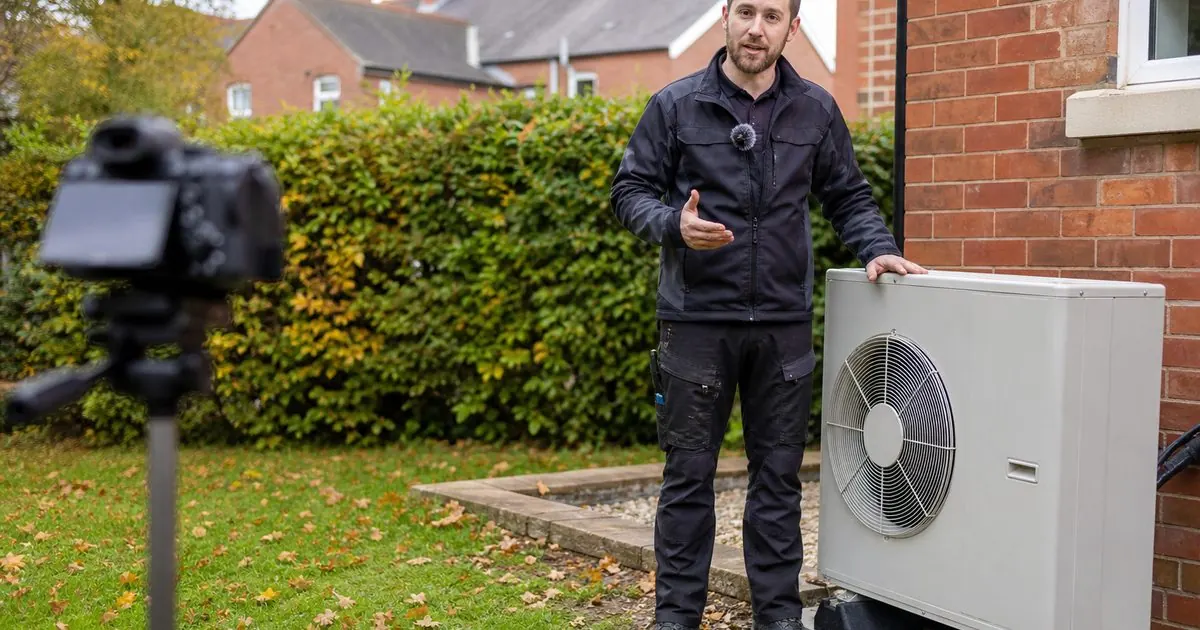
- A 60 second video of your owner or lead surveyor explaining the difference. People trust a face more than a PDF.
The follow-up for stalled deals
When a lead says "we'll wait", tag the reason in the CRM. "Waiting for grant" is a different follow-up from "price" or "need to speak to my partner". Then run a short sequence:
- Same day, WhatsApp: a thank-you, the one-page explainer and the link to GOV.UK. No pressure.
- Day 3: the 60 second video. "A few people have asked us the difference between the grant and the loan, so here's Dave explaining it."
- Day 10: a short case study of a customer who used the scheme or the heat pump grant, with their numbers.
- Day 21: a check-in. "Did you get a chance to look into the council grant? If it's not for you, happy to update your quote."
- Monthly after that: useful updates only, such as a genuine scheme change, the VAT date getting closer, or a new review.
Our AI assistant can answer the scheme questions on WhatsApp at any hour, using the same approved answers as your setters, and hands over to a person when the customer is ready to talk. Leads who go quiet for months are picked up by reactivation campaigns rather than forgotten.
Heat pump deals have one extra layer, because the customer has to understand a grant and a loan on the same quote. That's covered in quoting heat pumps with a Warm Homes loan plus the Boiler Upgrade Scheme. Insulation firms face a different version of this objection; see after the ECO scheme ends.
Closing the loop
The installers who do best with the scheme are the ones whose team gives one clear, consistent answer, in person, on WhatsApp and on the website. We set that up as part of our system: sales closers who close booked appointments for you, AI follow-up for the leads who stall, and WhatsApp AI that replies in seconds. If your pipeline is full of people "waiting for the grant", book a video call with Tom and we'll show you how we'd move them.
Sources
- GOV.UK: Warm Homes Plan
- GOV.UK: Warm Homes Loan Scheme factsheet (27 October 2026)
- GOV.UK: Warm Homes loan: how to apply
- GOV.UK: Boiler Upgrade Scheme, what you can get
- GOV.UK: Apply for the Warm Homes: Local Grant
- GOV.UK: VAT on energy-saving materials and heating equipment (VAT Notice 708/6)
Questions owners ask
Is the Warm Homes Plan a grant?
The Warm Homes Plan is the government's overall programme. Inside it, the Warm Homes loan is credit from a participating lender that must be repaid. The Boiler Upgrade Scheme is a grant towards heat pumps, which the installer claims. The Warm Homes: Local Grant is free upgrades for eligible lower-income households in England, arranged by councils.
Should I tell a customer if they might qualify for free upgrades?
Yes. If their answers suggest a lower income and an EPC rating of D to G in England, point them to GOV.UK's Warm Homes: Local Grant page. You lose a sale you were unlikely to close anyway, and you keep their trust. Many of those households will recommend you to friends who can pay.
When does 0% VAT on solar and heat pumps end?
HMRC's VAT Notice 708/6 says installing energy-saving materials in residential accommodation is zero-rated until 31 March 2027, and reverts to the reduced rate of 5% from 1 April 2027. It is a real deadline, so you can mention it, but don't invent urgency on top of it.