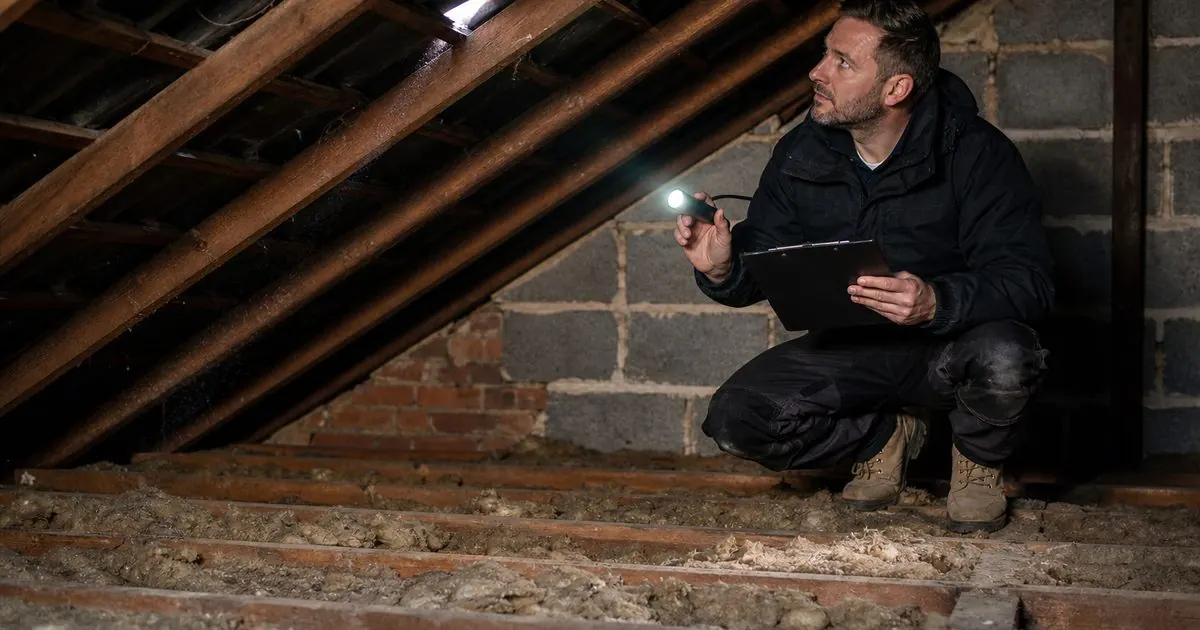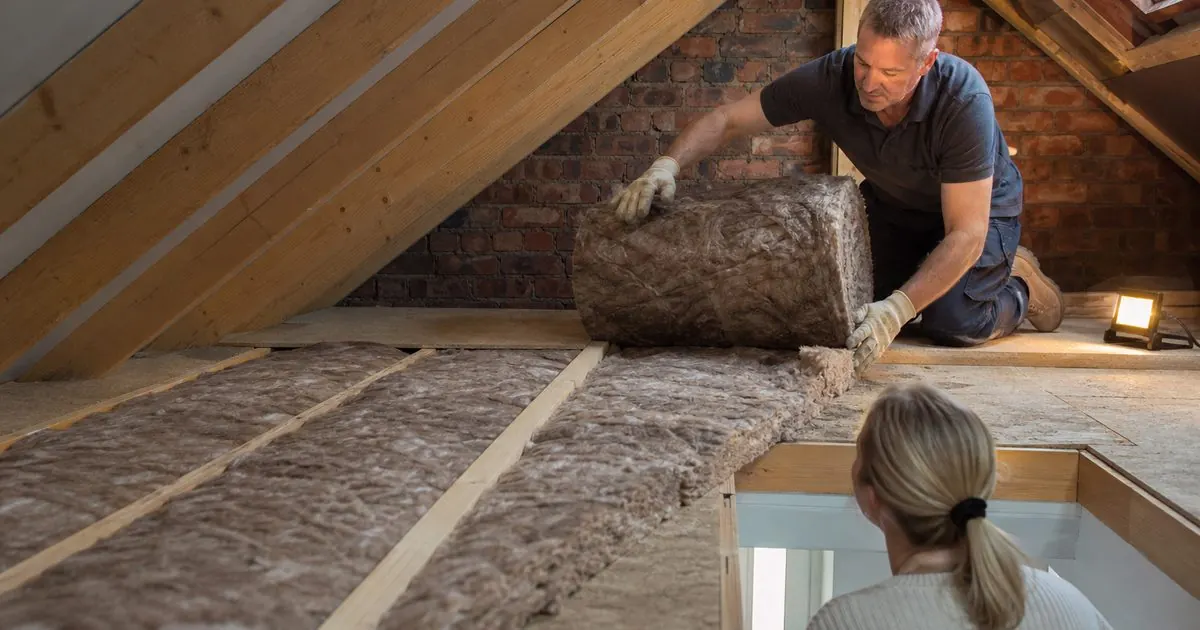
For years, plenty of insulation firms ran almost entirely on funded work. The surveys came through managing agents, the paperwork was heavy, but the diary stayed full. That pipeline is closing. The government's Warm Homes Plan says it is winding down the supplier-funded schemes because they were not good value for money, and low-income grant funding now runs mainly through councils and social landlords instead.
If most of your work has come through funded routes, you now need customers who pay you directly. That is a different business. This guide covers who those customers are, what they need to hear and how to build a steady flow of them.
The new buyer is not the old buyer
Funded work and private work look similar on site. They are completely different in the sales process.
| Funded work | Private work |
|---|---|
| The customer was told it was free | The customer is spending their own money |
| Leads arrived through agents or schemes | You have to generate every enquiry |
| The decision was quick (it cost them nothing) | They compare, research and ask questions |
| Trust was borrowed from the scheme | You must earn trust yourself |
| Price did not matter to the homeowner | Price, value and payment options matter a lot |
The skills that won funded work (volume, compliance, speed through paperwork) still matter. But you now need marketing, sales follow-up and a reason for people to choose you.
Who actually pays for insulation
There are four groups worth building campaigns around.
1. Homeowners with a comfort problem
Cold rooms, a bedroom over the garage that is never warm, condensation on walls, high bills. They do not search for "cavity wall insulation" first. They search for the symptom. Your ads and pages should start with the problem and then explain the fix.
2. Private landlords
This is the biggest change coming. In January 2026, the government confirmed that privately rented homes in England and Wales must meet EPC C, or an equivalent standard, by 1 October 2030. The government response says landlords will be required to invest up to £10,000 per property, that spend on relevant measures installed from 1 October 2025 counts towards that cap, and that the main standard is set against fabric performance, with insulation named as a fabric measure. The legislation is intended to come into force in 2027 and the details could still change.
That gives landlords a deadline and a reason to plan now. Landlords with several properties are also a repeat customer: one good job leads to the rest of the portfolio.
3. New owners and renovators
People who have just bought an older house and are doing the work before they move in, or alongside other jobs. They are already spending and already have trades in.
4. Homes getting a heat pump
Heat pumps work best in a well-insulated home. Partner with local heat pump installers so their survey findings reach you.
The VAT window: a real deadline
HMRC guidance says installing insulation in homes in Great Britain is zero-rated for VAT from 1 May 2023 to 31 March 2027, after which it reverts to 5%. That is a genuine, checkable reason to act before April 2027. Use it honestly: "VAT on insulation goes from 0% to 5% on 1 April 2027" is a fact. "Prices rising, book now!" with no detail is the kind of pressure that makes homeowners think you are a scam.
Warm Homes loans do not cover insulation
Many insulation firms expected the new Warm Homes Loan to fund their work. It does not. As of November 2026, the GOV.UK eligibility page lists heat pumps, solar panels, battery storage, heat network connections, domestic wind turbines and micro hydro. Insulation is not on it.
What that means in practice:
- Do not put "Warm Homes loan" on insulation ads. It will attract people who then cannot get the loan for your work, and the deal falls apart at the lender stage.
- Offer separate finance properly. If you want customers to spread the cost, work with an FCA-authorised lender or broker. Never invent a monthly figure.
- Bundle with partners, carefully. If a customer is getting a heat pump or solar panels through a Warm Homes loan, your insulation can be part of the same project, but it must be paid for separately. Be clear about that from the first conversation.
- Know where funded help still exists. Low-income households may qualify for council-run grant schemes. If someone clearly qualifies, point them to their council. It builds trust and costs you nothing.
Our article on what the Warm Homes loan does not cover goes through the sales checklist for ineligible work.
The funnel for private customers
A private insulation enquiry needs more explaining and more reassurance than funded work. A good landing page:
- Leads with the symptom. "Cold rooms and condensation? It is often the walls or the loft."
- Shows real prices or ranges. Typical costs for a loft top-up, a cavity fill on a semi and so on. Private buyers will not book a survey with no idea of cost.
- Asks qualifying questions:
- Do you own the property, or are you a landlord? How many properties?
- What type of house is it, and roughly when was it built?
- What are the walls: cavity, solid, timber frame, not sure?
- How much loft insulation is there now, roughly?
- What is the main problem: cold, bills, damp, EPC rating?
- Do you know your EPC rating? (Landlords usually do.)
- When would you like the work done?
- Shows proof. Your accreditations, guarantees, reviews and a short video of your team.
- Books the survey. A calendar, not "we will be in touch".
Run a separate campaign for landlords, with its own page that leads with EPC C by 2030, portfolio surveys and a single point of contact for multiple properties.
The trust problem
Private buyers have heard about rogue insulation callers and botched wall insulation. They will check you. We cover that in Is this a scam? and, for solid wall work, in External wall insulation after the quality audits. The short version: inbound marketing only, real faces, verifiable credentials and no pressure selling.
Build the pipeline from your capacity
Work backwards from what your teams can install:
- How many installs a week can you do?
- What percentage of surveys turn into jobs?
- What percentage of enquiries book a survey?
If you can fit 10 jobs a week, close 50% of surveys and book 40% of enquiries, you need around 50 enquiries a week. That number sets your ad budget and tells you how many channels you need: Google Ads for people searching, Facebook and Instagram for people with the problem who have not searched yet, and local SEO for "loft insulation [town]".
What it looks like when it works
RJ Insulation came to us with most of their work coming from word of mouth and referrals. Ron Spence, their MD, put it this way: "Before working with them, most of our work came from word of mouth, referrals, and the occasional enquiry through the website. … Attain Digital have not only delivered on those targets but actually exceeded expectations."
Where we fit
We build the whole private-customer system for insulation firms: ads aimed at homeowners and landlords, landing pages that qualify, AI replies that book surveys and a CRM that follows up. See our insulation page and our lead generation service.
If you want to move from funded work to paying customers, book a video call and we will check whether your area is open.
Sources
- GOV.UK: Warm Homes Plan
- GOV.UK: Improving the energy performance of privately rented homes, government response (January 2026)
- GOV.UK: VAT on energy-saving materials and heating equipment (VAT Notice 708/6)
- GOV.UK: Warm Homes Loan Scheme eligibility
- Financial Conduct Authority: consumer credit
Questions owners ask
Does the Warm Homes Loan cover insulation?
No. As of November 2026, the GOV.UK eligibility page lists heat pumps, solar panels, batteries, heat network connections, domestic wind turbines and micro hydro. Insulation is not on the list. Homeowners who want to spread the cost of insulation need a separate finance product from an authorised lender or broker.
Is there VAT on insulation for homeowners?
HMRC's guidance says installing insulation and other energy-saving materials in residential accommodation in Great Britain is zero-rated from 1 May 2023 to 31 March 2027. From 1 April 2027 it reverts to the reduced rate of 5%. Check the conditions in VAT Notice 708/6 for your own jobs.