A heat pump quote used to have one number that mattered: the price after the grant. Now many customers will want to pay part of that balance with a Warm Homes loan, and your quote has to show the full price, the Boiler Upgrade Scheme grant, the balance, and how the balance could be funded, in a way a homeowner understands at the kitchen table and a lender accepts without sending it back.
Get it wrong and you lose the deal in one of two ways. The customer misreads the numbers and thinks you have hidden something, or the lender rejects the quote and the job stalls for a fortnight. This post covers how we would lay it out.
The rules that shape the quote
As of November 2026, from GOV.UK and the Warm Homes Loan Scheme rules:
- The grant. The Boiler Upgrade Scheme gives £7,500 towards an air source or ground source heat pump, plus an extra £1,500 until March 2027 if the home is heated by oil or LPG with no mains gas. That is the "up to £9,000" figure in the GOV.UK loan factsheet. The installer applies to Ofgem, and the grant comes off the price on the quote and the invoice. One grant per property, no hybrids, and not to replace an existing low-carbon system.
- The loan. A Warm Homes loan can be combined with the grant. The scheme rules give the example of a homeowner taking a loan to cover installation costs above the grant. The loan cap for an air-to-water heat pump is £20,000 and for ground source £35,000, both listed as applying before the grant is deducted.
- No double public funding. A Warm Homes loan cannot be used alongside other government funding for the same improvement. The Boiler Upgrade Scheme and the Home Energy Scotland grant are the stated exceptions.
- What the lender needs. For journeys where the customer applies with your quote (rather than point-of-sale finance), the rules say the quote must be dated within the last six months, addressed to the applicant, on company headed paper, include your MCS number, show the full installation address, give an itemised cost breakdown, and show the system size in kW.
- What the loan will not fund. Insulation is not funded, even as part of a heat pump installation. Radiators, pipework and cylinders are the kind of ancillary work the rules expect in a heat pump quote.
A quote layout that works
Keep the money section on one page, in this order. Here is an illustrative example (round numbers, not a real job or a price guide):
| Line | Amount |
|---|---|
| 8kW air source heat pump, supplied and fitted | £9,200 |
| Hot water cylinder and controls | £2,100 |
| Radiator upgrades (6 rooms) and pipework | £1,900 |
| Commissioning and MCS registration | included |
| Total installation price | £13,200 |
| Less Boiler Upgrade Scheme grant (we claim this for you) | minus £7,500 |
| Balance to pay | £5,700 |
| How you can pay the balance | Cash, or finance from a lender, including Warm Homes loans (subject to the lender's checks) |
Then, on a separate page or a separate quote:
| Not covered by the heat pump grant or a Warm Homes loan | Amount |
|---|---|
| Loft insulation top-up | £650 |
A few things this layout does on purpose:
- It shows the full price first. Hiding the pre-grant price makes the customer suspicious when they see it on the lender's paperwork.
- It says who claims the grant. "We claim this for you" removes the most common worry, which is that the customer has to apply to the government themselves.
- It keeps the loan wording generic. No monthly figure, no rate. Those come from the lender, in its approved format. Putting your own "about £60 a month" on the quote is how installers end up making credit promotions they are not allowed to make. See how to advertise the Warm Homes Plan without breaking finance rules.
- It separates ineligible work. Insulation, roof work or anything else outside the scheme sits on its own page. If a lender sees it mixed into the heat pump total, the quote may be sent back. Your customer can pay for it in cash or ask the lender about a separate standard loan, which the scheme rules allow lenders to offer.
- It itemises. The lender needs an itemised breakdown and the system size in kW. Customers like it too.
Off-gas homes: the £1,500 window
For oil and LPG homes, the extra £1,500 changes the balance noticeably, and GOV.UK says it runs until March 2027. Show it as its own line ("Additional grant for homes heated by oil or LPG") so the customer sees exactly why their number is lower than their neighbour's on mains gas. Then mention the date once, factually. You do not need to push. The end of 0% VAT on 31 March 2027 falls at the same time, so off-gas customers who are planning to go ahead in the next few months have two good reasons to get the timing right.
Explain it on video, not just on paper
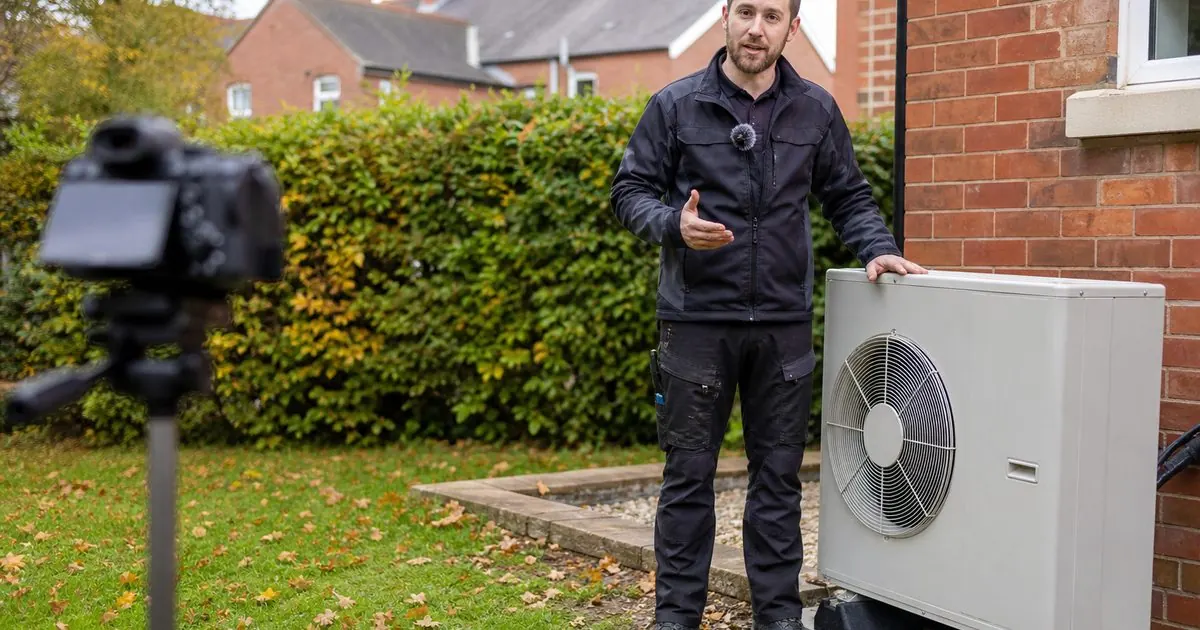
Even with a clean layout, a quote with a grant and a loan is three ideas at once. We pair every heat pump quote with a short personal video, recorded by the surveyor on their phone or produced as a reusable explainer:
- 20 seconds on the system you are recommending and why.
- 20 seconds walking through the numbers: full price, grant, balance.
- 20 seconds on the ways to pay, including "if you'd like to spread the cost, the Warm Homes loan is available from lenders taking part in the scheme, and we can explain the process".
That video gets sent on WhatsApp straight after the visit and again with the reminder a few days later. It answers the questions the customer will otherwise ask their brother-in-law, who will get them wrong.
Proof matters too. A customer who has seen a real household's bills a year after install trusts the payback story far more; see real running-cost proof from heat pump customers.
What setters should check before the survey
Most quote problems start with a survey booked on bad information. Before the visit, confirm:
- They own the home (the loan needs an owner, and so does the grant application).
- Current heating fuel, and whether there is mains gas.
- There is no existing heat pump.
- They have not had, and are not getting, other public funding for the heat pump.
- Whether they plan to pay cash, finance or a mix.
These questions belong in your funnel as well; see Warm Homes loan landing pages and quiz funnels.
The bigger picture
Heat pump buyers take time, and the quote is where many deals stall. Night & Day Renewable Energy, one of our air source heat pump clients, went from buying leads to running their own campaign and grew turnover from £200k to £650k+ in twelve months. Clear quoting and fast follow-up are a big part of turning that lead flow into installs. If you want help with your heat pump marketing, quote videos or closers who follow up every quote, book a video call with Tom.
Sources
- GOV.UK: Boiler Upgrade Scheme, what you can get
- GOV.UK: Boiler Upgrade Scheme, how to apply
- GOV.UK: Warm Homes Loan Scheme factsheet (27 October 2026)
- GOV.UK: Warm Homes Loan Scheme rules, September 2026 (PDF)
- GOV.UK: Warm Homes loan scheme guide
- GOV.UK: VAT on energy-saving materials and heating equipment (VAT Notice 708/6)
Questions owners ask
Can a customer use a Warm Homes loan and the Boiler Upgrade Scheme on the same heat pump?
Yes. GOV.UK says the loan can be combined with the Boiler Upgrade Scheme, and the scheme rules describe using the loan to cover installation costs above the grant. Other government funding cannot be used for the same improvement, so check the customer is not also getting a council or other public grant for it.
How much is the Boiler Upgrade Scheme grant?
As of November 2026, GOV.UK lists £7,500 for an air source or ground source heat pump, with an extra £1,500 until March 2027 for properties heated by oil or LPG with no mains gas connection. Air-to-air heat pumps get £2,500. The installer applies to Ofgem and the grant comes off the quote and invoice.
Does the Warm Homes loan cap apply before or after the grant?
The scheme rules list the heat pump caps (for example £20,000 for an air-to-water heat pump) as applying prior to the Boiler Upgrade Scheme grant being deducted. Confirm with your lender exactly how it applies the cap to your quotes, as its own product rules may be tighter.