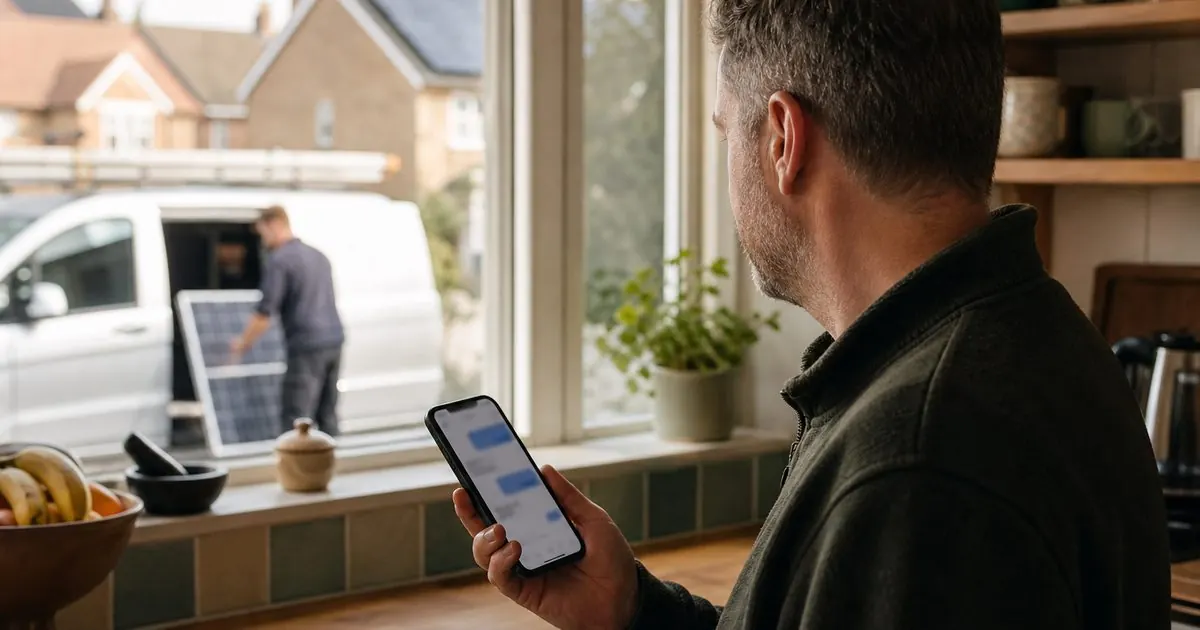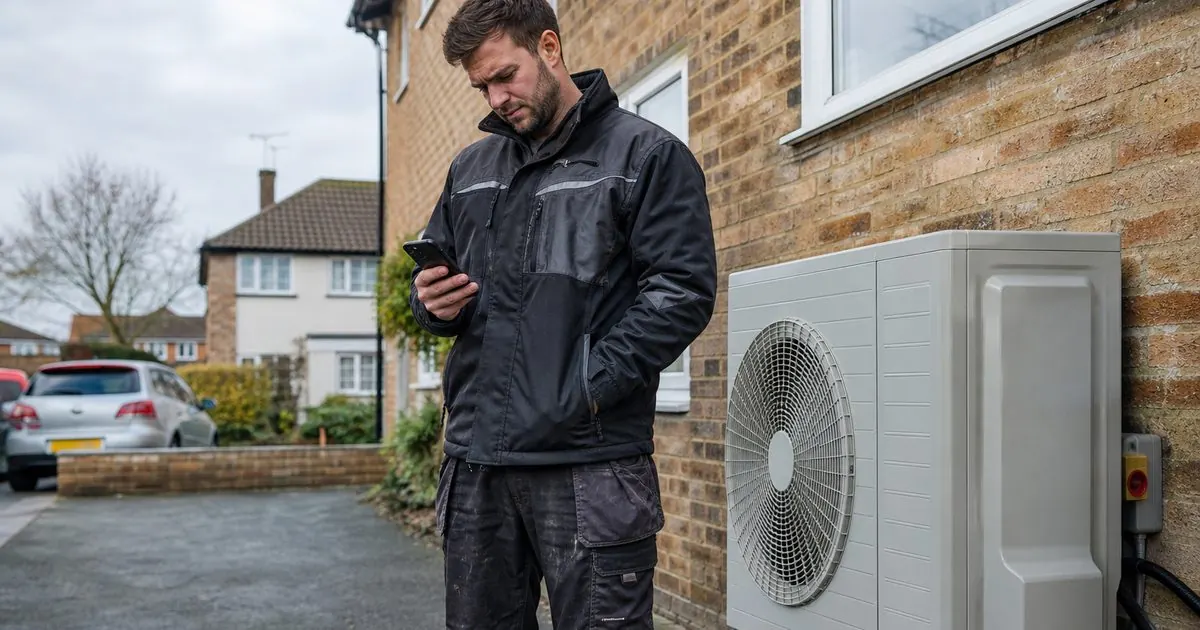
Before a homeowner spends thousands on a heat pump, a battery or a new roof, they do their homework. A lot of that homework now happens on YouTube. They search "do heat pumps work in old houses", "is a solar battery worth it", "what happens during a boiler install", and they watch whoever has answered it.
Right now, that is usually a national company, a hobbyist with strong opinions, or an installer from the other end of the country. If it were you, the buyer would arrive at your survey already trusting you, and already understanding the product.
This guide covers how to build a YouTube library of answers that buyers find, that your sales team uses, and that also helps your search visibility.
Why YouTube is worth it for a local installer
- Buyers research there. For big, unfamiliar purchases, people want to see it explained, not just read about it.
- It works for years. A good answer to "how loud is a heat pump" stays useful long after you film it. A Facebook post is gone in a day.
- Your sales team gets a toolkit. Every time a customer asks a common question, the rep can send a link to your video instead of explaining it again.
- It feeds search. Videos can appear in Google results, and a clear video answer on your own site gives AI search tools something specific to reference. See will ChatGPT recommend your business?.
You do not need a big channel. A library of 15 good answers, used properly, does more for a local firm than chasing subscribers.
Step 1: Collect the questions
The best list of video topics is already in your business:
- Survey and sales call questions. Ask your surveyors and sales team to write down every question for two weeks. The repeated ones are your first videos.
- Objections. "I've heard they don't work in winter." "My neighbour's panels never paid back." Answer them honestly.
- Quote questions. What do customers ask about once they have your quote?
- Google's "People also ask" box for your main products. These are real searches.
- YouTube's own search suggestions. Start typing "heat pump" and see what it suggests.
Pick the ten to fifteen that come up most and that you can answer from real experience.
Step 2: Answer one question per video
Each video answers one question. Structure it like this:
- Say the question and the short answer in the first 20 seconds. "Do heat pumps work in older houses? Usually yes, but it depends on three things. Let me show you."
- Explain with real examples. Your own installs, your own photos and footage, real numbers where you have them.
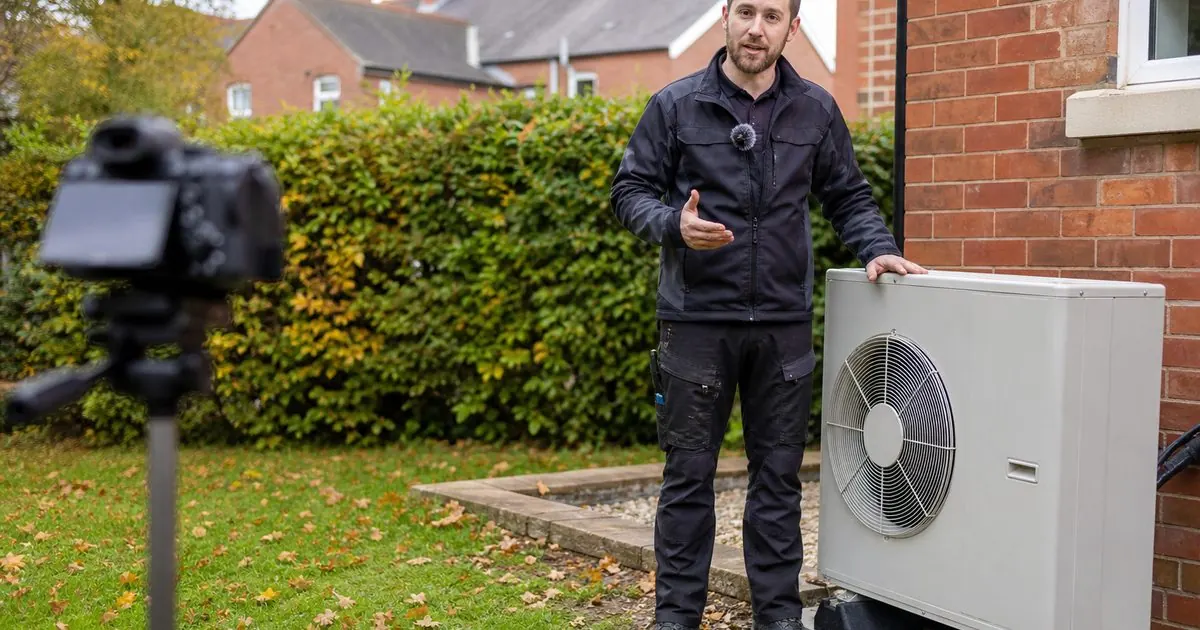
- Show, do not just tell. Stand next to the unit. Show the radiator. Point at the roof.
- Be honest about when it is not a good fit. This builds more trust than anything.
- Close with a simple next step. "If you're in Shropshire or Cheshire and want us to look at your house, the link is below."
Three to eight minutes is plenty for most answers.
Step 3: Title it the way people search
Use the question as the title, in the buyer's words. "Do heat pumps work in old houses? (Real installs in 1930s homes)" beats "Heat Pump Installation Insights | Smith Energy". Put the town or region in the description, and in the title if it fits naturally.
Write a proper description: a summary of the answer, links to your website and the relevant service page, and timestamps.
Step 4: Add chapters
YouTube chapters split a video into labelled sections, which helps viewers jump to the part they care about. To add your own, list timestamps with titles in the description. YouTube's rules are that the first timestamp must be 00:00, you need at least three in ascending order, and each chapter must be at least 10 seconds long.
Google can also show key moments from videos in search results, and chapters in a YouTube description are one of the ways it finds them.
Step 5: Cut Shorts from every video
YouTube treats square or vertical uploads of up to three minutes as Shorts. Shorts reach people who are browsing rather than searching. From each longer answer, cut one or two vertical clips that make a single point, and point viewers to the full video.
If you film vertical and horizontal versions on the day, or frame wide enough to crop, this is quick.
Step 6: Put every video on your website
YouTube alone is not enough. Embed each video on the most relevant page of your website, with a written summary of the answer underneath. Google's video best practices recommend giving important videos a page where the video is the main content, with its own title and description, so Google can understand and show it. A page answering "Do heat pumps work in old houses?" with your video and a written answer is useful to visitors, to Google and to AI tools.
The written part matters. Search engines and AI tools read text far more reliably than they watch video.
Step 7: Make the sales team use it
The library pays off most when it is used every day:
- Send the relevant answer videos with each quote. See video with every quote.
- Add them to booking confirmations and follow-up messages.
- Keep a simple list of "question to link" so anyone in the office can find the right one.
Getting the filming done
The hard part is time. The answer is to film several answers in one session. One morning with a list of questions, a quiet location and a decent microphone can produce five or six videos. Better still, film them on the same day as an install so you can show the real thing. We cover how in the content day system.
How to measure it
Views alone are misleading for a local installer. Watch:
- Which videos your sales team sends most.
- Whether buyers mention the videos on calls ("I watched your one about noise").
- Clicks from YouTube to your website, using tagged links.
- Enquiries from the website pages where the videos are embedded.
A video with 300 views that helps close ten jobs is a great video.
Building a question library is part of our videography and SEO and GEO work. If you want help choosing the first ten questions for your trade, book a video call and we will go through them with you.
Sources
- YouTube Help: Video chapters
- YouTube Help: Understand three-minute YouTube Shorts
- Google Search Central: Video SEO best practices
- Google Search Central: AI features and your website
Questions owners ask
How many YouTube videos does an installer need?
Start with ten to fifteen videos that answer the questions you hear most often. That is enough to cover most of what buyers ask before they call, and enough for your sales team to use. Add one or two a month after that, based on new questions coming up on calls.
Should installers post YouTube Shorts or long videos?
Both, for different jobs. Longer videos of a few minutes answer a question fully and are what people find when they search. Shorts, which YouTube treats as vertical or square videos up to three minutes, reach people browsing. Cut Shorts from your longer answers rather than making them separately.