Ask ten marketers whether installers should run video or photo ads on Facebook and Instagram and you will get ten confident answers. Most of them will say video, always. The honest answer is: it depends on what the ad has to do, and you find out by testing properly.
This guide covers what each format is good at, where photos still earn their place, how to run a fair test, and how to film footage that actually works as an ad.
What each format is good at
Video is good at
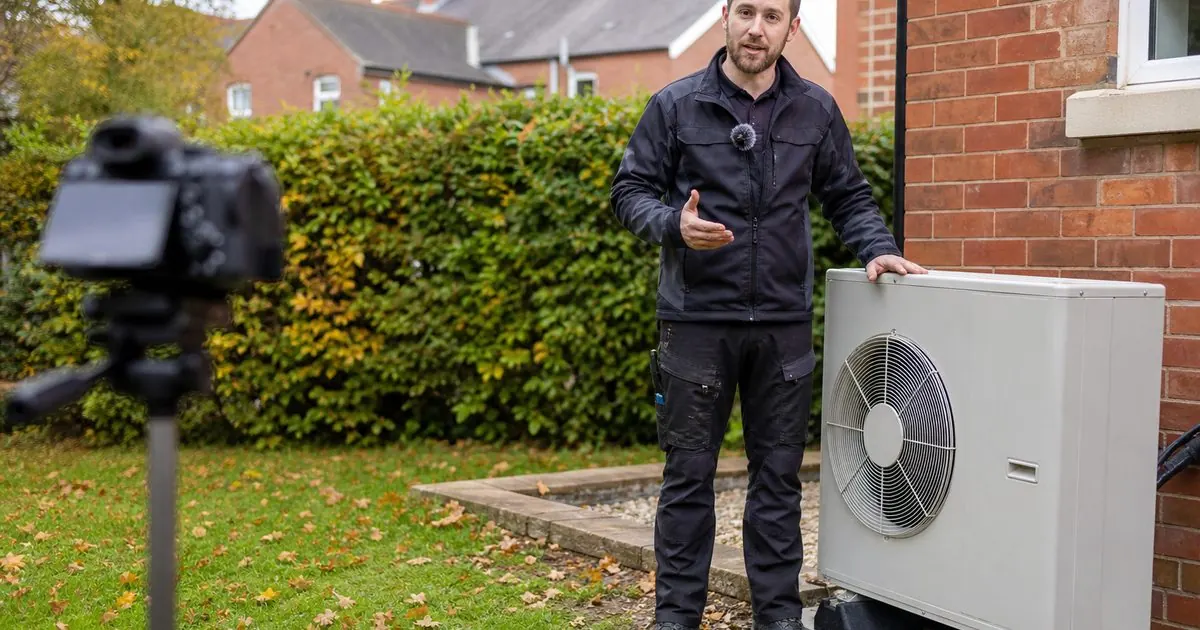
- Trust. A real person talking, on a real job, is harder to dismiss than a photo. For trades where buyers fear cowboys or pushy sales, that matters most.
- Explaining. How a battery stores cheap overnight power. What a heat pump install day looks like. How motorised shutters work. A photo cannot show a process.
- Stopping the scroll. Movement in the first second catches the eye in a feed full of still images.
- Telling a story. Before, problem, decision, result. That is the shape of a good customer testimonial, and it needs time.
Photos are good at
- A clear, simple offer. If the message is one line ("Free solar and battery survey in Cheshire this month"), a strong photo with that line can do the job faster than a video.
- Before and after. A side-by-side of an old roof and a new one, or a tired bathroom and a finished one, can be read in a second.
- Carousels of real projects. Several finished jobs, swipeable, each with a town name. Good for home improvement where buyers want to browse.
- Speed of production. You can test five photo ads this afternoon. A good video takes planning.
Neither format fixes a weak message. A video of a van driving past with music does less than a photo of a real customer with a strong headline.
When video tends to win for installers
Video is the format to put most effort into when:
- The product needs explaining (heat pumps, batteries, solar, air-to-air systems, motorised blinds).
- Trust is the main barrier (roofing, windows, anything sold in the home).
- You are reaching cold audiences who have never heard of you.
- You have real customers willing to talk on camera.
Photos tend to hold their own for retargeting people who have already watched your videos, for simple seasonal offers, and for trades where the finished result sells itself.
For product demos specifically, see why video ads beat photos for motorised blinds. For heat pumps, see real running-cost proof.
How to test fairly
Most "video vs photo" tests are not fair tests. To get an answer you can trust:
- Same audience, same offer, same landing page. Change only the format.
- Same message. If the video is a customer story and the photo is a discount offer, you are testing the message, not the format.
- Enough budget and time. A test that runs for two days with a handful of leads tells you nothing. Let each version gather enough enquiries to compare.
- Judge on the right number. Cost per click and cost per lead are early signals. What matters is cost per booked survey and cost per sale. A video lead can cost more than a photo lead and still be the better buy, if it books and closes better because the buyer has already seen and heard you. If you only look at cost per lead, you can pick the wrong winner. We explain this in which marketing actually makes you money.
- Test several of each. One video against one photo is a test of two ads. Three or four of each gives you a pattern.
What to film for ads
Ads need different footage from a website showreel. Plan for:
- Vertical first. Most Facebook and Instagram viewing is on phones, and Reels and Stories are vertical. Film vertical, or frame wide enough to crop both ways. Check Meta's Ads Guide for current specs for each placement.
- Sound off. Many people scroll with sound off. Add captions to every spoken line and make sure the first few seconds work without audio.
- A hook in the first second. Start on the most interesting frame: the customer mid-sentence, the reveal, the problem. Not a logo.
- One idea per ad. One worry answered, one benefit shown, one customer's story. Cut longer interviews into several short ads.
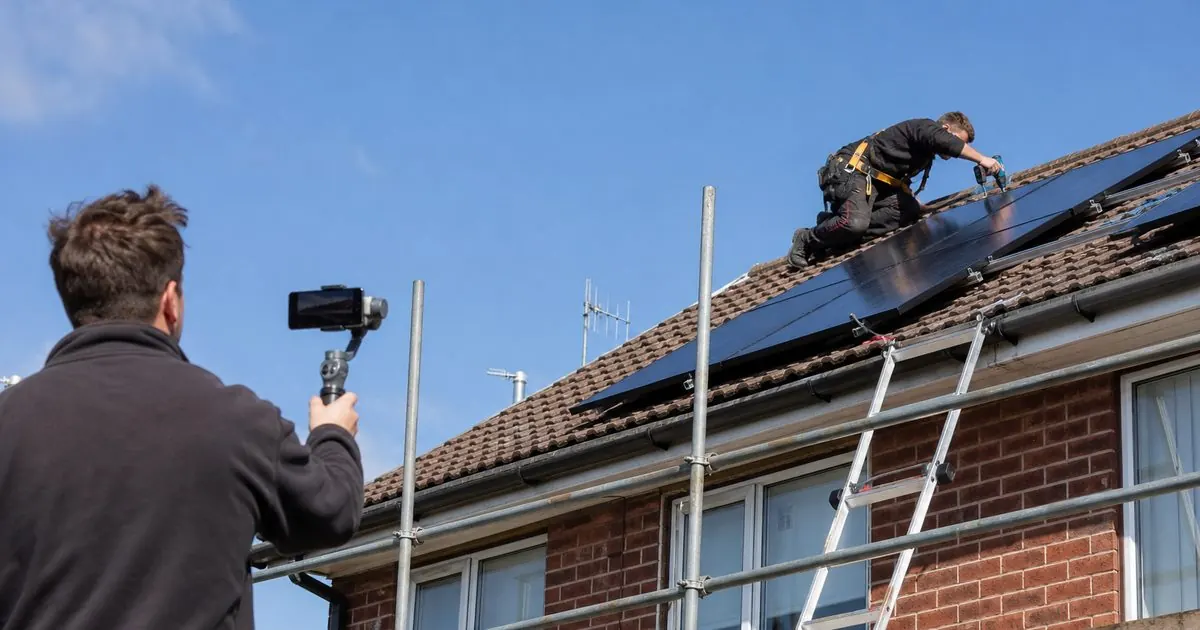
- Real people and real jobs. Your team on site, your vans, your customers. Stock footage looks like stock footage.
- Plenty of variations. Ad performance fades as the same people see it repeatedly. Several hooks and cuts from the same shoot keep things fresh.
Somebody in your business needs to be on camera, but it does not have to be the owner. A friendly lead installer or surveyor often comes across better.
Getting enough footage without stopping work
The usual reason installers do not run video is time. The fix is to film in batches: one planned day captures enough footage for months of ads. We cover how in the content day system.
That is how we work with clients. We come to you for a full shoot day on site once a quarter, and our editors cut the footage into scroll-stopping video ads, website videos and follow-up clips. For example, we made Sunlite Group's domestic and commercial solar video ads.
The short answer
- Run both. Use video to build trust and explain, and photos for simple offers, before-and-afters and retargeting.
- Test fairly, and judge on cost per survey and cost per sale, not cost per click.
- Film real people and real jobs, vertical, with captions, with a strong first second.
If you want to see how video ads would work for your trade, look at our videography and Facebook and Instagram ads pages, then book a video call and we will talk it through.
Sources
Questions owners ask
Do I need professional video for Facebook ads?
Not for every ad. Honest phone footage of real jobs and real people often performs well because it looks like normal social content. Professional filming pays off for the core assets you use for months: customer stories, the founder video and product explainers. Most installers do best with a mix of both.
How long should a video ad be for an installer?
Long enough to make one point well. Short cuts of 15 to 30 seconds work for a single message such as a reveal or one customer's worry answered. Longer customer stories of one to two minutes can work for warmer audiences who have already engaged. Test lengths rather than assuming.