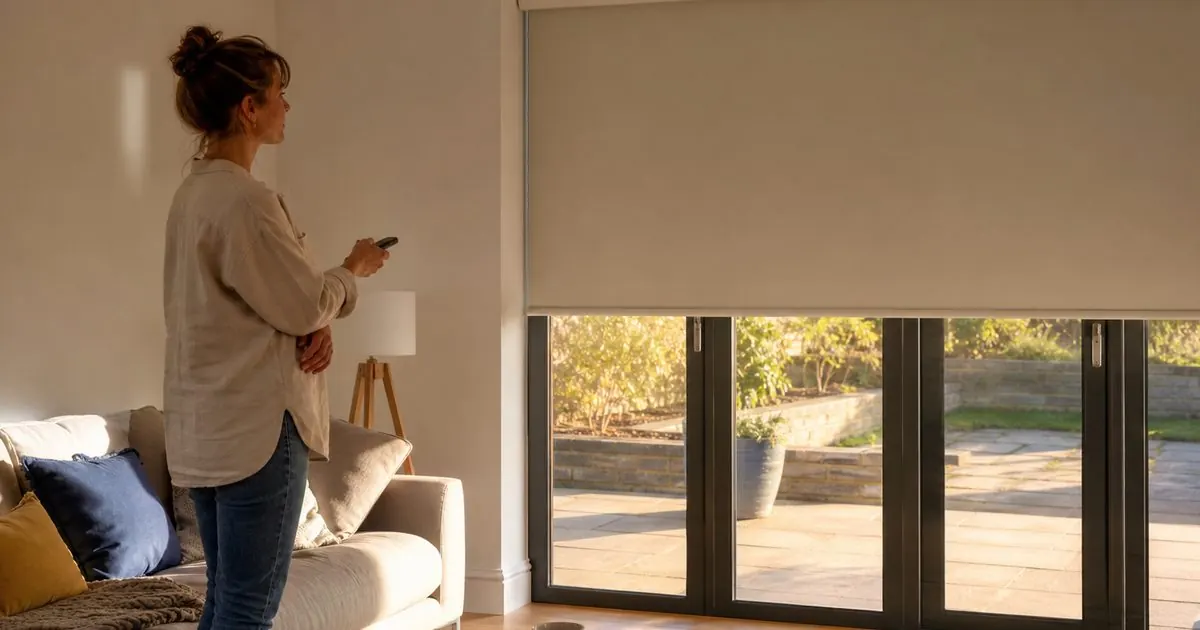
Put a photo of a motorised roller blind next to a photo of a manual one and most people cannot tell them apart. The fabric is the same. The window is the same. The whole point of the product, that it moves on its own, on a schedule, from a phone or a voice command, is invisible in a still image.
That is why motorised blinds and shutters are one of the clearest cases in home improvement where video beats photos. The product is the movement. If your ads do not show it moving, they are not showing the product.
What a photo cannot show
The benefits buyers pay extra for are all things that happen over time:
- Convenience. One tap closes every blind in the room.
- Reach. Windows that are hard to get to, like roof lanterns, skylights, tall stairwell windows and high gable glazing, become easy.
- Automation. Blinds open at sunrise and close at sunset, or drop when the sun hits a south-facing room.
- Quiet. A good motor is almost silent, which matters in a bedroom.
- No cords. For parents, cordless operation removes a worry. Industry standards for internal blinds (BS EN 13120) include child safety requirements because hanging cords can be a strangulation risk for young children.
Each of those is a moment you can film in a few seconds. None of them comes across in a photo.
The shot list
Plan a set of short clips you can film on any good install. Each one should be 3 to 8 seconds and show a single idea clearly.
- The hero move. A wide shot of a big glazed wall as the blinds drop together. This is your opening shot.
- The tap. A close-up of a thumb on a phone app or remote, cutting straight to the blind moving.
- The voice command. Someone on the sofa saying "close the blinds" and the room going dim.
- The hard-to-reach window. A roof lantern or skylight blind closing, shot from below so the height is obvious.
- The morning routine. A bedroom blind rising on its own at sunrise, with soft light filling the room.
- The sound. A quiet room, the blind moving, natural audio. Let people hear how little noise it makes.
- The shutters. Motorised louvres tilting to let in light and keep privacy.
- The person. The homeowner saying in one sentence why they love it.
With those eight clips you can cut a dozen different ads.
Formats that work on Meta
Most people watch Facebook and Instagram on a phone, often with the sound off.
- Vertical (9:16) for Reels and Stories, and 4:5 for the feed.
- Show the movement in the first two seconds. If it starts with a logo or a static room, people scroll on.
- Add captions. Short on-screen lines like "Every blind. One tap." work with the sound off.
- Keep it short: 10 to 20 seconds for cold audiences. Save longer walk-throughs for people who have already watched.
- Use real homes, not CGI or catalogue shots. People want to see blinds in houses like theirs.
The general case for video over images is in video ads vs photo ads for installers. For motorised products, it is not a close call.
Hooks that stop the scroll
Lead with a situation the viewer recognises, then show the blind solving it:
- "That window you can't reach." Then a skylight blind closing.
- "The sun hits the TV every afternoon at four." Then a blind dropping automatically.
- "Still pulling cords in the dark?" Then a bedroom closing with one tap.
- "Close every blind in the house from bed." Then a sequence of rooms going dark.
Test several hooks against each other with the same footage. The winner is often not the one you expect.
Filming without stopping the job
You do not need a film crew on every install. Most clips can be shot on a phone in a couple of minutes once the fitting is finished:
- Clean the glass and tidy the room.
- Shoot in good natural light, with the phone on a small tripod.
- Film the hero move three times so you have a clean take.
- Ask the homeowner for a ten-second comment while they are pleased.
For your best ads and website videos, a planned shoot day pays off. We come and film for clients once a quarter, capturing several installs and customers in one day, which gives a steady supply of fresh footage. Our videography service covers how that works.
Use the footage everywhere
The same clips earn their keep beyond ads:
- Product pages. A short loop at the top of the motorised blinds page beats any photo.
- Quotes. Send a 20-second clip of a similar install with every quote.
- Showroom screens and social posts.
- Follow-up. Someone who enquired about manual blinds may upgrade after seeing a motorised one in action.
How to judge the ads
Watch three numbers:
- Hook rate: how many people watch the first three seconds.
- Hold rate: how many watch most of the video.
- Cost per booked consultation, not cost per click.
A video that holds attention but brings no bookings needs a stronger offer. One that books well but few people watch needs a better first two seconds.
If you sell motorised blinds or shutters and your ads still use photos, book a free video call with Tom. We will look at what you have and check whether your area is open for our Facebook and Instagram ads.
Sources
Questions owners ask
How long should a motorised blinds video ad be?
Short. The first two or three seconds must show the blind moving, and most strong ads make their point in 10 to 20 seconds. Longer videos of 30 to 60 seconds work well for people who have already watched a short one, such as remarketing audiences or the product page on your website.
Do I need professional filming for blinds ads?
Not for every clip. Phone footage of real installs, shot steadily in good light, works well on social media. A planned shoot day pays off for hero ads and website videos, where lighting, sound and a smooth edit make an expensive product look as good as it is.