Every installer knows they should be filming more. The jobs look great, the customers are happy, the team is good at what they do. But on the day, there is a van to load, a customer asking questions and a deadline to hit. Filming is the first thing that gets dropped.
The result is the same handful of phone photos, a website that has not changed in two years, and ads that have run so long everyone has seen them.
The fix is not to film a bit every day. It is to plan one proper content day, every few months, and capture everything you need in one go. This guide covers how to do that without slowing down the install.
Why batch filming works
- One day of planning instead of a hundred moments of guilt. Nobody has to remember to film. It is in the diary.
- Better footage. When someone is there whose only job is filming, the shots are steadier, the sound is clean and nothing gets missed.
- More output. A well-run day can produce footage for months of ads, website videos, social posts and quote follow-ups.
- Less disruption. The installers work as normal. The filming fits around them.
Before the day: planning
Pick the right job
Not every job makes good footage. Look for:
- A product you want to sell more of. If you want more battery retrofits, film a battery retrofit.
- A customer who is happy to be filmed and to give an interview. Ask at the survey or when the job is booked.
- Good access and a tidy site. Somewhere you can film without trailing leads or tight lofts.
- Daylight. Book the shoot for the brighter months where you can, and start in the morning.
Ideally, line up two or three locations for the day: the install in progress, a finished job nearby for a customer interview, and your yard or office for team and founder pieces.
Write a shot list
This is the most important step. List every clip you need, grouped by where it will be filmed. For a heat pump install, it might look like this:
| Location | Shots | Used for |
|---|---|---|
| Install site | Arrival, dust sheets going down, old boiler coming out, unit being positioned, pipework close-ups, commissioning, tidy finish | Ads, install-day explainer, social posts |
| Install site | 30-second interview with lead installer on what they are doing and why | Ads, quote follow-ups |
| Finished job | Customer interview (before, worry, decision, result), customer using controls, house exterior, warm rooms | Testimonial, ads |
| Yard | Founder story, team intro clips, vans leaving | Website, booking confirmations |
Share it with the team the week before so they know what to expect.
Get permission in writing
From each customer: written consent covering where the footage will be used (website, social media, paid ads), and an agreement on whether you show their town. Never show house numbers or car number plates. From your team: make sure everyone who will appear is happy to.
Brief the team
Tell the installers the shoot is happening and that their job is to do the job as normal. Ask them to wear clean, branded or plain workwear, keep the van tidy, and follow every safety rule exactly. Footage of someone on a roof without proper edge protection is not usable, and it is the last thing you want in an ad.
On the day: how to film without getting in the way
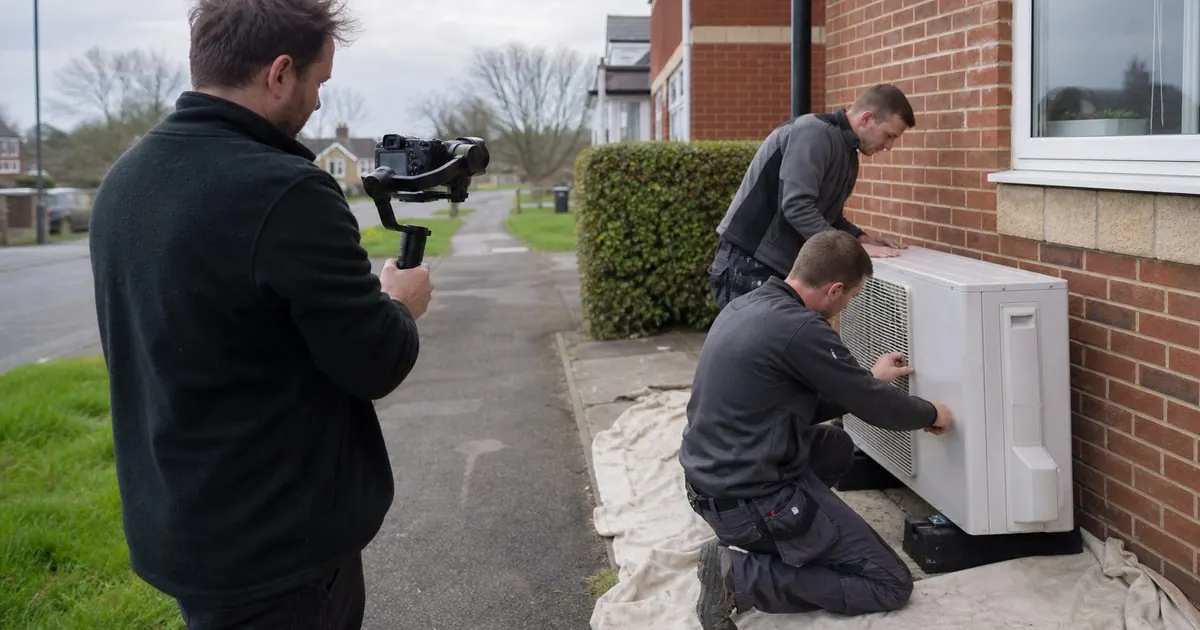
- The crew follows the job, not the other way round. The installers work at their normal pace. The videographer moves around them.
- Talk to the lead installer at the start. Agree the key moments (unit going in, panels being lifted, commissioning) so the camera is in place when they happen.
- Interviews at natural breaks. Grab two minutes with the installer at lunch or between stages, not in the middle of a tricky connection.
- Stay out of the danger zone. No filming from places the crew should not be. Roof shots from a safe position, scaffold, a pole camera or a drone with the right permissions.
- Respect the customer's home. Shoes off or covers on inside, keep it brief, and keep their personal things out of shot.
- Film more b-roll than you think you need. Close-ups of hands at work, tools, the product, the finished detail. These shots make every edit possible.
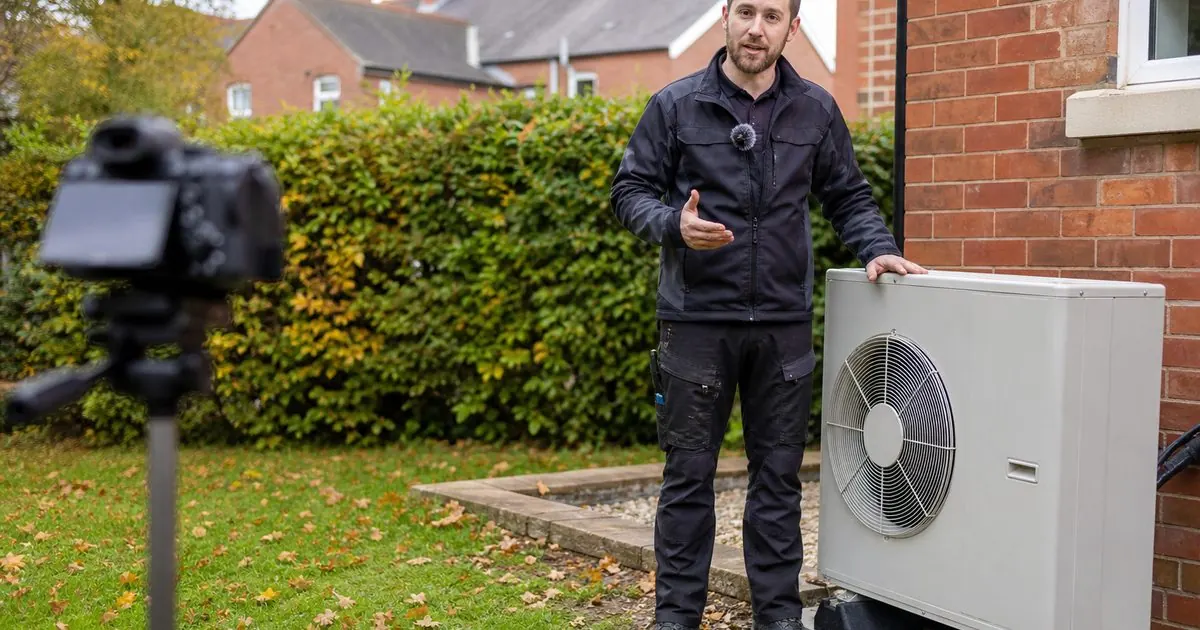
- Capture sound properly. A clip-on microphone for anyone speaking, and a moment of quiet for each interview.
After the day: turning footage into months of content
One well-shot day can produce a long list of assets. A typical output plan:
- Several short video ads, each built around one idea: a customer's worry answered, the install-day process, the founder's promise. See video ads vs photo ads.
- A full customer testimonial for the website and YouTube. See testimonial videos that sell.
- Product explainers and an install-day walkthrough to send with quotes. See video with every quote.
- Founder and team intro clips. See meet-the-team videos.
- Social posts and reels: short clips of the work, before-and-afters, team moments.
- Stills pulled from the footage for the website, Google Business Profile and proposals.
- Answers to common questions for YouTube and your website. See YouTube for installers.
Release them over the following weeks and months rather than all at once, and rotate ad creative as performance fades.
How often to do it
For most installers, once a quarter works well. It keeps the ads fresh and catches the seasons: heat pumps working in winter, solar panels in full sun, gardens and driveways looking their best in late spring.
How we run it
This is exactly how we work with clients. We come to you and film a full shoot day on site, once a quarter, built into the package. We plan the shot list with you, film the install, the customers and the team, and our editors turn it into ads, website videos and follow-up clips. Somebody in your business needs to be on camera, but it does not have to be the owner.
If you want to see what a content day would look like for your business, our videography service explains more. Book a video call and we will plan the first one with you.
Sources
- Civil Aviation Authority: Getting what you need to fly legally (drones)
- HSE: Working at height
- ASA: Testimonials and endorsements
Questions owners ask
How often should an installer do a content day?
Once a quarter suits most firms. It gives enough fresh footage for ads and social posts before the old material gets stale, and it catches seasonal moments, such as heat pumps in winter or solar panels in summer. Firms spending heavily on ads may need more frequent shoots to keep creative fresh.
Do we need to stop work while filming?
No. A well-planned content day films the job as it happens. The crew works around the installers, and the only time anyone stops is for short interviews, which are scheduled at natural breaks such as lunch or the end of a stage. Customer interviews happen at a time that suits them.