Every heat pump installer says their customers save money. Homeowners know that, which is why they do not believe it. What they do believe is a real person, in a house like theirs, holding their own bill and saying what happened over winter.
This article covers how to get that proof: who to film, when, what numbers to collect, how to keep it honest, and where to use it. For the general method of filming testimonials, see our video testimonials guide. This one is specific to heat pumps, where the thing being proved is not workmanship but running costs.
Why "a year after" beats "on the day"
Most testimonial videos are filmed at handover. The unit is shiny, the customer is relieved the install is over, and nobody has seen a bill yet. For a heat pump, that is the weakest moment to film.
The government's 2026 evaluation of the Boiler Upgrade Scheme (BUS) shows why:
- 80% of owners were very or fairly satisfied shortly after installation.
- 91% were very or fairly satisfied 9 to 21 months later.
- Only 26% felt completely confident programming their system to minimise running costs, and people with a weaker handover took longer to adapt.
In other words, customers like their heat pump more once they have lived with it, and the first months are when they are still learning. Film after the first winter and you capture the confident version of the story, with real numbers.
Why peer proof works for heat pumps
The government's Heat Pump Ready programme found that peer learning and trusted messengers increased confidence and conversion. One project built a library of over 60 case studies from early adopters, each with property details, system specification, installation cost and measured energy performance, filterable by home type. Another used a local "heat pump champion" with a system in their own home, plus open house events.
The lesson for an installer: buyers want to see someone like them. A 1930s semi on gas wants to hear from a 1930s semi on gas. A rural bungalow on oil wants a rural bungalow on oil.
Who to film
Build a small library that covers your typical customers, not just your happiest ones:
- one or two homes replacing oil or LPG (usually the strongest bills story)
- one replacing mains gas (the hardest comparison, so the most credible)
- one older or harder-to-heat property
- one family with children (hot water demand matters to them)
- one retired couple at home all day
Five to eight good stories is enough to run ads for a year.
What numbers to collect
Before filming, sit down with the customer and gather the facts. Write them down and keep the evidence:
| Data | Where it comes from |
|---|---|
| Property type, age, bedrooms | Your survey |
| What the heat pump replaced | Your survey |
| Annual heating cost before | Old bills, oil or LPG receipts |
| Electricity used by the heat pump | The heat pump app, monitoring or smart meter |
| Tariff now, and whether they switched | Their energy account |
| Grant received and net price paid | Your quote and invoice |
| Comfort on the coldest days | Ask them |
The BUS evaluation found 46% of owners had switched tariff since installing, and time-of-use or heat pump tariffs were linked to a greater chance of lower bills. So always ask about the tariff and say it on camera. It explains the result and gives viewers something they can act on.
Keep it honest
The same evaluation found 42% of owners said their total bills went down, rising to 52% for those replacing a gas boiler. Good, but not everyone. If your videos suggest everybody saves a fortune, you are back to the claims buyers already ignore.
A few rules:
- Use the customer's real numbers and keep the paperwork on file.
- Say what made the difference (replacing oil, the tariff, solar panels if they have them).
- Do not edit a lukewarm answer into a glowing one.
- Put the context on screen: "Replaced oil boiler, 3-bed detached, on a heat pump tariff."
Honest, specific stories with a little nuance get more trust than perfect ones.
The shoot list
A heat pump running-cost video needs only a few shots:
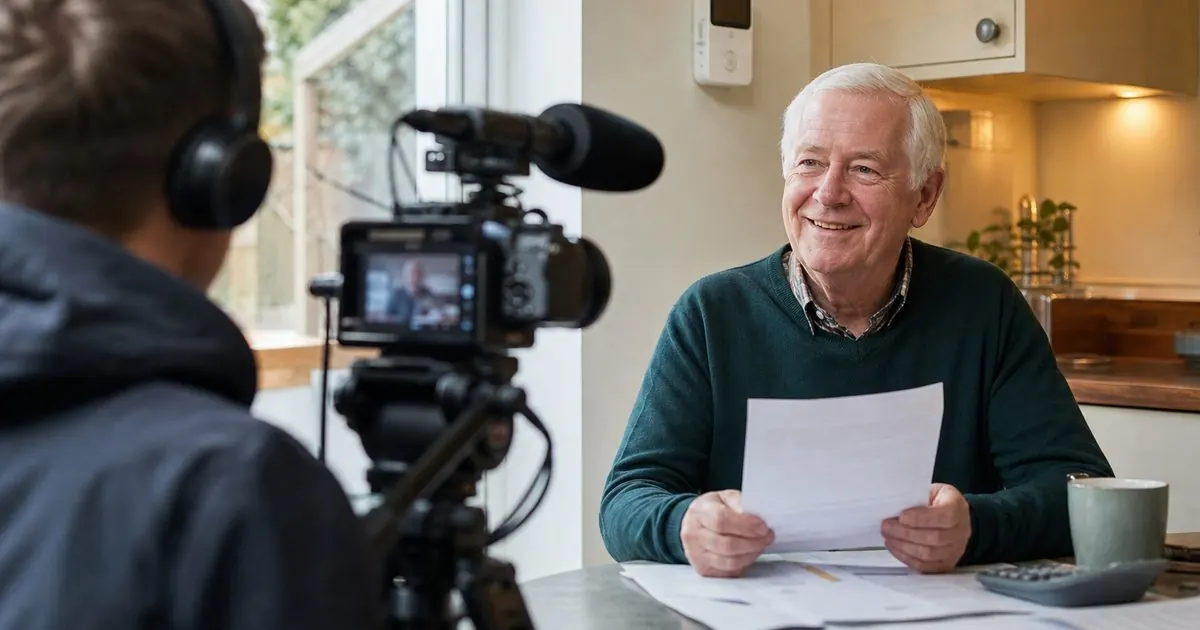
- The customer on the sofa or at the kitchen table, talking: what they had before, why they switched, what winter was like.
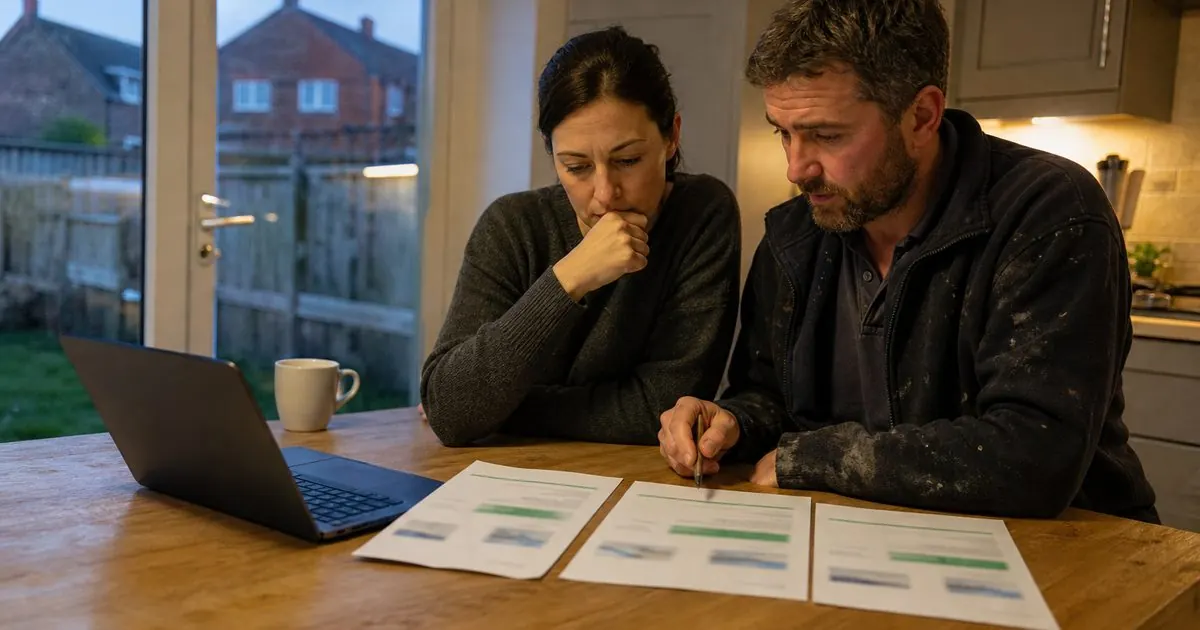
- Close-up of the bill or app, with the number they are talking about.
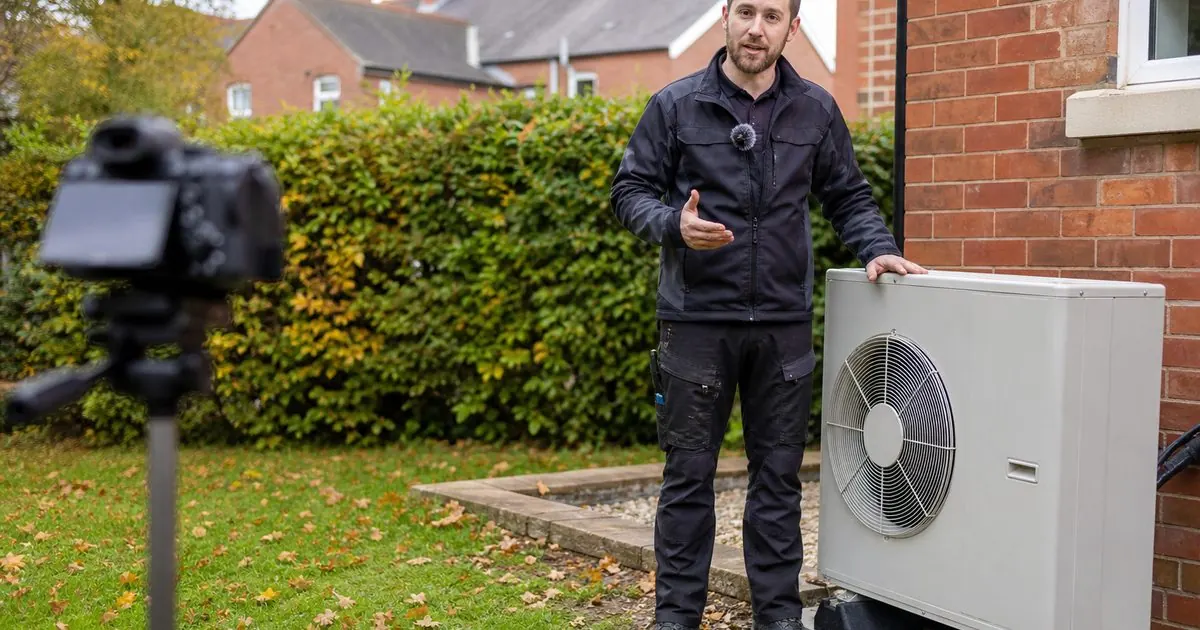
- The outdoor unit running, with sound, so viewers hear how quiet or loud it is.
- The controls, with the customer showing how they use them.
- A walk through a warm room on a cold day.
Questions that get good answers: "What were you worried about before?", "What was the coldest day like?", "What would you tell a neighbour thinking about it?"
Where to use the videos
- Ads: cut 15 to 30 second versions, each led by one customer's situation. "We had oil. Here's what last winter cost us."
- Landing page: one video per house type, so visitors find the home most like theirs.
- Before the survey: send the most relevant one by WhatsApp. It answers the running cost question before it is asked. See running costs and noise.
- After the quote: if the customer goes quiet, a video from a similar house is a far better follow-up than "just checking in".
What it looks like in practice
When we work with an installer, we come to you and film. A full shoot day on site once a quarter is built into the package, so your library grows with the seasons. Night & Day Renewable Energy, an air source heat pump installer, grew turnover from £200k to £650k+ in twelve months after moving from bought leads to their own campaign. Brad's verdict: "Right from the off we were getting more leads than we could manage."
If you have heat pump customers coming up to their first anniversary, that is your next shoot. Book a video call with Tom and we will show you how we would plan it through our videography and turn it into heat pump ads.
Sources
- Evaluation of the Boiler Upgrade Scheme: 2026 Final Report (DESNZ)
- Improving the customer journey for heat pump adoption: lessons from Heat Pump Ready (DESNZ)
- Boiler Upgrade Scheme (GOV.UK)
Questions owners ask
When is the best time to film a heat pump customer?
After their first full winter. Government research on the Boiler Upgrade Scheme found satisfaction rose from 80% shortly after installation to 91% after 9 to 21 months. By then customers have real bills, have learned how to run the system and can answer the question every buyer asks: what was it like when it was cold?
What if a customer's bills went up?
Do not film it as a success story, and do not hide it. Find out why: tariff, settings, or a design issue. Fixing it is good service, and a customer who says 'it was high at first, the installer came back and sorted the settings' can be strong, honest proof.