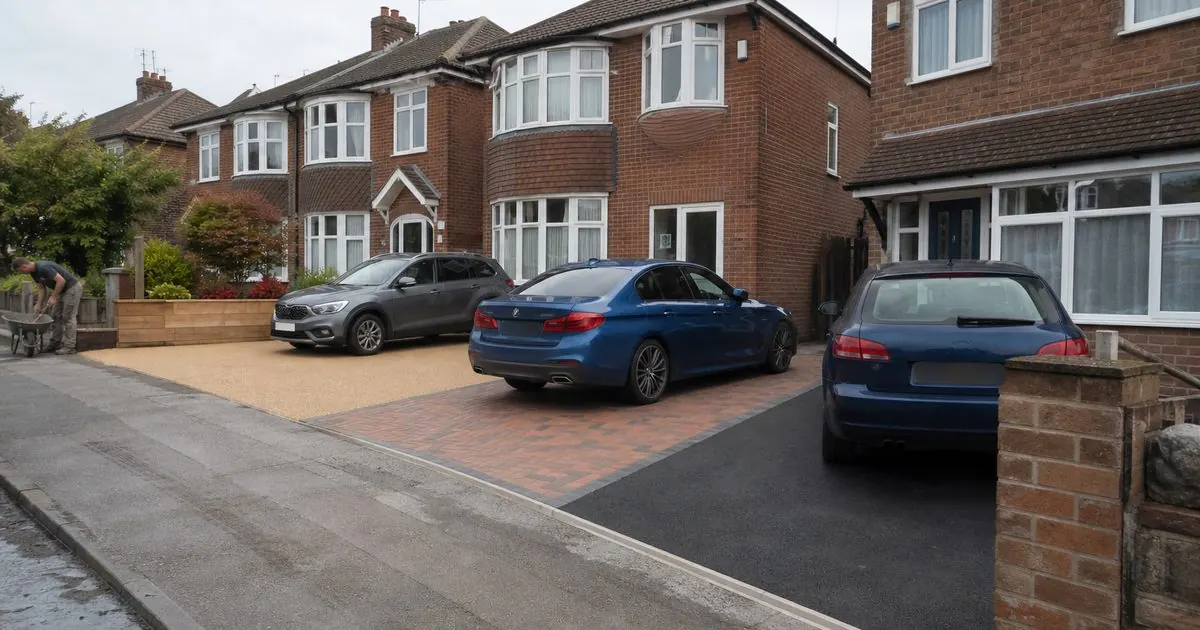
"Resin or block paving?" is one of the first things a homeowner types when they start thinking about a new drive. The results are almost always national: big manufacturers, price comparison sites, home magazines. Useful, but none of them can say what a drive costs in your area, which material suits the houses on their estate, or who can actually lay it.
A local buyer guide fills that gap. Written well, it ranks for the comparison searches, gets quoted by AI assistants, and turns readers into survey requests at the moment they are deciding what to buy.
Why a comparison guide works for driveways
Driveway buyers usually start with the material, not the company. They have seen a neighbour's resin drive or a friend's block paving and want to know the pros and cons. If your guide helps them decide, two things happen:
- They arrive at your quote form already knowing what they want, which makes the survey shorter and the quote more accurate.
- They trust you as the expert, so you are not just one of three prices.
What the guide should cover
Do not copy a national guide. Write from your own jobs, in your own words, for your local housing. Cover these for each material: resin bound, block paving, tarmac (asphalt), and gravel if you lay it.
| What buyers compare | What to explain |
|---|---|
| Look and choice | Colours, patterns, borders, how it suits the house style |
| Drainage and planning | Whether it is permeable as laid, and what that means for planning |
| Durability | How it handles heavy cars, turning wheels, frost and tree roots |
| Maintenance | Weeds, moss, sealing, cleaning, oil stains |
| Repairs | How easy it is to lift and relay a section, or patch |
| Install time | How long the drive is out of use |
| Cost | Ranges for typical drive sizes, from your own jobs |
Keep it honest. If tarmac is the better choice for a long, steep rural drive, say so. Buyers can tell when a guide is pushing whatever has the highest margin.
The planning section most guides get wrong
Many buyers have no idea that the material choice can affect planning, and many guides skip it. This is where you can add real value and stand out.
As of November 2026, the Planning Portal says that for a house in England:
- A new or replacement front driveway of any size does not need planning permission if it uses a permeable surface, such as gravel, permeable block paving or porous asphalt.
- It also does not need permission if rainwater is directed to a lawn or border to drain naturally.
- A traditional, impermeable driveway covering more than 5 square metres that does not drain to a permeable area does need planning permission.
- Flats and maisonettes, and areas with an Article 4 direction or a planning condition removing these rights, may be treated differently.
GOV.UK guidance confirms these rules have applied since 1 October 2008.
What this means in your guide:
- Resin: resin bound laid on a permeable base can be permeable. Resin bonded, where stones are scattered on resin over a solid base, generally is not. Explain the difference, because buyers often confuse them.
- Block paving: standard blocks on a sealed base are not permeable. Permeable block paving is designed to let water through the joints into the sub-base.
- Tarmac: standard tarmac is impermeable. Porous asphalt is available.
- Any material can be made compliant by directing water to a soakaway, a border or a rain garden.
Also mention the dropped kerb. The Planning Portal says a dropped kerb is needed to drive across the pavement onto a property, and the homeowner must apply to the council. If your guide covers it, readers who are converting a front garden to parking will find you.
Prices: use your own numbers
Cost is the first thing most buyers look for. Do not lift national averages. Pull your last 20 or 30 jobs and work out typical ranges for a single drive, a double drive and a large drive in each material, with what was included (excavation, sub-base, edging, drainage, spoil removal).
Then explain what pushes the price up: removing an old concrete slab, poor ground, steps or slopes, drainage work, a new kerb, decorative borders. A range with honest reasons reads as trustworthy. A single "from" price reads as bait.
Make the guide a lead tool
A guide that ends with "call us" leaves most readers on the page. Give them a next step that matches where they are:
- "Not sure which material suits your drive? Send us a photo." Low effort, high intent.
- A short quote request with the questions that matter: rough size, current surface, preferred material (or "not sure"), any slope, dropped kerb needed, postcode, timescale.
- A downloadable version of the comparison table for people who are not ready yet, in return for an email address, followed by a few useful messages and an invitation to a survey.
The second option is where a well-built landing page that qualifies earns its place: by the time you call, you know the size, material and timing.
Make it findable
To rank and to be quoted by AI assistants:
- Answer the question at the top: "For most front drives in [area], block paving and resin bound both work well. Here is how they compare."
- Use the table. Structured comparisons are easy for search engines and AI tools to pick up.
- Link to official sources for the planning rules.
- Show local proof: photos of real drives you have laid, with the town named.
- Date it and update the prices each year.
Our SEO and GEO service builds guides like this for driveway firms, alongside the pages that win the map pack for "driveways near me". The wider question of whether to show prices on your website is covered separately.
If you run a driveway business and want a buyer guide that books surveys, book a free video call with Tom. We will check whether your area is open.
Sources
- Planning Portal: paving your front garden, planning permission
- GOV.UK: Permeable surfacing of front gardens guidance
- GOV.UK: Apply for a dropped kerb
Questions owners ask
Does a resin driveway need planning permission?
It depends on how it is built. As of November 2026, Planning Portal guidance says a front driveway does not need permission if the surface is permeable or water drains to a lawn or border. Resin bound laid on a permeable base can meet that. An impermeable surface over 5 square metres with no drainage to a permeable area needs permission.
Should a driveway buyer guide include prices?
Yes, as ranges from your own recent jobs, with what is included. Buyers comparing materials want to know the cost difference above all. A range per typical driveway size, with a note on what pushes the price up, is more useful and more believable than a national average per square metre.