Homeowners want a price before they let anyone into the house. Independent installers worry that a price on a website gives the game away, attracts tyre-kickers, or commits them to a number before they have seen the job. Both sides have a point. A good online boiler quote tool settles the argument by doing one thing well: it prices the standard jobs instantly and routes everything else to a human.
We have built instant online quote tools for boiler installers, and this is what we have learned about making them work.
What a quote tool is (and is not)
A quote tool is a short, step-by-step form on your website. The homeowner answers questions about their current boiler and home, uploads a few photos, and sees a price or price range. They then book a survey or a video call to confirm it.
It is not a replacement for the survey. It is a replacement for the first phone call, the "how much roughly?" conversation and the wasted visit to someone who was never going to pay your price.
The questions that matter
Keep it to the questions that change the price or the job. Every extra question loses people.
- Postcode. Filter out anyone outside your area first. Many installers set a drive-time limit, for example 30 minutes from base, and show a polite message to everyone else.
- Fuel. Mains gas, LPG or oil. If you only fit gas, say so at this step.
- Current boiler type. Combi, system, regular (heat-only) or back boiler. Show a picture of each, because most homeowners do not know the names.
- What they want. Like-for-like, or a change such as a regular system to a combi.
- Location. Is the new boiler going in the same place? Moves add cost.
- Flue. Does it go out through a wall or up through the roof?
- Hot water demand. Number of bathrooms and showers, which drives boiler size.
- Radiators. Roughly how many, which matters for output and cleaning.
- Who owns the home. Owner-occupier, landlord or tenant. Tenants should be pointed to their landlord.
- Urgency. No heat now, within a few weeks, or planning ahead.
Then ask for photos (see the FAQ above), then contact details, then show the price.
Should contact details come before or after the price?
There is no single right answer, but here is the trade-off.
| Ask for details before showing the price | Show the price, then ask to book |
|---|---|
| You capture every lead, even if they leave | Fewer leads, but each one has seen your price |
| Some people drop out at the form | Less friction, more trust |
| You must follow up fast, or it feels like bait | Good if your prices are competitive |
Our default is to ask for a name, mobile and email just before the result, with a line saying "Your price appears on the next screen". It is honest, and it means you can follow up with anyone who did not book.
How to price it
Start from your three or four most common installs and build from there.
- Base prices by boiler tier. A good, better and best option, each with a named range of boilers and a guarantee length. Three options let the homeowner choose up, not just say no.
- Add-ons with fixed prices. System conversion, boiler move, flue extension or vertical flue, system cleanse, magnetic filter, smart controls, condensate route changes, removing an old cylinder.
- What is always included. Removal of the old boiler, the commissioning paperwork and the Building Regulations notification. Planning Portal guidance says a Gas Safe registered installer can self-certify the work, and the homeowner should receive a commissioning record such as a Benchmark certificate. Say this on screen, because cheaper quotes often do not spell it out.
Show a firm price where the answers are standard, and a range with "confirmed at survey" where they are not. If the answers point to something truly unusual (back boiler removal, a flat with a shared flue, an LPG to gas conversion), skip the price and offer a callback instead.
Review the prices every quarter. Out-of-date prices are the fastest way to make the tool a liability.
What happens after they press submit
This is where most quote tools fail. The price appears, the homeowner says "that's interesting", and nobody contacts them.
The tool should hand straight into a process:
- Instant confirmation by WhatsApp or text, with the price, what is included and a link to book a survey slot.
- The enquiry lands in your CRM with the answers and photos attached, so the engineer can check the photos before calling.
- A call within minutes during working hours, or an AI assistant that answers questions and books the survey out of hours.
- A follow-up sequence for anyone who did not book: a short video from your engineer explaining the options, a reminder after two days, a check-in after a week. If they still go quiet, our quote follow-up plan covers what to send.
So, do they work?
They work when three things are true:
- Your prices are realistic for your area and kept up to date.
- The tool is quick: under three minutes on a phone.
- Someone, or something, follows up every quote fast.
They do not work as a widget bolted onto a home page that nobody visits. Send your Google Ads and Facebook traffic straight to the tool, not to your home page. Link to it from your Google Business Profile. Mention it in your van signage and your missed-call text ("Get a price in two minutes at...").
Track four numbers each month: tool starts, completed quotes, booked surveys and installs. If lots of people start but few finish, cut questions. If many finish but few book, look at your price or your follow-up speed.
Common mistakes
- Too many questions up front. Ask the postcode and boiler type first, and the rest once they are invested.
- No pictures in the questions. Homeowners guess wrong without them.
- One price only. Give three tiers.
- No photos. Without them, your survey turns into a second quote.
- No mobile testing. Most people will fill it in on a phone, standing next to the boiler.
For the wider question of whether any trade should show prices online, see our piece on showing prices on your website. For how this fits into the bigger fight against national online brands, read Competing with online boiler companies.
Where we fit
We design, build and run quote tools as part of a full system: the ads that send people to it, the landing page or funnel, the CRM it feeds and the follow-up after it. More on how we work with heating firms is on our boilers and heating page.
If you want to see what a quote tool would look like for your business, book a video call and we will walk you through it.
Sources
- Planning Portal: Building Regulations for boilers and heating
- Benchmark: commissioning checklist scheme
- Gas Safe Register
Questions owners ask
Will competitors copy my prices if I put a quote tool on my website?
They might look, but most will not change how they price because of it. The bigger risk is the homeowner who never contacts you because they could not get a price. Showing a range for standard jobs, with the final price confirmed at a short survey, protects you on unusual installs.
What photos should a boiler quote tool ask for?
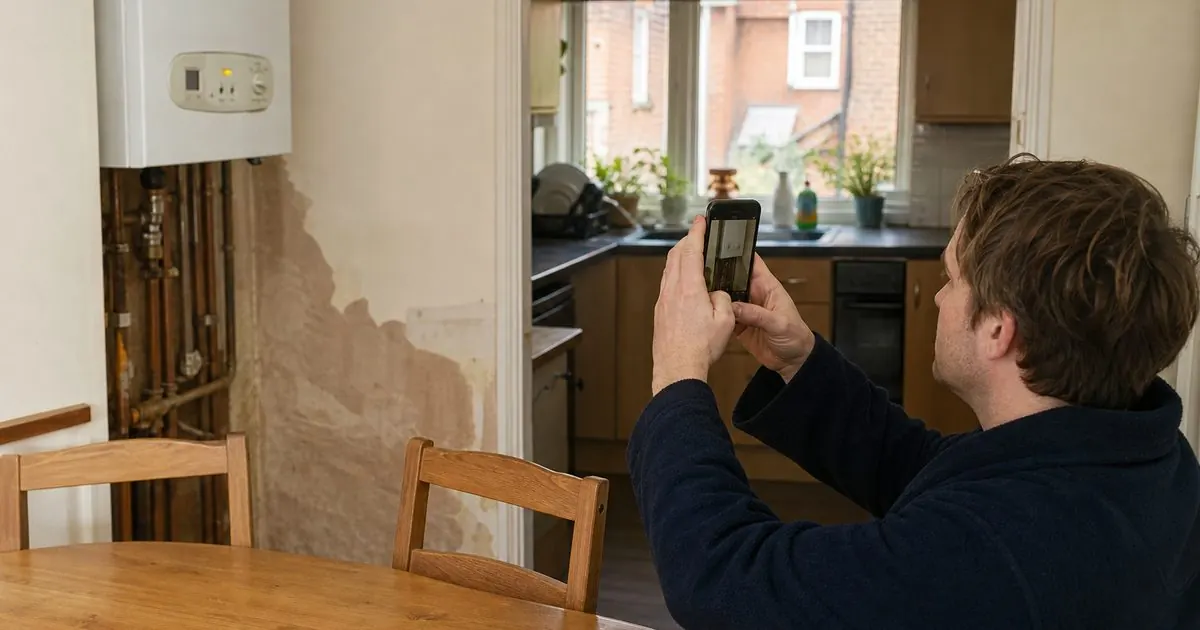
Ask for the existing boiler with its casing on, the flue where it leaves the house, the gas meter, and the pipework under the boiler. Those four photos let an engineer spot most of the things that change a price, such as a system conversion, a flue extension or an undersized gas supply.