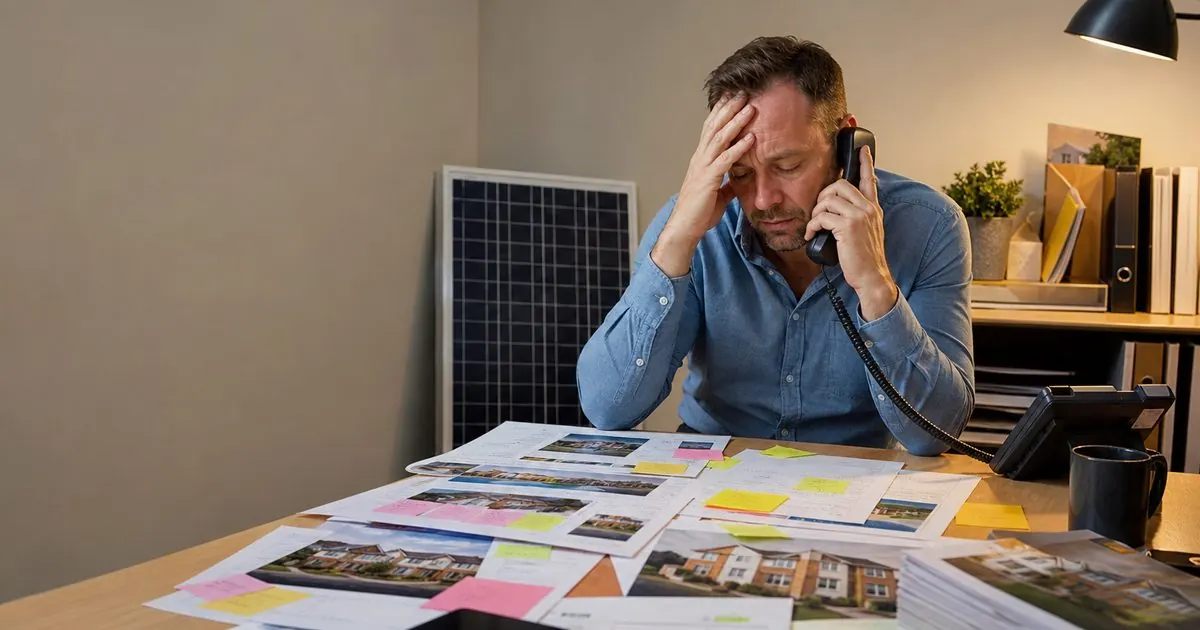
When sales slow down, the first instinct is to get more leads. Turn up the ads, buy another batch, try a new lead seller. Sometimes that is the right call. But in a lot of solar and heat pump businesses, the problem is not the number of leads coming in. It is what happens to them afterwards. Pour more leads into a leaky process and you mostly get a bigger bill and a more stressed team.
This post shows how to tell the difference, with a worked example comparing "double the leads" against "fix the process", the most common breaks we see and a checklist to run before you increase spend.
The worked example
Take an illustrative solar installer getting 200 leads a month. Here is what happens to them at each stage:
| Stage | Today | Double the leads | Fix the process |
|---|---|---|---|
| Leads a month | 200 | 400 | 200 |
| Contacted (reached and spoken to) | 60% | 45% | 85% |
| Of those, survey booked | 40% | 35% | 50% |
| Of those, survey sat | 75% | 75% | 85% |
| Of those, sold | 25% | 24% | 35% |
| Sales a month | 9 | 11 | 25 |
These numbers are illustrative, but the pattern is common:
- Doubling the leads roughly doubles the ad bill and adds about two sales. The team cannot call 400 people properly, so contact rates fall, the rushed calls book fewer surveys, and the rushed, overloaded follow-up drags down the close rate too.
- Fixing the process, with no extra leads, nearly triples sales. Faster contact, better qualifying, reminders before the survey, a structured visit and proper follow-up each add a little, and those gains multiply.
That multiplication is the key. A sales process is a chain of percentages. Improving each one modestly has a bigger effect than doubling the number at the top.
Signs your sales process is the problem
If several of these sound familiar, more leads will not help much yet:
- Leads wait more than an hour for a first call, especially evenings and weekends.
- Nobody can tell you how many leads were never reached.
- Surveyors regularly turn up at homes that could never go ahead.
- Surveys get booked but a lot do not happen.
- Quotes take more than a few days to go out.
- Quotes are sent and then followed up once, if at all.
- Each salesperson sells their own way, and results swing wildly between them.
- You know your cost per lead but not your cost per sale.
The five breaks we see most
1. Slow or missing first contact
The longer a lead waits, the harder they are to reach. Solar enquiries often come in at night or at the weekend, which is exactly when nobody is answering. We go deeper on this in the 5-minute rule.
2. No qualifying before the survey
If anyone who fills in a form gets a surveyor, your best people spend their week at rented flats and north-facing roofs. A few questions up front fix most of it. See the hidden cost of an unqualified survey for what that waste costs.
3. A survey with no structure
The survey is often the only face-to-face moment in the sale. If every visit is different, with no clear agenda for understanding the customer's bills, goals and worries, results depend on whether the surveyor is having a good day. The structure of a repeatable sales process is covered in the sales process that helps solar and heat pump salespeople succeed.
4. Quotes sent and left
A quote is the start of the decision, not the end. Buyers compare, discuss with a partner and stall on questions they did not ask on the day. Without a follow-up plan, most quiet quotes stay quiet. Our follow-up plan for ghosted quotes sets out the steps.
5. No numbers
Without stage-by-stage numbers, every slow month looks like a lead problem, because leads are the only number you can see. That is how businesses end up spending more on ads every year while the real leak stays put.
Fix the process first, then scale
You do not need to fix everything before spending more. You need to fix the biggest leak, then add leads into a process that can use them. A sensible order:
- Measure each stage for the last 60 to 90 days: leads, contacted, booked, sat, sold. Split by lead source.
- Fix first contact. Reply within minutes, day and night. Automation or an AI assistant can handle this while you are on a roof.
- Qualify before you book. Home ownership, roof or property type, bills, timing, decision-makers.
- Confirm and remind so booked surveys actually happen.
- Standardise the visit and the quote. Same agenda, same quote layout, quote out within 48 hours.
- Follow up every quote on a set schedule until you get a yes or a clear no.
- Then increase leads, watching that the stage percentages hold.
When sales capacity itself is the gap
Sometimes the process is sound but there are not enough good people to run it. The owner is selling in the evenings, or one rep is carrying everything. That is when it makes sense to bring in help with closing. Our sales closing service installs and manages closers who sell the booked appointments for you. We took Eco2u from zero to a £250,000 a month business that way.
The process still matters with closers. Eco Green Energy Group close 5 in 10 booked appointments, and that sort of rate comes from leads that are well qualified and properly prepared before anyone sits down with them, not from closing skill alone.
Make the leaks visible
The reason most installers reach for more leads is that they cannot see where the current ones go. A dashboard that shows every stage, by source and by rep, changes the conversation. If 30% of leads are never reached, that is a phone problem. If surveys are sat but not sold, it is a sales or quote problem. Our Installer Flow reporting pulls these numbers from the CRM so you can see them every week without building a spreadsheet.
Carl Hughes at ECH Group described what that kind of system can do over time: "Have grown my business by over 30% whilst cutting sales costs by 37% at the same time."
Before you increase spend: a checklist
Answer yes or no for the last 90 days:
- We know what share of leads were contacted, and it is high.
- Most leads get a first reply within minutes, including evenings and weekends.
- We ask qualifying questions before booking a survey.
- Most booked surveys actually happen.
- Every quote goes out within 48 hours.
- Every quote is followed up on a set schedule.
- We know our close rate on sat surveys, by rep.
- We know our cost per sale, by lead source.
Mostly yes: you are ready for more leads. Mostly no: fix those first, and your existing spend will produce more jobs.
Want to find your leak?
Book a free video call with Tom. Bring your last three months of leads, surveys and sales, and we will help you see which stage is costing you the most and whether more leads or a better process is the right next step for your solar and battery business.
Questions owners ask
How do I know if my problem is leads or my sales process?
Look at what happens to the leads you already have. If most are contacted quickly, a good share book surveys and those surveys sell at a healthy rate, you probably need more leads. If leads wait hours for a call, surveys are often wasted or quotes go out late and are never chased, more leads will mostly be wasted too.
What close rate should a solar installer aim for?
It depends on how you count and how well leads are qualified. Measured on surveys that actually took place, a well-run process with qualified leads can do far better than many installers expect. Eco Green Energy Group, who install solar, batteries and heat pumps, close 5 in 10 booked appointments. Track your own number first, then improve it.