When a solar or heat pump rep struggles, owners usually blame the rep. Sometimes that is fair. More often the rep has been handed a phone, a price list and a postcode, and told to "go and sell". Good salespeople succeed faster inside a good process, and average ones become reliable. Without one, even strong reps drift.
This post sets out a practical sales process for residential solar, battery and heat pump installers: the stages, what has to be true before a lead moves on, how to run the visit, and how to review it each week. It is about building the system. If your question is how many people you need, see when to hire your first salesperson.
What a sales process actually is
A sales process is not a script. It is an agreed answer to four questions for every lead:
- What stage is this lead at?
- Who owns it right now?
- What is the next action, and when?
- What must be true before it moves to the next stage?
If any rep, or you, can look at a lead and answer those four questions in ten seconds, you have a process. If the answer is "ask Dave, it's in his phone", you don't.
The stages, with exit rules
Here is a pipeline that works for most residential solar and heat pump firms. Rename the stages to suit you, but keep the exit rules. They are what stop leads sitting in the wrong column for weeks.
| Stage | Owner | Must be true to move on | Time limit |
|---|---|---|---|
| New enquiry | Setter or AI assistant | First contact attempted | Minutes, not hours |
| Contacted | Setter | Spoken to or messaged back | 48 hours of attempts |
| Qualified | Setter | Owner-occupier, suitable property, a way to pay, a reason to act | Same call |
| Appointment booked | Setter | Date set, all decision makers attending, confirmation sent | Within 7 days ideally |
| Appointment sat | Rep | Full visit done, needs and budget understood | On the day |
| Quote sent | Rep | Written quote plus a short explainer, sent | Within 24 to 48 hours |
| Decision pending | Rep | Follow-up dates set, objections logged | Up to 30 days |
| Sold | Rep then office | Signed, deposit or finance approved | Hand to install team |
| Lost | Rep | Reason recorded from a fixed list | Kept for reactivation |
Two rules make this work. First, every lead must have a next action with a date. Second, a lead can only be marked lost with a reason picked from a short list (price, timing, chose competitor, not suitable, no contact). Those reasons become your most useful data in six months.
Before the visit: set the rep up to win
Most visits are won or lost before the rep rings the doorbell.
- Confirm all decision makers will be there. In homes with two owners, a visit with one of them often ends with "I need to talk to my partner". Ask the question when booking and again in the confirmation message.
- Send a short pre-visit message. Who is coming, a photo of them, what to have ready (a recent electricity bill for solar; boiler age and fuel type for heat pumps), and how long the visit takes.
- Do the homework. Satellite view of the roof, EPC if there is one, notes from the qualifying call. The rep should walk in knowing the house.
- Remind the day before and the morning of. Simple automated reminders cut no-shows. Our post on appointment no-shows covers this in depth.
The visit: a structure, not a script
Agree an order for the visit and let reps use their own words within it.
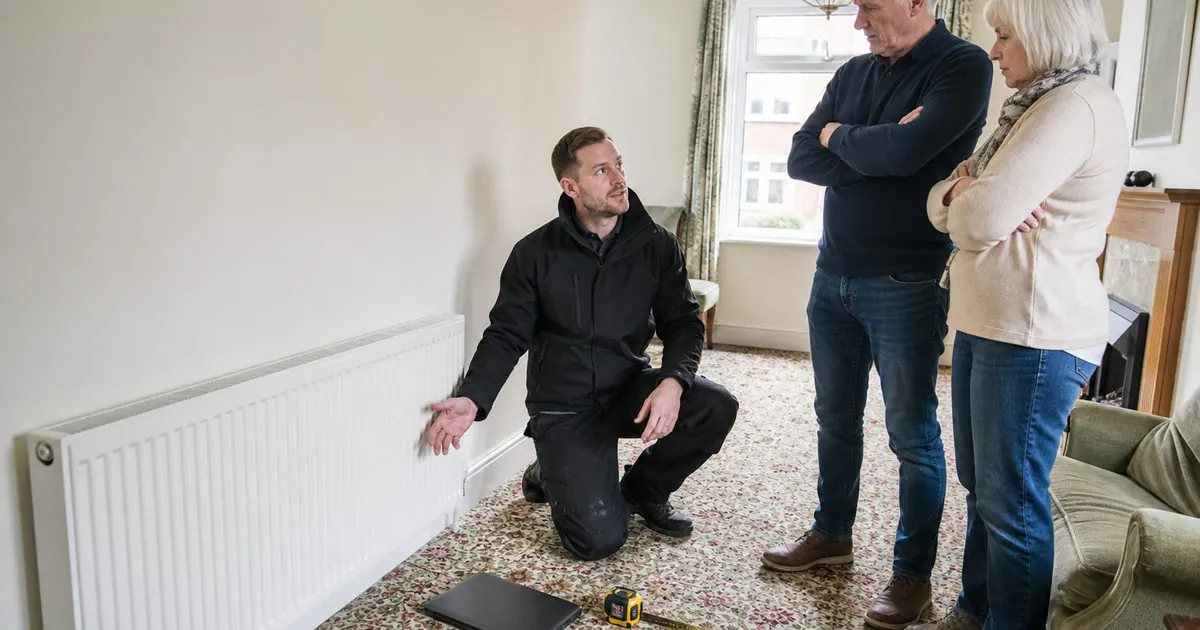
- Open and agree the agenda. "I'll have a look round, ask a few questions, then show you what we'd suggest and the price. If it makes sense, great. If not, no problem." This lowers the pressure and sets up a decision at the end.
- Discovery. Why now? What are the bills? Is anyone at home in the day? Electric car now or soon? For heat pumps: what is the current system, what fails, how warm do they like the house? Write the answers down.
- Survey. Roof, meter, consumer unit, loft, cylinder space, outdoor unit position. Explain what you are checking as you go. It builds trust.
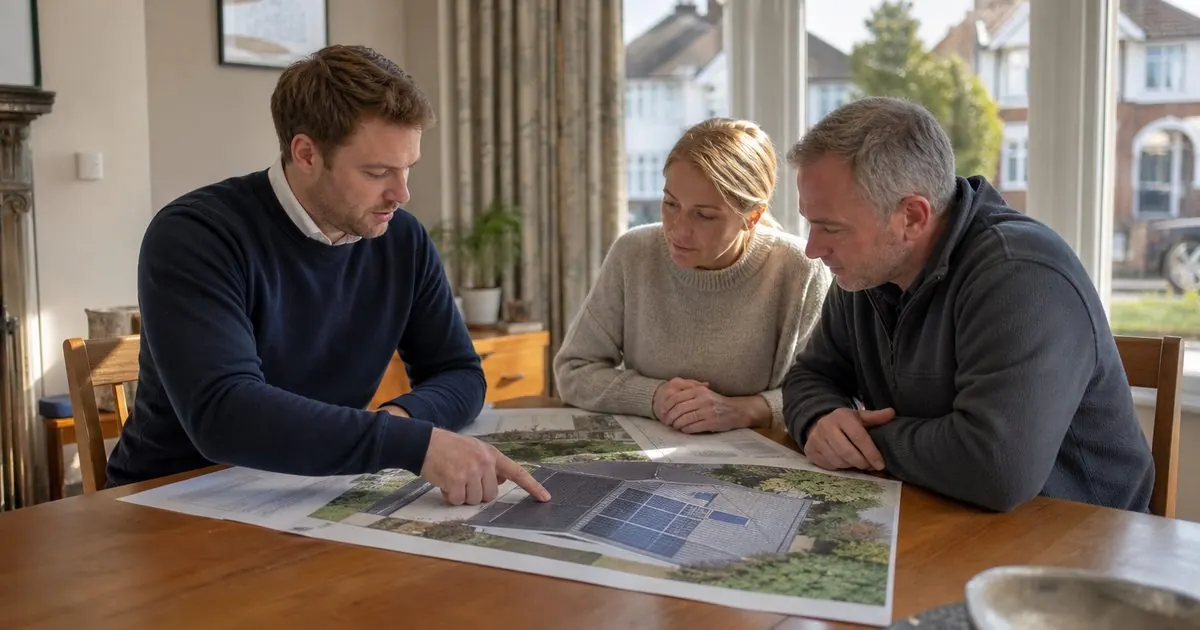
- Recommend. Link the system back to what they told you in discovery. "You said you are out all day and want to cut the evening bill, so the battery size matters more than squeezing on extra panels."
- Price and payment routes. Show the price clearly with the ways to pay: cash, finance, and any scheme they may qualify for.
- Ask for a decision. Not pressure. A clear question: "Does this look right for you? Shall we get you booked in?"
- Agree the next step either way. If they are not ready, book the follow-up call before leaving.
Eco Green Energy Group close 5 in 10 booked appointments. Numbers like that don't come from charm alone. They come from leads that arrive qualified, a visit that follows the same structure every time, and follow-up that doesn't rely on memory.
After the visit: follow-up that doesn't depend on memory
Most solar and heat pump sales don't close on the night. A written follow-up plan is the part of the process that most firms skip.
- Same day: the quote, plus a short video of the rep walking through it. See video with every quote.
- Day 2: a call to check it arrived and answer questions.
- Day 5 to 7: a useful message, for example a short customer story from a similar house.
- Day 10 to 14: a direct call asking where they are with it.
- Then: a slower sequence over the following weeks, until they buy or say no.
Automate the reminders and messages in the CRM, but keep the calls human. Our quote follow-up plan has the full sequence and wording ideas.
Handover to install
A sale isn't finished until it is fitted. Agree what the rep must hand over: the signed contract, photos, survey notes, finance status, any promises made ("they want the inverter in the garage"). A rep who promises things the install team never hears about creates cancellations and bad reviews. Make the handover a checklist in the CRM, and don't pay commission until the job is installed.
Run the process every week
A process that nobody reviews decays within a month. Hold a 30 minute weekly sales meeting with the same agenda:
- Numbers for each rep: appointments sat, quotes sent, sales, close rate from sat appointments, average job value.
- Leads with no next action, or overdue actions.
- Lost reasons this week. Is one reason growing?
- One recording or role-play to coach a single step of the visit.
Our post on setter and sales team reporting has the detailed numbers for each role.
Put it in a CRM, not a spreadsheet
Everything above relies on stages, owners, dates and automatic reminders. That is what a CRM is for. Our own CRM, Installer Flow, routes leads by postcode into the right rep's diary, sends the reminders, and shows the pipeline and each rep's numbers on a dashboard. Whatever you use, make sure the process lives in the system, not in people's heads.
If you would rather not run the sales side yourself, our sales closing service puts closers on your booked appointments using the same structure.
Want help building yours?
Book a free video call with Tom. We will look at how leads move through your business today, show you where they stall, and talk through what a process built for your solar and battery team would look like.
Questions owners ask
How many stages should a solar sales pipeline have?
Usually seven to nine. Enough that every lead has an obvious next step, few enough that reps keep it up to date. A typical set is new enquiry, contacted, qualified, appointment booked, appointment sat, quote sent, decision pending, sold and lost. Each stage needs a clear rule for what must be true before a lead moves on.
Should solar reps follow a script?
They should follow a structure, not read a script word for word. Agree the order of the visit, the questions that must be asked and the way the quote is presented, then let each rep use their own words. A shared structure makes coaching possible, because you can see which step is going wrong.