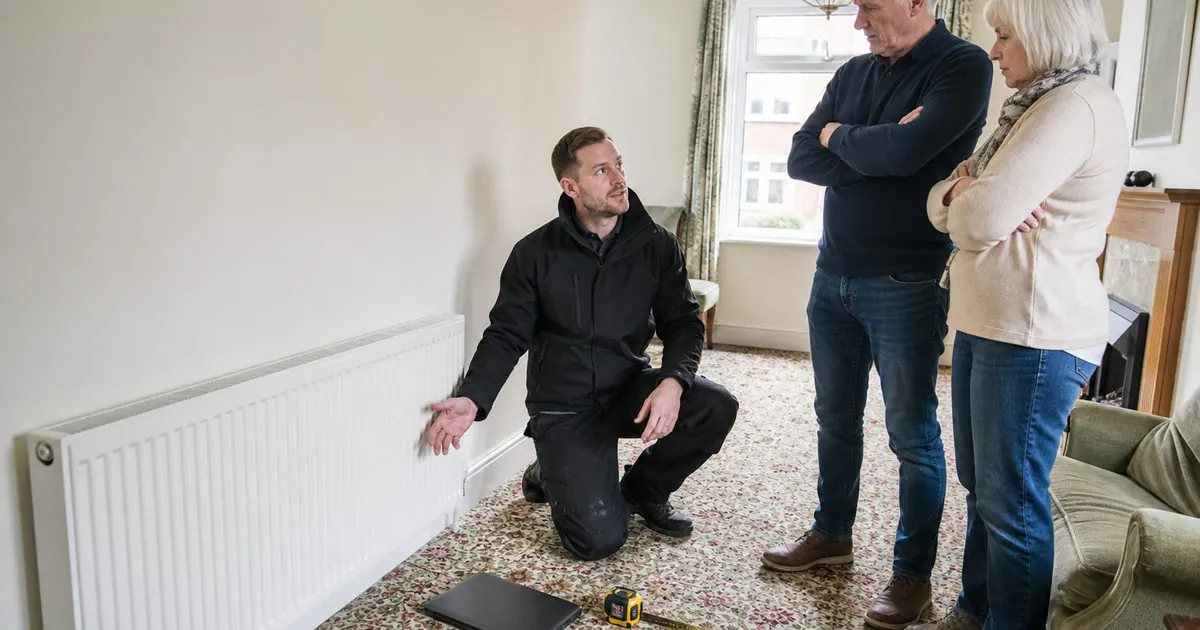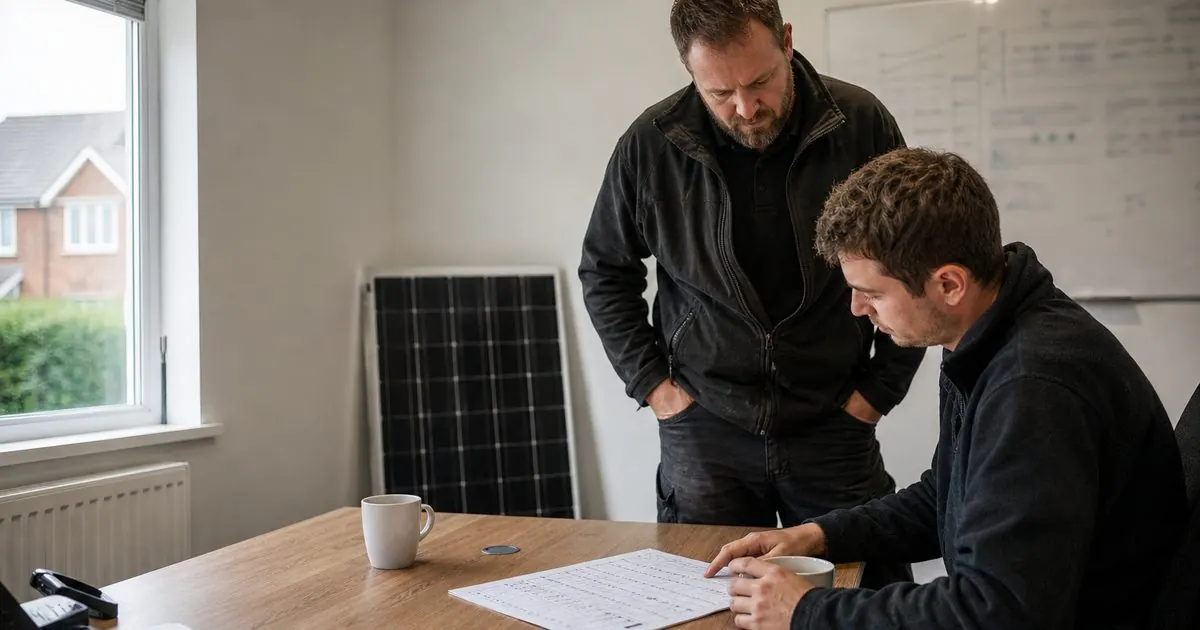
Most installers think about reviews as a task at the end of the job: send the link, hope they click. But the review is written long before that. It is written by everything the customer experienced from the first reply to the first winter. The request just collects it.
That matters for sales because solar and heat pump buyers read reviews more carefully than almost any other home improvement buyer. They are spending thousands on something they cannot try first, and many are more worried about choosing the wrong installer than the wrong panels. This post covers which moments in the customer experience shape what gets written, how those reviews then sell the next job, and what to measure.
How to ask for reviews, when to send the link and the rules you must stay inside are covered in how to get more Google reviews as an installer. This post is about what goes into them.
What buyers are really looking for in reviews
A homeowner scrolling your reviews is not counting stars. They are looking for answers to their own worries:
- Did they turn up when they said?
- Was the advice honest, or did they upsell?
- Was the house left tidy?
- Does it actually work? Are the bills lower? Is the house warm?
- What happened when something went wrong?
A page of "Great job, highly recommend" answers none of those. A review that says "Dan told us a battery would not pay back for our usage and quoted panels only. Install took two days, everything cleaned up, and our first summer bill was a fraction of last year's" answers four of them.
So the goal is not just more reviews. It is reviews full of specifics, and those only come from experiences worth describing.
The eight moments that decide what gets written
Walk through your customer journey and look at each moment through the customer's eyes:
| Moment | What usually goes wrong | What a good one looks like |
|---|---|---|
| First reply | Callback two days later | A reply within minutes, from a named person |
| Survey | Late, rushed, pushy | On time, explains as they go, no pressure |
| Quote | Arrives a week later, full of jargon | Within 48 hours, with a short video walking through it |
| Waiting for install | Silence for weeks | Regular updates and a firm date |
| Install day | Strangers, mess, no explanation | Named installer, tidy site, a clear plan for the day |
| Handover | "Here's the app, cheers" | Walk-through of the system, controls and what to expect |
| First bill or first cold snap | Nobody checks in | A call or message asking how it is going |
| Something goes wrong | Hard to reach, defensive | Quick answer, fixed, owned |
Every row on the left produces a forgettable or bad review. Every row on the right gives the customer something to write about.
The last two are where solar and heat pump installers can really stand out. A heat pump customer contacted after their first cold week, asked whether the house is warm and given help with the settings, will often write about exactly that. A solar customer helped to read their first bill, or shown how much they exported, will mention it.
Handle the problems well, because they get reviewed too
Things go wrong on installs: a delayed delivery, an inverter fault, a radiator that needs changing. How you handle it is often what the review ends up being about.
A simple problem rule helps:
- Call the customer the same day, before they call you.
- Tell them what happened, what you are doing and when.
- Give them a named person and a direct number.
- Follow up when it is fixed.
Customers rarely leave bad reviews because something went wrong. They leave them because nobody told them what was happening. A problem handled well often produces a better review than a job that went smoothly.
How reviews sell the next job
Good reviews do much more than sit on your Google profile:
- Ads. Short quotes and customer videos are some of the most effective ad material for installers, because they speak to the buyer's worries in someone else's words.
- Landing pages. Recent reviews next to the form reassure people at the exact moment they are deciding whether to enquire.
- Follow-up. Sending a review from someone with a similar house, between survey and quote, answers "will it work for us?" better than any brochure.
- Local search and AI search. Reviews that mention the job and the town help Google understand what you do and where. AI assistants that recommend local firms draw on what is written about you online, including reviews. We cover that in will ChatGPT recommend your business?
This is why we build reviews into everything from the start. The system we run for installers begins with video testimonials and reviews, before the ads, because everything else performs better with real proof behind it. Our SEO and AI search work then makes sure that proof is visible where buyers are looking.
What happens when you ask everyone
You do not need to be perfect. You need to be consistent. Creativ UK grew its reviews from 37 to 211, with a 4.7 average, by asking every customer on every job. No clever trick: just a process that never skipped anyone. A 4.7 average from 211 reviews is far more convincing to a buyer than a perfect 5.0 from 12, because it looks real.
The point for this post is the order. That kind of growth only works if the experience behind it is good enough that most customers have something positive to say when asked.
What to measure
Track these monthly, alongside your sales numbers:
- Review rate. Reviews received divided by installs completed. If it is low, either you are not asking everyone or the experience is not memorable.
- Average rating. Watch the trend, not the single number.
- Recency. How many reviews in the last 90 days. Buyers notice if your latest is from last year.
- Detail. Roughly what share mention something specific (a person, the tidy install, bills, warmth).
- Problem resolution time. Days from a customer raising an issue to it being fixed.
Then connect it to sales. When your review rate and recency go up, look at whether your enquiry-to-survey and survey-to-sale rates improve. They usually move together.
A quick audit you can do this week
- Read your last 20 reviews. How many mention something specific?
- Ring three recent customers and ask: "What was the best and worst part?"
- Check how long it takes to reply to a complaint or problem.
- Look at your handover. Is there a written or video walk-through?
- Do you check in after the first bill or first cold spell? If not, start this month.
Want your proof working harder?
Book a free video call with Tom. We will look at your reviews, how your customer experience is coming across online and how the solar and battery or heat pump system would use that proof to bring in more of the right enquiries.
Questions owners ask
Why do reviews matter so much for solar and heat pump installers?
Because the buyer is spending a lot on something they cannot see working before they buy, and they often worry about the installer more than the product. Reviews from people with similar homes, mentioning tidy installs, honest advice and real bills, answer those worries in a way your own marketing cannot.
How do I get more detailed reviews instead of one-line ones?
Give customers something specific to remember and ask at the right moment. A clear handover, a named installer, a follow-up at the first bill and a request that asks what they would tell a neighbour all produce longer, more useful reviews. You can prompt the topic, but never write the review for them.