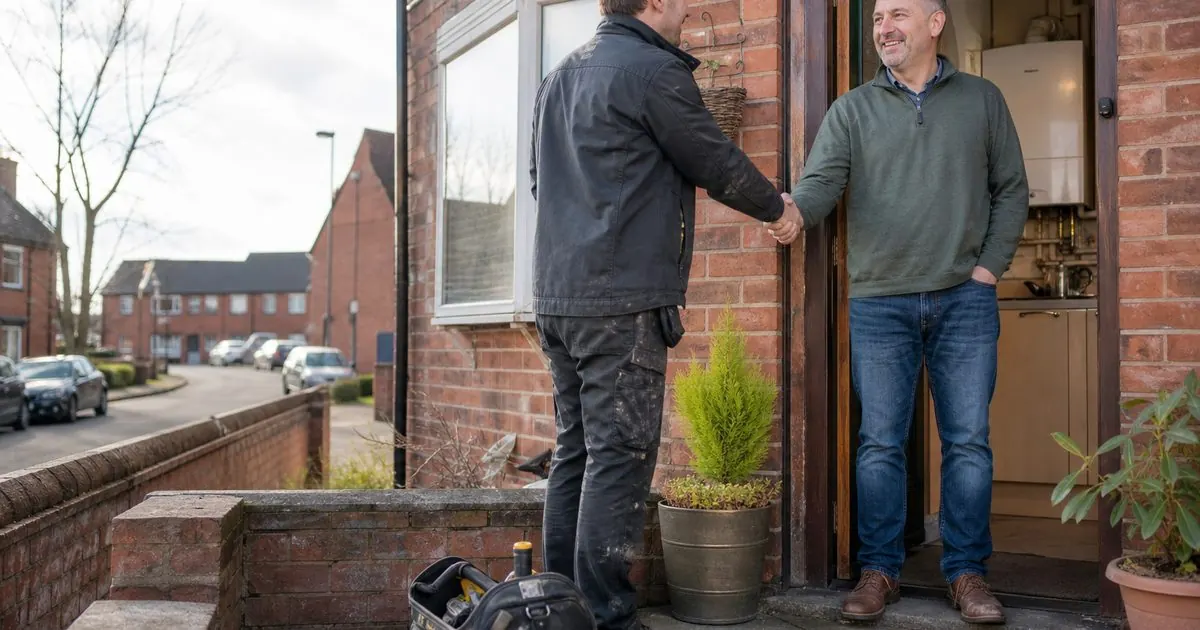
You have fitted boilers for years. You have a good name locally, a full diary in winter and a few hundred reviews that all say "great boiler engineer". Then you add heat pumps, and the phone does not ring for them.
That is normal. Online, your reputation is for boilers. Google, homeowners and AI search tools all see you as a gas business that happens to mention heat pumps. This article sets out how to build a separate heat pump reputation, honestly, from your first jobs.
Why your boiler reputation doesn't carry over
Homeowners buying a heat pump are worried about one thing above all: is this installer actually good at heat pumps? Which? research from July 2026 found distrust of installers was a big reason people did not go ahead, with some describing the market as a "Wild West". A boiler review does not answer that worry.
You are also not alone in making the move. The government's 2026 evaluation of the Boiler Upgrade Scheme (BUS) found around 1,600 installers were active on the scheme by March 2025, and many joined to enter the low carbon heating market for the first time. You are competing with them, and with the energy suppliers, from day one.
Step 1: Get the paperwork that unlocks the grant
Without this, nothing else matters. To install under the BUS your business must be MCS certified for heat pumps and a member of an approved consumer code. As of November 2026, Ofgem's installer guidance lists:
- Home Insulation and Energy Systems Contractors Scheme (HIES)
- Renewable Energy Consumer Code (RECC)
- MCS:2025
Once you have them, show them. Which? found few homeowners had heard of MCS, but most said it would reassure them once it was explained. So do not just put a logo in the footer. Add one sentence saying what MCS means for the customer: certified installers, standards for design and installation, and access to the grant.
Step 2: Give heat pumps their own space on your website
A line that says "we also do heat pumps" is not enough. Build a proper heat pump section:
- a main heat pump page covering what you install, who it suits and how the grant works
- a "what to expect" page: survey, design, install week, handover
- a page or section for each type you fit (air source, and ground source if you do it)
- local pages for the main towns you cover, each with something genuinely local (a job you did there, the housing types, whether lots of homes are off the gas grid)
Each page needs its own proof. Which brings us to the hard bit.
Step 3: Turn your first ten jobs into your reputation
With no heat pump history, your first jobs are your marketing. Plan them that way:
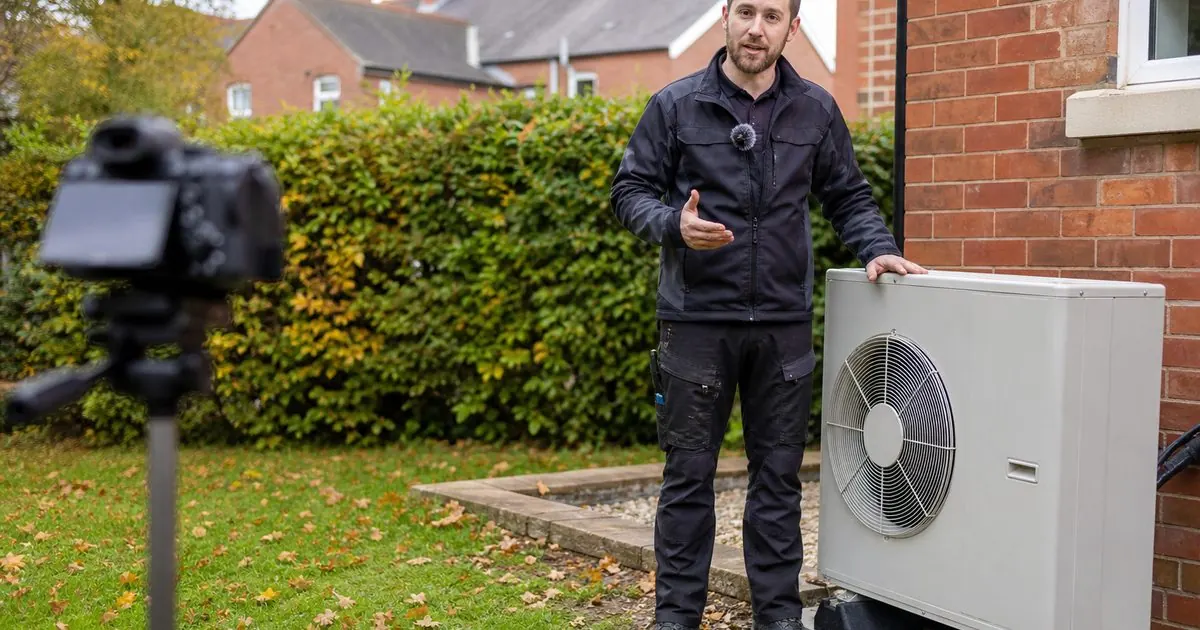
- Pick customers who are happy to help. Explain that you are building case studies, and ask permission upfront to film and photograph.
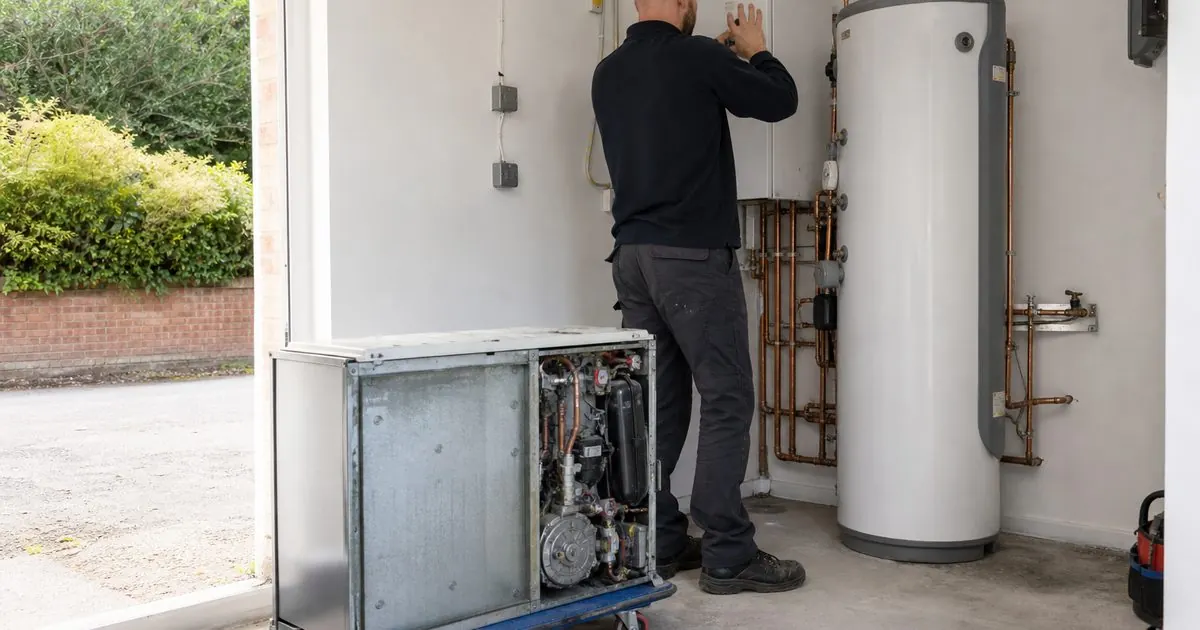
- Document the whole journey. The old boiler, the survey, install day, the finished unit outside, the cylinder, the controls.
- Write each one up as a case study. House type, what was replaced, unit size, how long the install took, what the customer said.
- Go back after the first winter. This is where the real proof is. The government's BUS evaluation found satisfaction climbed from 80% shortly after install to 91% after 9 to 21 months. Film the customer then, with their bills. We cover how in running-cost proof.
Ten honest case studies, each with a named customer and a real house, will do more than any amount of general copy.
Step 4: Get reviews that say "heat pump"
When you ask for a review after a heat pump job, ask the customer to mention what you fitted and how it went. Reviews that name the product help homeowners trust you and help search engines and AI tools connect your name with heat pumps.
In your Google Business Profile, add heat pump installation as a service, post photos of every install and answer questions about the grant. For the wider local search picture, including the map pack, see our local SEO guide.
Step 5: Start with the customers who already trust you
Your boiler customer list is your best early source of heat pump work. The government's Heat Pump Ready research found that when a boiler breaks, people usually go for a fast like-for-like replacement. So the time to talk heat pumps is before it breaks:
- Off-gas customers on oil or LPG: the strongest case, and the grant is £9,000 for eligible homes until 31 March 2027.
- Customers with older boilers: at their service visit, leave a one-page heat pump explainer and offer a free suitability chat.
- Every new boiler quote: include a short "have you considered a heat pump?" option with the grant already taken off. Some will say yes.
A WhatsApp or email message to your past customers announcing your MCS certification costs nothing and often brings in the first few surveys.
Step 6: Then add paid ads
Once you have proof, paid ads work much better. Start with video of your own customers in your area, the grant explained honestly and a qualifying funnel. Do not run "heat pump specialist" ads with stock footage before you have any real jobs to show. Homeowners notice, and it undermines the trust you are trying to build.
Don't let heat pumps damage the boiler business
A few rules we would follow:
- Keep boiler pages for boiler searches. Do not replace your boiler content with heat pump content.
- Be honest about suitability. If a home is better served by a new boiler for now, saying so builds trust for later.
- Train whoever answers the phone. A heat pump enquiry needs different questions from a boiler breakdown.
For competing on the boiler side against online boiler companies, see our boiler guide.
Building both reputations at once
We work with heating installers on both sides: boilers and heat pumps. Gas Tech Heating is a boiler and heating installer we work with, and Night & Day Renewable Energy is an air source heat pump installer. If you are adding heat pumps and want the reputation to match the work, book a video call with Tom. We will look at your website and search presence and show you what we would build first.
Sources
- Boiler Upgrade Scheme: guidance for installers V5.2 (Ofgem)
- Evaluation of the Boiler Upgrade Scheme: 2026 Final Report (DESNZ)
- Improving the customer journey for heat pump adoption: lessons from Heat Pump Ready (DESNZ)
- Boiler Upgrade Scheme: what you can get (GOV.UK)
- 5 reasons why homeowners aren't buying heat pumps (Which?)
Questions owners ask
What do I need before I can offer the Boiler Upgrade Scheme?
Your business must be MCS certified for the technology you install and a member of an approved consumer code. Ofgem's installer guidance lists HIES, RECC and MCS:2025 as the approved codes as of November 2026. Without both, your customers cannot get the grant, which makes most heat pump sales very hard.
Should heat pumps have a separate website?
Usually not. A separate, properly built heat pump section on your existing site is better, because it inherits the trust and search history of your boiler business. Give heat pumps their own pages, their own reviews and their own case studies, rather than a single line on your services list.