Ask any heat pump salesperson which questions come up on every survey and you will hear the same two. "Will it cost more to run than my gas boiler?" and "Will it be noisy?"
The problem is not that these questions exist. It is that most installers meet them for the first time in the customer's kitchen, after the homeowner has spent a fortnight reading worst-case stories online. By then the doubt is set. This article shows how to answer both objections earlier, in your ads, your landing page and the messages you send before the survey, without overselling.
How big these objections really are
Which? published research in July 2026 from more than 1,000 homeowners who had looked into heat pumps and decided against them or were undecided. Cost (upfront and running) was the biggest deterrent, cited by almost half. Many could not tell whether a heat pump would lower their bills over time. A third said there were "too many long-term uncertainties", and 29% said it felt too much of a gamble.
Now look at what happens after people actually have one. The government's 2026 evaluation of the Boiler Upgrade Scheme (BUS) surveyed owners after at least one heating season:
- 89% were satisfied with the noise level of their system, and 85% were satisfied with it on the coldest days, when it works hardest.
- 42% said their total energy bills went down. Among those who replaced a gas boiler, it was 52%.
- 46% had switched electricity tariff since installing, and time-of-use or heat pump tariffs were linked to a greater chance of lower bills.
- 91% were very or fairly satisfied with their system 9 to 21 months after installation.
That gap between fear and experience is your marketing opportunity. But notice the bills figure. It is good, not universal. If your ads promise everyone lower bills, you are setting up the exact distrust that Which? found.
Running costs: be specific, not cheerful
Homeowners do not believe "heat pumps are cheaper to run". They believe a clear explanation of what makes the number go up or down. Give them that.
What to say
Explain the four things that drive running cost, in plain English:
- What you are replacing. Oil, LPG and electric storage heaters are expensive to run, so the comparison is usually easier. Mains gas is cheaper per unit, so the design and tariff matter more.
- The tariff. A heat pump tariff or time-of-use tariff can change the picture. Nearly half of BUS customers switched.
- The design. Correct sizing and lower flow temperatures make a real difference. That is why your survey takes time.
- How it is run. Only 26% of BUS customers felt completely confident programming their system to keep running costs down. A proper handover is part of the product.
Where to put it
- Ads: do not lead with "save £££". Lead with a real customer's situation: "Replaced our oil boiler last winter. Here's what our bills did." Then let the video show the numbers.
- Landing page: a short section called "Will it cost more to run?" with the four points above and a link to a filmed customer.
- Pre-survey message: ask what they pay now and what they heat with. It shows you take the question seriously and gives your surveyor the starting point.
- At the quote: an estimate based on their house, with the assumptions written down.
Avoid quoting national average savings figures you cannot back up. If you use a number, say where it came from and who it applies to. For filming real customers and their bills, see running-cost proof.
Noise: show it, don't describe it
Nobody can picture a decibel figure. Everyone can judge a video.
What to say
- It is designed and checked. In England, many air source heat pumps can be installed as permitted development, but only if the installation complies with the MCS 020a noise standard and the other Planning Portal conditions. Tell customers your survey includes the noise assessment and where the unit can go.
- Placement is part of the job. Explain that you choose the position with neighbours, bedroom windows and boundaries in mind.
- Real owners are mostly happy with it. That 89% figure is from government research, not a manufacturer. Use it with the source.
Where to put it
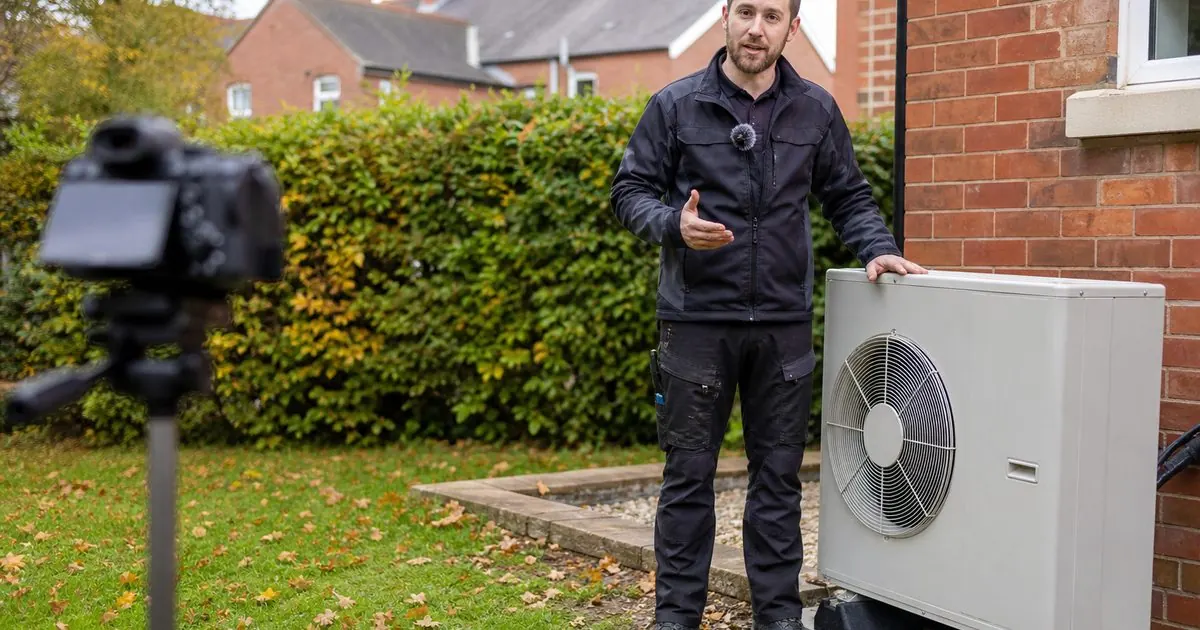
- Ads: a 20-second clip filmed next to a running unit on a cold morning, with the sound left in. A homeowner speaking at normal volume beside it does more than any spec sheet.
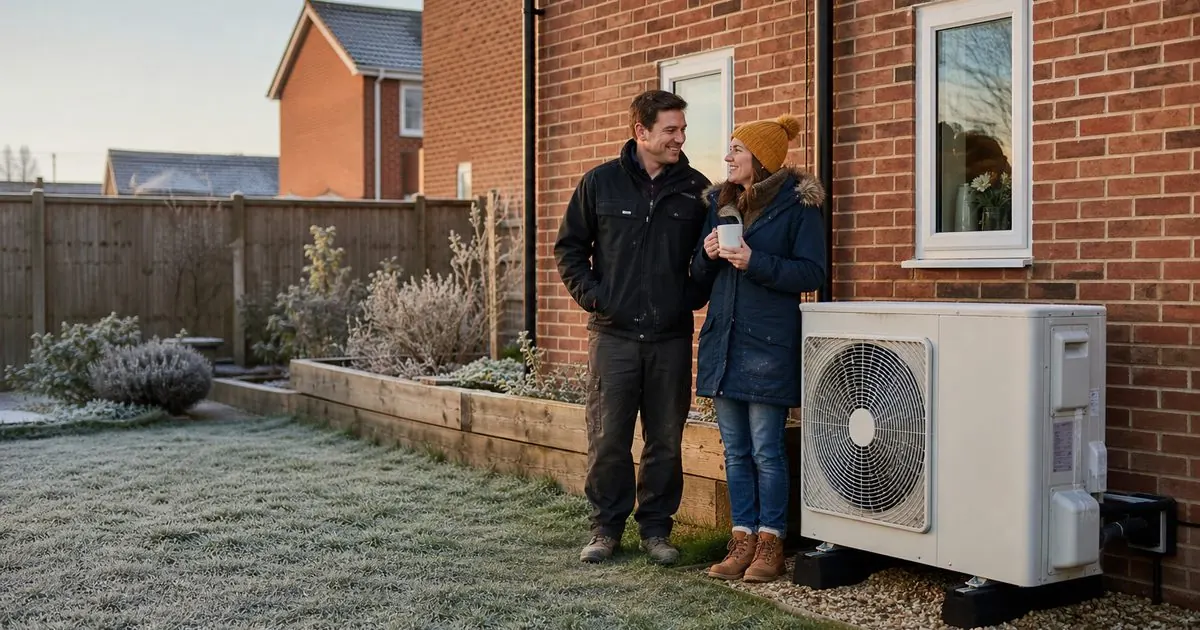
- Landing page: the same clip, plus a photo of where the unit sits relative to the house and the neighbours.
- WhatsApp before the survey: "Most people ask about noise. Here's a 20-second clip of one we fitted last month, filmed right next to it." This lands before the doubt hardens.
Turn objections into qualifying questions
The objections also tell you about the lead. In your funnel or first message, ask:
- "What worries you most: cost, noise, disruption or something else?"
Tag the answer in your CRM. A "running cost" lead gets the tariff and bills content. A "noise" lead gets the clip and the placement explanation. Your surveyor walks in knowing which conversation to have first. For the full set of pre-survey questions, see pre-qualifying heat pump leads.
The trust underneath both objections
Which? found distrust of installers was one of the big reasons people did not go ahead, and that few people had heard of MCS, though most said it would reassure them once it was explained. So every objection answer should end with proof that you are a real, certified business:
- your MCS certification and consumer code membership, explained in one sentence each
- reviews that mention heat pumps specifically, not just "great service"
- a named person on camera, not a stock photo
Where this works best: video
Both objections are answered best by real people in real homes. That is why the system we build starts with filmed customer stories and a shoot day on site. If you want running costs and noise answered before your surveyor arrives, book a video call with Tom. We will show you how it works on our heat pump page and how we film it through videography.
Sources
- Evaluation of the Boiler Upgrade Scheme: 2026 Final Report (DESNZ)
- 5 reasons why homeowners aren't buying heat pumps (Which?)
- Heat pumps: permitted development (Planning Portal)
- Boiler Upgrade Scheme (GOV.UK)
Questions owners ask
Can I tell customers a heat pump will cut their bills?
Not as a blanket promise. Whether bills go down depends on what is being replaced, the tariff, the design and how the system is run. Government research found 42% of BUS customers saw total bills fall, rising to 52% of those replacing gas. Say what drives the cost, show real customers' numbers and avoid guarantees.
Do heat pumps need planning permission because of noise?
In England, many air source heat pumps are permitted development, but only if the installation complies with the MCS 020a noise standard and the other conditions on the Planning Portal, such as size and position. If it does not meet them, planning permission is needed. Wales has its own rules.