There is a group of homeowners who were sold cavity wall insulation years ago, often after a cold call, and now have damp patches on bedroom walls, black mould behind wardrobes, or a survey that flagged the cavity when they tried to sell. They know something is wrong. They are not sure who to believe. And the last time someone offered to fix their walls, it caused the problem.
If you extract and replace cavity wall insulation, these people need you. But they are among the most sceptical buyers in home improvement. This guide covers how to find them, what to say and, just as importantly, what not to say.
Who you are trying to reach
They fall into a few groups:
- Homeowners with symptoms. Damp patches, cold spots, mould, often on the walls most exposed to wind and rain.
- Sellers and buyers. A survey has flagged the insulation, and the sale depends on getting answers.
- People who have been told by someone else. A damp specialist, a builder or a roofer who saw the signs.
- Owners of unsuitable properties. Homes in exposed locations or with narrow, irregular or bridged cavities that should never have been filled.
What they have in common: they are problem-aware, they are searching for answers, and they distrust anyone who sounds like a salesperson.
What they search for
These buyers start with the symptom or the question, not with your service. Phrases like:
- "cavity wall insulation causing damp"
- "signs of failed cavity wall insulation"
- "cavity wall insulation removal cost"
- "cavity wall insulation extraction"
- "can cavity wall insulation be removed"
- "cavity wall insulation guarantee claim"
That makes this a good fit for Google Search ads and for useful content on your website. Social media ads struggle here, because you cannot see who has a damp problem behind a wardrobe. Search lets them find you at the moment they are looking.
Lead with diagnosis, not extraction
The single most important trust signal: do not assume the insulation is the cause.
Damp has many sources. Leaking gutters, cracked render, failed pointing, bridged damp-proof courses, plumbing leaks and condensation can all look similar. A homeowner who has already been mis-sold once will be watching for the next firm to jump to the expensive answer.
So make diagnosis your first offer:
- Inspect outside first. Gutters, downpipes, pointing, render, ground levels, signs of the original drill pattern.
- Use a borescope. Show the homeowner the inside of the cavity on a screen. Wet, slumped or patchy fill is visible.
- Take moisture readings and photos, and explain them.
- Write it up. A short report saying what you found and what you think is causing the problem. If it is the gutters, say so.
Telling some homeowners that they do not need extraction will cost you a few jobs. It will win you many more through reviews and referrals, because almost nobody else in this market does it.
Help them check for a guarantee first
Many cavity installs carry a guarantee. CIGA, the Cavity Insulation Guarantee Agency, provides independent 25-year guarantees for cavity wall insulation fitted by registered installers in the UK. Before a homeowner pays for extraction, they should check whether they have one and what it covers.
Put a short section on your website explaining how to look for the paperwork and where to start. If you help homeowners gather evidence for a claim (photos, borescope images, your report), say so. Never promise that a claim will succeed. That depends on the guarantee terms and the cause.
Content that ranks and reassures
Write a small set of genuinely helpful pages:
- "Signs your cavity wall insulation may have failed", with photos from real jobs.
- "What else causes damp on cavity walls", which builds trust because it is not selling.
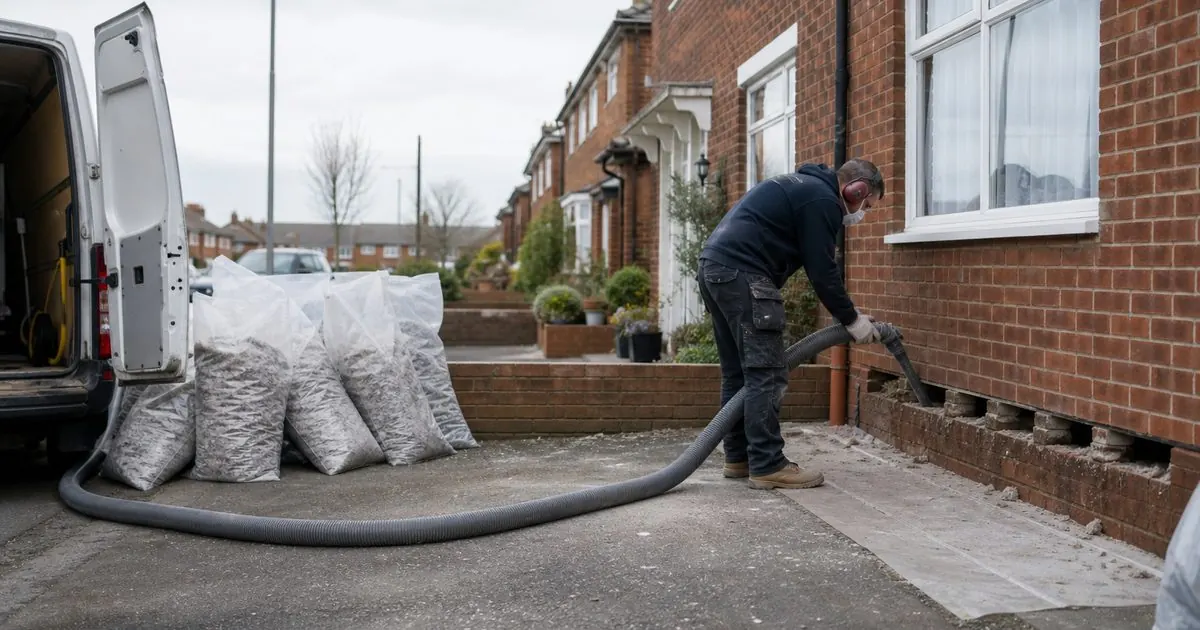
- "What happens during cavity wall insulation extraction": removing bricks at intervals, vacuum extraction, checking the cavity is clear, replacing the bricks and making good, and what happens next (refill with a suitable material or leave empty, depending on exposure).
- "How long it takes and how messy it is", honestly.
- "Selling a house with cavity wall insulation problems", for the seller group.
Answer the questions plainly, with photos and short videos from real jobs. Pages like these help in Google and in AI search tools, which increasingly answer this kind of question directly. See our SEO and GEO service.
Qualify on the landing page
A short form that asks:
- When was the cavity insulation installed, roughly?
- Do you have any guarantee paperwork?
- What are the symptoms, and on which walls?
- Is the house in an exposed spot (coastal, hilltop, open countryside)?
- Has a surveyor, damp specialist or buyer's survey flagged it?
- Are you selling, buying or staying put?
- Upload photos of the affected walls, inside and out.
The answers tell you who needs a diagnostic visit, who needs to check their guarantee first and who has a sale deadline.
What not to do
This market attracts aggressive marketing. Stay well away from it.
- No scare tactics. "Your insulation is making your family ill" might get clicks. It also makes you sound like the people who sold the original install.
- No compensation claims language. You are an installer, not a claims firm.
- No cold calling. Many of these homeowners were cold-called into the original job. Say clearly that you never cold call.
- No guaranteed outcomes. Promise a thorough investigation and an honest report.
For the broader trust issue in insulation, see Is this a scam?.
Partner with the right trades
Damp specialists, roofers and builders see failed cavity insulation all the time and often do not know who to refer to. Build relationships with a few, and make it easy for them to send you photos. In return, refer the gutter, pointing and render problems you find to them. Our damp proofing page covers how that side of the market buys.
Where we fit
We set up search-led marketing for specialist insulation firms: Google Ads built around problem phrases, content pages that answer the real questions, landing pages with photo upload and a CRM that sorts urgent sales from long-term problems. See our page on cavity and external wall insulation.
If you extract and replace cavity insulation and want to reach the homeowners searching for help, book a video call and we will show you how we would set it up.
Sources
- CIGA: Cavity Insulation Guarantee Agency
- GOV.UK: What to do if you have poor quality wall insulation (covers solid wall insulation fitted through government schemes)
Questions owners ask
Does damp on an internal wall always mean the cavity wall insulation has failed?
No. Damp can come from leaking gutters, cracked render, poor pointing, bridged damp-proof courses, plumbing leaks or condensation. Failed or unsuitable cavity insulation is one possible cause. A responsible firm investigates first, with a borescope, moisture readings and a look at the outside of the building, before recommending extraction.
Is failed cavity wall insulation covered by a guarantee?
It may be. CIGA provides independent 25-year guarantees for cavity wall insulation fitted by registered installers in the UK. Homeowners should look for their guarantee paperwork and check the terms before paying for extraction. Whether a claim succeeds depends on the guarantee and the cause of the problem.