Ring a homeowner about their insulation enquiry and there is a decent chance the first thing they say is "Is this one of those scam calls?" It is not paranoia. Many people have had years of calls, texts and doorstep visits telling them they "qualify for free insulation" or a "government grant". Some were genuine. Plenty were not.
National Trading Standards reported in 2022 that scam calls offering grants for things like loft insulation, spray foam, glazing and boilers rose 85% in a single month. Council Trading Standards teams now warn people not to agree to spray foam work offered through cold calls, and some owners of homes with spray foam have faced mortgage refusals and trouble selling. Add the well-publicised problems with wall insulation fitted under government schemes (see External wall insulation after the quality audits) and you have a buyer who starts every conversation suspicious.
That is the trigger behind this article. If you run a genuine insulation business, your marketing has to work hard to not look like the scam.
Your ad might look like the scam
Read your current ads and landing page as a suspicious homeowner would. Common red flags:
- "Free" or "fully funded" in the headline
- "You may qualify" or "check your eligibility" with no detail
- "Government-backed" or government-style logos and colours
- Stock photos of smiling families and generic vans
- No business name, address or faces
- A form that asks for a phone number and nothing else
Each one of those is what the cold callers use. Put three of them together and your genuine ad reads like a phishing message.
Change the wording
| Avoid | Use instead |
|---|---|
| "Free insulation, check if you qualify" | "Loft and cavity insulation in [town], from a local team" |
| "Government grants available" | "Prices from £X. Survey and written quote, no obligation" |
| "Limited funding, act now" | "VAT on insulation goes from 0% to 5% on 1 April 2027" (a real, checkable date) |
| "Energy experts" | "Mike and Sam, our surveyors" with photos |
If you do still handle genuinely funded work for qualifying households, describe it factually and link to the official source, such as the customer's council. Never use government branding.
Be inbound only, and say so
The simplest trust signal in insulation is this sentence, on your website, ads and van:
We never cold call, text or knock on doors. If someone contacts you out of the blue claiming to be us, it is not us.
Then live by it. Do not buy data, do not use lead sellers that cold call, and do not let a subcontracted canvasser use your name.
Make every credential checkable
Homeowners have seen fake logos. So do not just show a badge, link it to where it can be checked.
- Companies House number in your footer, so anyone can see who runs the business and how long it has traded.
- TrustMark registration, if you have it, with a link to your listing.
- Guarantees explained properly. For cavity wall insulation, CIGA provides independent 25-year guarantees for work by registered installers. Explain what the guarantee covers and how the homeowner gets the paperwork.
- Manufacturer approvals for the systems you install.
- Insurance details on request, without fuss.
Put names and faces on everything
The scam caller is anonymous. You should be the opposite.
- Team page with real photos and first names.
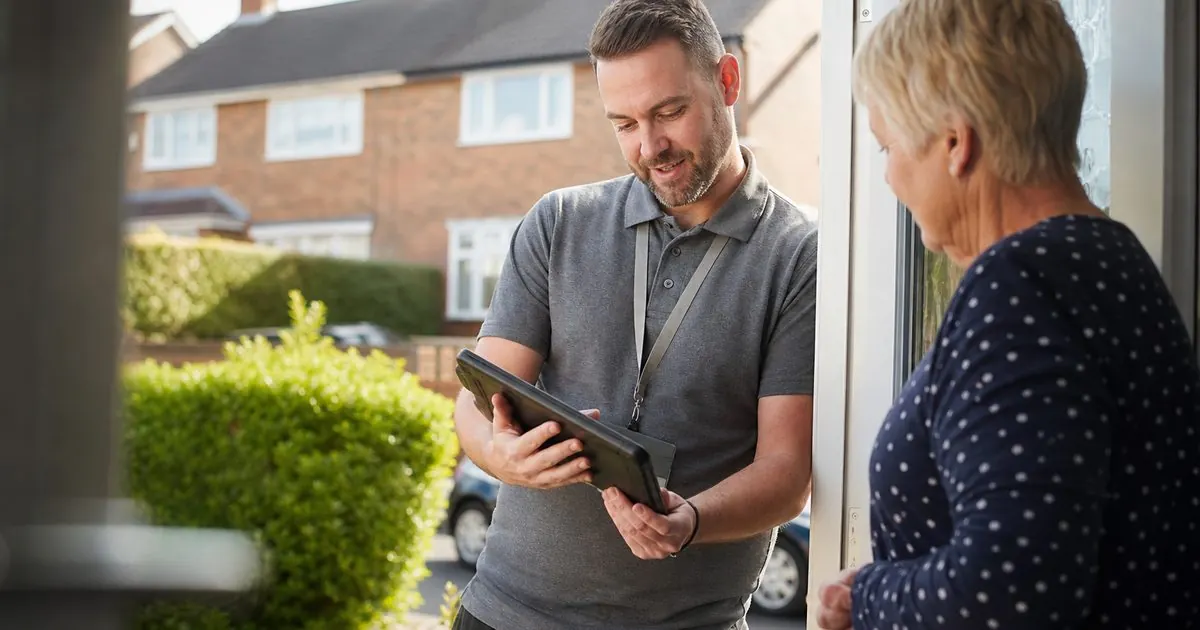
- Send the surveyor's name and photo by WhatsApp or text the day before the visit, with their ID badge in the picture.
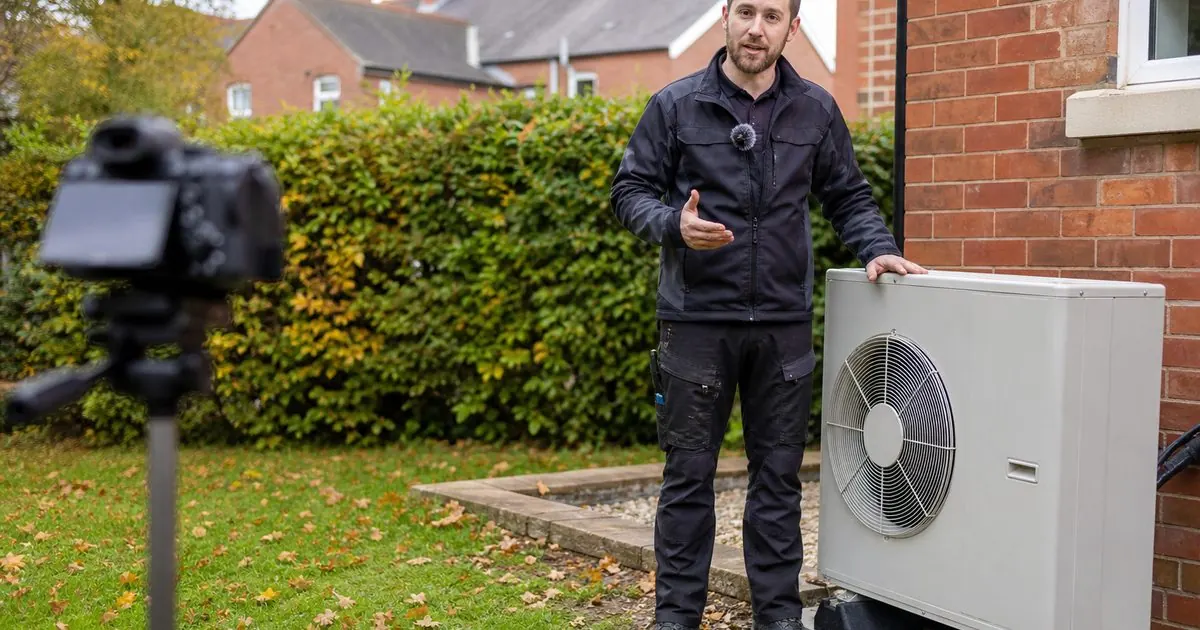
- Short videos of your own surveyors explaining what happens on a survey, filmed on a real job. We film these for clients because it is the fastest way to show you are a real, local firm. See our videography service.
- Customer video testimonials from named towns near the viewer.
Run the survey like a professional, not a salesperson
The survey is where trust is won or lost.
- Show your evidence. Measure loft insulation depth in front of the homeowner. Use a borescope for cavities and show them the image. Photograph everything.
- Explain what you will not do. If the walls are not suitable for cavity fill (exposure to wind-driven rain, narrow or bridged cavities, existing damp), say so. Turning down unsuitable work is the strongest trust signal there is.
- No same-day signatures. Leave a written quote and let them think. Pressure is what scammers do.
- Explain cancellation rights. Contracts agreed in the customer's home usually carry a 14-day cooling-off period. Telling them that up front shows you have nothing to hide.
Follow up without chasing
Here is the trap: insulation leads need fast follow-up, but a homeowner who already fears scams will treat five unknown numbers calling in a day as proof they were right.
- Call from one recognisable number, saved as your business name if possible.
- Send a WhatsApp introduction first: who you are, why you are calling, the surveyor's photo.
- Use your business name in every message.
- If they do not reply, slow down. Three friendly touches over a week beat ten calls in two days.
Reviews that answer the scam question
Ask every customer for a review, and ask them to mention what made them trust you. Reviews like "I was worried it was another scam call but they were completely straight with us" are worth more than "great job". Reply to every review with your name.
Publish a "how to spot a scam" guide
Write a short page on how homeowners can tell a genuine insulation company from a cold caller. Include: no cold calls, a checkable company number, a fixed address, a written quote, no pressure to sign today, and a clear cancellation right. Link to Trading Standards advice. Share it in local Facebook groups. It helps people, and it positions you as the honest firm in your area.
Where we fit
We build insulation marketing that looks and sounds like a real local business, because it is one: video of your actual team, ads that avoid the scam language, Facebook and Instagram campaigns aimed at homeowners with the problem, and follow-up that reassures instead of chasing. See our insulation page for more. For the bigger picture on finding paying customers, read Building a private-paying insulation pipeline.
If your leads keep asking "is this a scam?", book a video call and we will show you how we would fix it.
Sources
- Inverness Courier (PA): National Trading Standards on energy scam calls rising 85% in a month (November 2022)
- Cornwall Council Trading Standards: spray foam insulation advice
- CIGA: Cavity Insulation Guarantee Agency
- Citizens Advice: cancelling building or home improvement work
- TrustMark
- GOV.UK: VAT on energy-saving materials (VAT Notice 708/6)
Questions owners ask
Why do homeowners think insulation companies are scams?
Because for years they have received cold calls, texts and doorstep visits saying they qualify for free insulation or a government grant, and some of those were scams or mis-selling. Trading Standards has warned about callers pushing grants and spray foam. Your ads can look exactly like those messages unless you change the wording and show real proof.
Should insulation ads use the word free?
Avoid it unless the work really is free to that customer and you can show why. 'Free insulation' and 'you qualify for a government grant' are the exact phrases scam callers use. Private buyers respond better to plain prices, real faces, town names and credentials they can check for themselves.