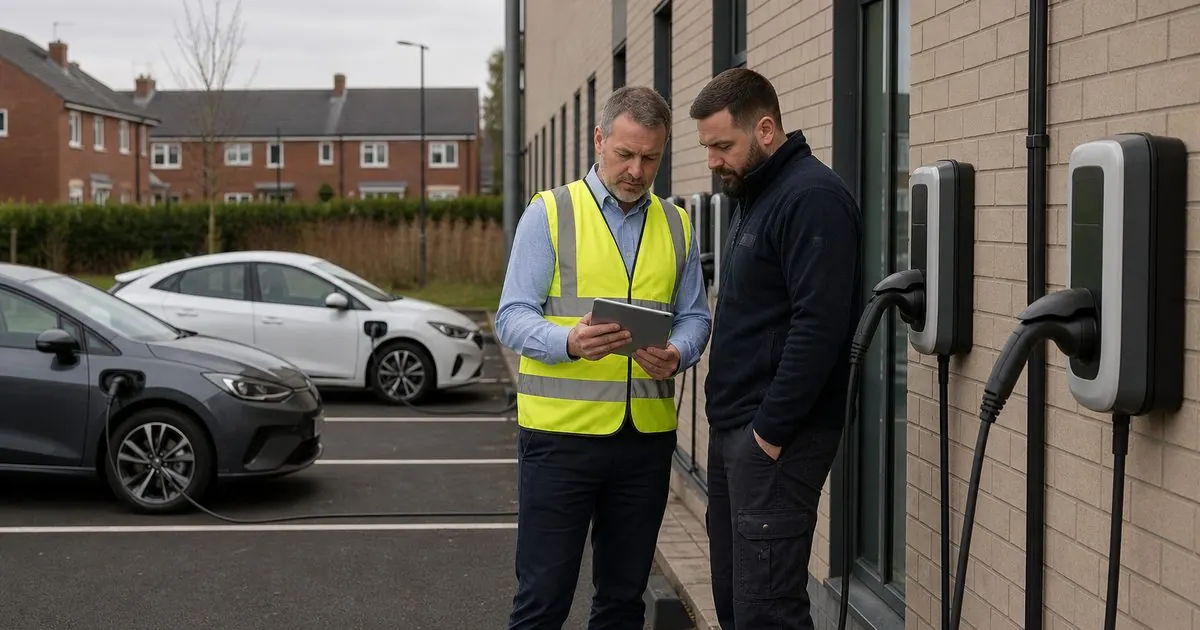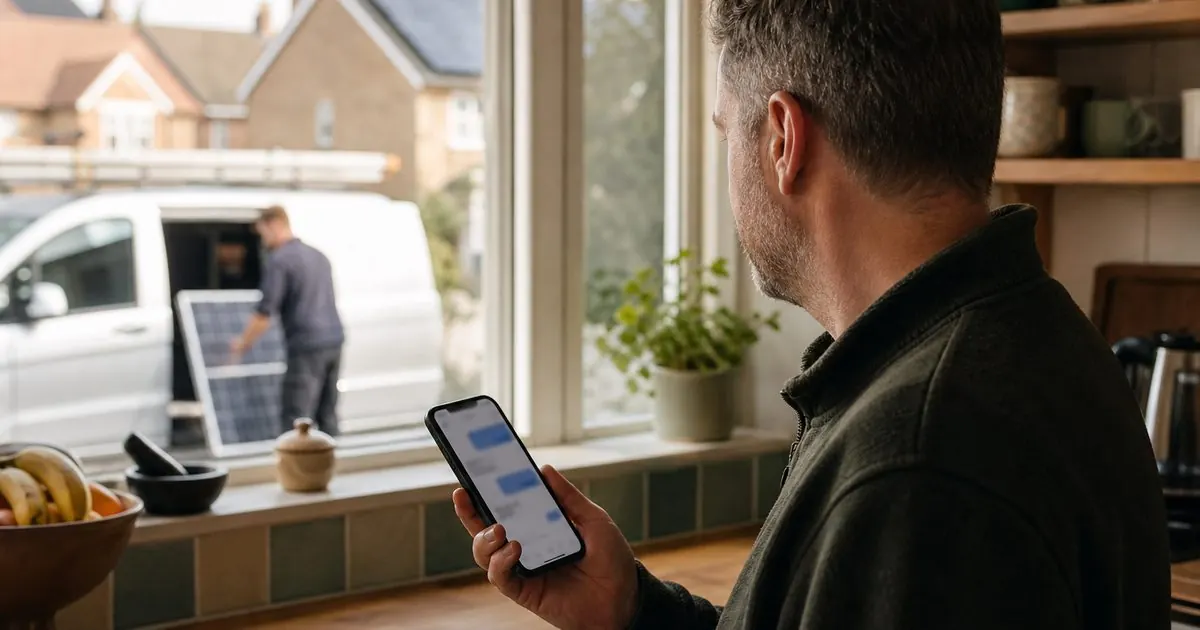
A homeowner gets your quote for a home charger and replies with a link: "This company does it for less, all in." You know the comparison probably is not like for like, but now you are the one who has to explain why.
National charger installers and manufacturer-backed packages publish fixed prices online. Homeowners see a single number, a checkout button and a date, and that becomes the benchmark. This article covers how a local installer competes with that without racing to the bottom.
Why the online price wins the first look
Fixed online prices are easy to understand. The homeowner does not have to arrange a survey, wait for a quote or wonder what it will cost. Even if the final bill ends up higher once extras are added, the first impression is "simple and cheap".
Your quote, by contrast, often arrives days later as a PDF with line items they do not understand. Same job, harder to compare, and harder to say yes to.
The answer is not to match their price. It is to match their clarity and then beat them on what they cannot offer.
Step 1: Put a price on your website
If your website says "contact us for a quote", many homeowners will not. Publish:
- a from price for a standard install
- exactly what the standard install includes (charger model options, cable length, mounting, testing, certificate, setup of the app and off-peak schedule)
- a short list of what can add cost, each with a typical range
This is the single biggest change most installers can make. For the wider debate about showing prices on trade websites, see should you show prices?.
Step 2: Explain the extras before the customer finds them
Standard online packages are built around a straightforward install. Real homes are not always straightforward. The common extras are things like:
- a longer cable run than the standard allowance
- drilling through thick or difficult walls
- a consumer unit that needs upgrading or extra protection
- earthing arrangements that need extra work
- a charger at the far end of a long drive or in a detached garage
- groundwork or trenching
You do not need to criticise anyone. Just say: "When comparing prices, check how much cable is included and whether consumer unit work is covered." The homeowner does the maths themselves. A local installer who lists these honestly comes across as the straight one.
Step 3: Quote instantly, not in three days
The online package's big advantage is speed. Take it away with an instant quote tool on your own site. The customer answers a few questions (charger choice, distance from the consumer unit, wall type, a couple of photos) and gets a price on screen, with an option to book.
We have built instant online quote tools for EV charger installers for exactly this situation. The quote does three jobs: it gives the homeowner the certainty they get from the national sites, it pre-qualifies them, and it captures their photos so you rarely need a survey visit. The mechanics of calculators and quote funnels are covered in quiz and calculator funnels.
Step 4: Win on what a national firm cannot offer
Once the price is visible and comparable, you compete on everything else:
- A firm date, soon. "We can fit on Thursday" beats a booking system offering slots weeks away. Show your next available date on the website if you can.
- A named local engineer. A photo and a name, not "one of our approved partners".
- Local reviews. "Fitted our charger in [nearby village], tidy job, sorted the app for us" carries weight with neighbours. Ask every customer to mention the charger and their area.
- Aftercare. Who do they call if the charger stops working? A local number answered by someone who did the install is a real selling point.
- Advice. Help with tariffs, the off-peak schedule (home chargers in Great Britain must come with default off-peak charging hours under the smart charge point regulations) and future solar or battery plans.
Step 5: Handle the comparison on the phone
When a customer sends you a cheaper link, do not argue. Ask three questions:
- "How much cable does their price include?"
- "Does it cover any work on your consumer unit if it's needed?"
- "When can they fit it?"
Then say what yours includes, plainly. Some customers will still take the cheaper option. Many will come back to you once they see the answers, and they will trust you more for not pushing.
Step 6: Follow up the quotes that go quiet
A homeowner comparing prices often goes silent while they decide. A short follow-up two days later with your next available date, plus a review from a nearby customer, recovers a fair share of them. The general approach to quiet quotes is in quotes that go quiet.
Grants worth mentioning (as of November 2026)
Some customers can cut the price with a government grant. GOV.UK lists up to £500 towards a chargepoint for renters and flat owners with private off-street parking, and for households with only on-street parking using a cross-pavement solution, until 31 March 2027. The customer must apply and wait for OZEV's confirmation before the install. If you can handle the claim, say so on your website. It is a real advantage over installers who do not.
Where this leaves you
You will not out-advertise a national firm with a national budget. You can make your price as clear as theirs, your quote faster than theirs and your service visibly more local. That is enough to win a good share of the homeowners in your patch.
We have no published EV charging results to quote. We do build the pieces described here: websites with clear pricing, instant quote tools, review collection and fast follow-up. If you want to see how they would fit together for your business, book a video call with Tom. We will check your area and walk through the EV charging system and our quote funnels.
Sources
- Electric vehicle chargepoint grants (GOV.UK)
- Changes to electric vehicle chargepoint grant schemes from 1 April 2026 (GOV.UK)
- Electric vehicle smart charge points regulations (GOV.UK)
Questions owners ask
Should a local EV charger installer publish prices online?
Yes, at least as a clear 'from' price for a standard install with a list of what is included and what costs extra. Homeowners are already looking at national fixed prices. If your site shows nothing, they assume you are dearer and move on before you get the chance to explain.
How can a small installer compete on EV charger price?
Usually not by being cheapest. Compete on certainty and speed: a price that includes what the national standard package may charge extra for, a firm install date, a named local engineer and reviews from nearby customers. Then make the comparison easy by listing exactly what your price covers.