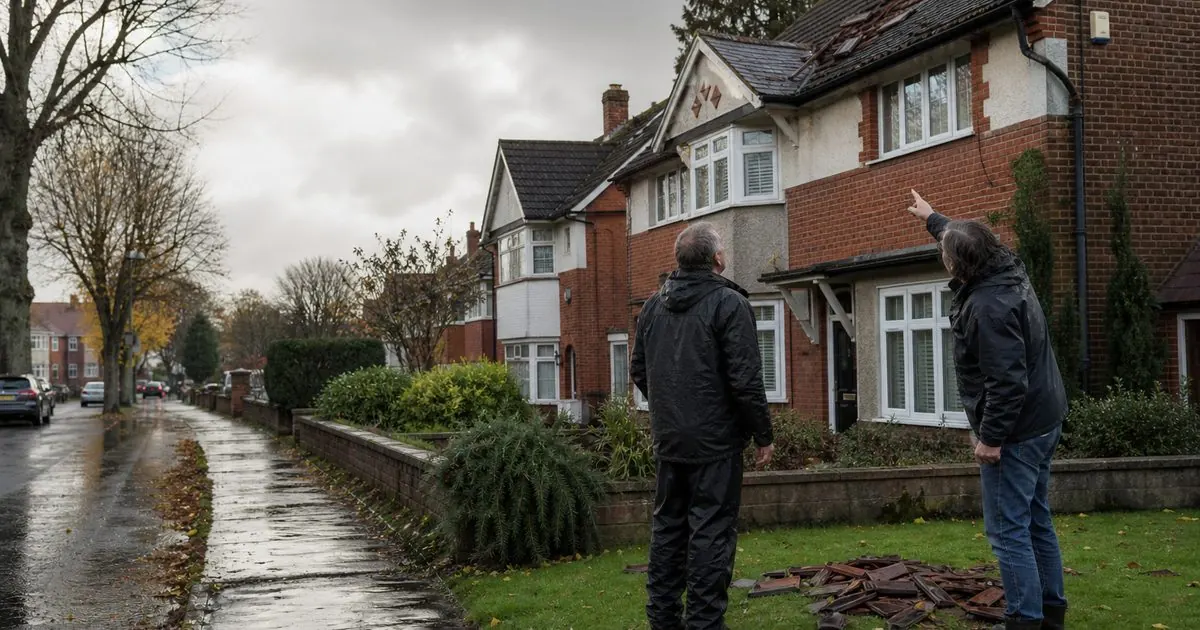
A named storm rolls through. By 8am the next day your phone has more missed calls than you get in a normal fortnight. Ridge tiles are in gardens, felt is flapping on flat roofs and water is coming through bedroom ceilings. You are up a ladder on the first job, your office line is ringing out, and two streets away a van with no name on it is knocking on doors offering "today only" prices.
Storm weeks are the busiest and riskiest days in a roofer's year. Handled well, they fill your diary for months and win customers for life. Handled badly, they leave a trail of unanswered calls, broken promises and one-star reviews. This guide is about the first outcome.
Before the season: prepare in October
Most UK storm damage arrives between autumn and early spring. Do the preparation while it is calm.
- Build a storm landing page now. One page, written for someone with a leak right now: what to do while they wait, what you can do today, and a short form with photo upload.
- Write the ads in advance. Ready to switch on, targeted by postcode. More on this below.
- Set a make-safe price list. Tarping, temporary ridge repairs, emergency flat roof patches. Fixed prices stop arguments later.
- Stock up. Tarps, battens, ridge tiles, sealant, sandbags. Running out on day two is common.
- Agree back-up capacity. A trusted roofer in a neighbouring area who can take overflow, and who you would cover for in return.
- Decide your rules. Who gets priority (water coming in, elderly or vulnerable occupants, existing customers), and what you will not take during a storm week.
Triage: not every call is an emergency
The key to a storm week is sorting calls quickly into the right bucket.
| Category | What it means | Response |
|---|---|---|
| Emergency | Water coming in, structural risk, loose material over a path | Same day or next day make-safe |
| Urgent | Visible damage, no water inside yet | Make-safe or inspection within days |
| Inspection | Worried, no visible damage | Booked inspection after the rush |
| Not for you | Gutter clearing, fences, other trades | Polite redirect |
Ask every enquiry the same few questions: is water coming in, where is the damage, what kind of roof is it, can you send photos, is anyone in the home vulnerable, and are you insured. Photos alone sort half the calls before anyone visits.
Answer every call, even when you cannot
During a storm week you cannot answer the phone and be on a roof. So:
- Divert calls to an answering service or an AI assistant that asks the triage questions, collects photos by text, tells people honestly when you can come and books them in.
- Auto-reply to every web form and Facebook message within seconds, with the same triage questions and an honest timescale.
- Update your voicemail and Google Business Profile with "storm response: here is how we are prioritising jobs this week".
We cover the case for AI call answering in detail in Missed calls are missed jobs. In a storm week, the main point is simple: every unanswered call goes to whoever answers next, and that might be the chancer with the unmarked van.
Storm campaigns: on fast, off faster
Pre-built storm ads let you react within an hour of the forecast or the damage.
- Google Ads: a paused campaign with phrases like "storm damage roof repair", "emergency roofer [town]", "roof leak repair", "ridge tiles blown off". Turn it on for the worst-hit postcodes.
- Facebook and Instagram: a short video of your team doing a make-safe, with a clear message: "Storm damage? Send us photos and we will tell you honestly how urgent it is."
- Budget rule: set a daily cap and pause as soon as your next two weeks are booked. Then switch to a waiting-list message.
Do not keep spending to collect leads you cannot visit for a month. They will book someone else, and they will remember who left them waiting.
Insurance: help, do not promise
Many storm repairs end up as insurance claims. Insurers usually want evidence, so make your survey useful:
- Date-stamped photos and video of the damage
- A short written report of what was damaged and what caused it, as far as you can tell
- An itemised quote for the repair
Never promise a homeowner that their insurer will pay. That is their insurer's decision. Just give them clear evidence to send.
Stand apart from the storm chasers
After every big storm, doorstep traders follow the damage. They knock, point at a slipped tile, quote high and ask for cash. Some do poor work. Some do none. Each one makes the next homeowner more suspicious of you.
Turn that into your advantage:
- Publish a short guide: "How to spot a storm chaser". Warning signs: cold calls and door knocking, pressure to decide today, cash only, no fixed address, no written quote, no reviews you can check.
- Explain cancellation rights. Citizens Advice says contracts agreed away from the trader's premises usually have a 14-day cooling-off period, and that if the trader does not give cancellation information, the period can be extended by up to a year. Mention this in your guide and on your quotes.
- Share it. Post it in local Facebook groups after a storm. It is genuinely useful, and it puts your name in front of exactly the right people.
- Never door-knock yourself. Say so on your ads, your site and your van.
Our wider guide on proving you are not a cowboy covers the everyday trust signals that make this land.
After the storm: follow up the make-safes
Make-safe jobs are temporary. Many of them are also on roofs that are near the end of their life. Two weeks after the storm:
- Send every make-safe customer a short report with photos of the roof's general condition.
- Quote the permanent repair, or a re-roof where it is honestly needed.
- Ask for a Google review while they are grateful you turned up.
- Tag the roof's condition in your CRM for follow-up in spring.
Storm weeks done right turn into a re-roofing pipeline for the following summer.
Where we fit
We set up the storm kit before the season: the landing page, the paused campaigns, the AI assistant that answers and books when you cannot, and the CRM that follows up afterwards. See our AI chatbots and AI appointment booking services, and our roofing page.
If you want to be ready before the next storm, book a video call and we will plan it with you.
Sources
Questions owners ask
Should roofers run ads during storms?
Yes, if you can handle the work. Prepare the ads and landing page before the season, then switch them on for the affected postcodes when a storm hits and pause them as soon as your diary is full. Running storm ads you cannot service only creates angry customers and bad reviews.
How can homeowners tell a genuine roofer from a storm chaser?
Genuine roofers rarely knock on doors after a storm. Warning signs include cold calls, pressure to decide today, requests for cash upfront, no fixed address and no written quote. Homeowners usually have a 14-day cooling-off period on contracts agreed at home, and a genuine roofer will explain it.