Accessible bathrooms are one of the steadiest parts of the bathroom market, and one of the easiest to get wrong in an advert. The buyer is often in their seventies, cautious about salespeople and very aware of being talked down to. Their son or daughter is doing half the research. And the ad platforms have rules that stop you saying the most obvious thing.
This guide covers how to reach both buyers, what you can and cannot say in ads, the VAT and grant facts that actually apply, and a follow-up approach that suits people who take their time.
Who you are really selling to
The Census 2021 counted over 11 million people aged 65 and over in England and Wales, 18.6% of the population, up from 16.4% ten years earlier. Plenty of them still have the bath they put in decades ago, and a bath edge gets higher every year.
There are usually two people in this sale:
- The homeowner. Wants to stay in their own home, keep their independence and not have a bathroom that shouts "care home". Often slow to decide and wary of anyone who rushes them.
- The adult child. Worried about a fall, researching on their phone in the evening, often the one who fills in the form. Wants a firm that will be patient with mum or dad and do a tidy, safe job.
Your marketing has to work for both, which usually means two sets of ads and one very calm sales process.
Language that sells without patronising
The fastest way to lose this buyer is to make them feel old. Words like "elderly", "frail" and "struggling" put people off, even when they are accurate. So does stock imagery of a grey-haired model clutching a rail.
What works better:
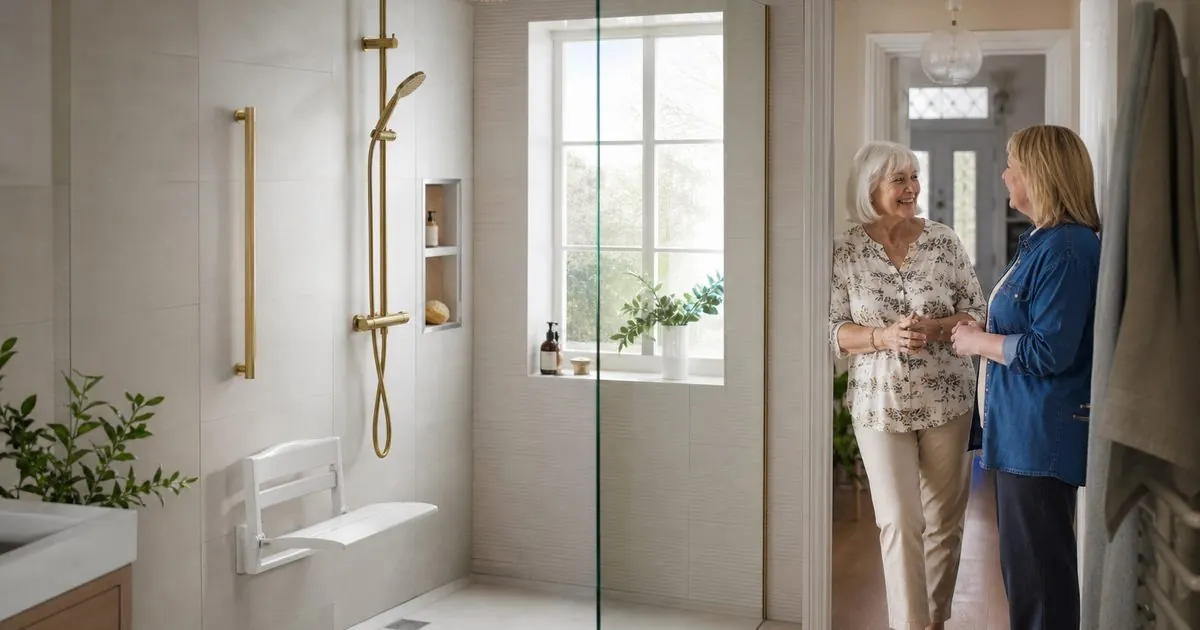
- Lead with the room, not the condition. A beautiful walk-in shower with a low threshold, good lighting and a fold-down seat. The accessibility features are there, but the bathroom looks like something you would want at any age.
- Talk about freedom and ease. "Step straight in", "no more climbing over the bath", "a shower you can use for years to come".
- Show real customers. A homeowner showing off their new shower to a friend does more than any copy. Film them in their own home, in their own words.
- For the family, talk about safety and care. "We fit around your parent's routine", "one person in charge from survey to handover", "we explain everything twice if needed".
What Meta will and won't let you say
Meta's advertising standards say ads must not assert or imply personal attributes, and the list includes age, disability, and physical or mental health. In practice that rules out the obvious hooks:
| Likely rejected | Usually fine |
|---|---|
| "Struggling to get in and out of the bath?" | "Walk-in showers designed for easy access" |
| "Are you over 70?" | "Bathroom adaptations for later life" |
| "Worried about your mum falling?" | "Safe, stylish bathrooms for parents and grandparents" |
| "Your mobility problems solved" | "Level-access showers fitted by a local team" |
The rule is about telling the viewer they have a trait. Describing the product or the general audience is normally allowed. Targeting is a separate setting, so keep the copy clean even if your audience settings are age-based.
The VAT facts, checked
Accessible bathroom buyers often ask about VAT, and there is a lot of confusion online. As of November 2026, HMRC's VAT Notice 701/7 sets out two different reliefs.
Zero rate for disabled people (section 6.3). Adapting a bathroom, washroom or toilet can be zero rated when the work is necessary to suit the condition of a chronically sick or disabled person, in their private residence. "Bathroom" here includes a shower or wet room. HMRC is clear that being elderly is not enough on its own, and temporary conditions do not count. The customer must give you a written eligibility declaration, kept separate from the order or invoice.
Reduced rate for people aged 60 or over (section 9). A short list of mobility aids can be charged at the reduced rate when supplied and installed in the customer's own home: grab rails, ramps, stair lifts, bath lifts, built-in shower seats or showers containing built-in shower seats, and walk-in baths with sealable doors. You must both supply and install the item, the customer must be 60 or over, and again a separate written declaration is needed. General building work is excluded.
What this means for marketing: never promise "VAT free bathrooms" across the board. Say that VAT relief may apply for eligible customers, link to an explainer page, and have your surveyor check eligibility properly. Getting this wrong costs you the VAT, not the customer.
Grants: what to say and what not to
The Disabled Facilities Grant is run by local councils. GOV.UK lists a level access shower as an example of eligible work. The maximums are up to £30,000 in England, £36,000 in Wales and £25,000 in Northern Ireland. The grant is not available in Scotland, which has separate support. GOV.UK also warns that a homeowner might not get any grant if work starts before the council approves the application.
For your marketing, that means:
- Do not run "free bathroom grant" ads. Eligibility is decided by the council, not you.
- Do publish a plain-English page explaining the grant and linking to GOV.UK.
- Train your team to tell customers not to start until approval comes through, even if they are keen.
- Track grant-funded jobs separately in your CRM, because their timelines are much longer.
Phone first, then gentle follow-up
Many older buyers prefer to talk to a person. Put a phone number at the top of every page and make sure someone friendly answers it. If you use an AI assistant for out-of-hours enquiries, keep it plain, slow and polite, and have it offer a callback at a time that suits rather than pushing a booking. (The general case for answering fast is made in the five-minute rule; here, patience matters as much as speed.)
A follow-up rhythm that suits this buyer:
- Same day: a call, then a short text confirming who called and what happens next.
- Before the survey: a message with the surveyor's name and photo, and an invitation for a family member to join.
- After the quote: a printed copy as well as the email. Many of these buyers read paper.
- One week later: a call to answer questions, not to close.
- Monthly after that: a short, useful update (a customer story, a reminder about the VAT declaration) until they decide either way.
No "price valid today only". No second salesperson. Families compare notes, and one pushy visit can lose you the whole family's trust.
How we help
We run campaigns for home improvement firms that speak to both the homeowner and the family, with creative that gets through Meta's review, follow-up that is patient rather than pushy, and reporting on cost per survey and cost per job. We film real customers in their own homes, because that is what this buyer believes. See our bathrooms page for how the system fits the trade.
If accessible bathrooms are a growing part of your work, book a video call and we will check whether your area is open.
Sources
- GOV.UK: Reliefs from VAT for disabled and older people (VAT Notice 701/7)
- GOV.UK: Disabled Facilities Grants
- ONS: Population and household estimates, England and Wales: Census 2021
- Meta Transparency Centre: Privacy violations and personal attributes
Questions owners ask
Can I say 'VAT free' in my walk-in shower ads?
Be careful. The zero rate applies only when the work is for a chronically sick or disabled person and they sign an eligibility declaration. The reduced rate for people aged 60 or over covers a short list of items, not a whole bathroom. Say relief 'may apply' and explain who qualifies, rather than promising it to everyone.
Should I target the older homeowner or their family?
Both, with different messages. The homeowner wants independence and a bathroom that looks like a home, not a hospital. Adult children want reassurance that the job will be done safely and kindly. Run separate creative for each, and make it easy for the family to book a visit they can attend.
Can my firm apply for a Disabled Facilities Grant on a customer's behalf?
The grant is applied for through the customer's local council, and the council decides what work is necessary. You can help by explaining the process and providing quotes when asked. Make sure customers know not to start work before approval, because GOV.UK warns they might not get any grant if they do.