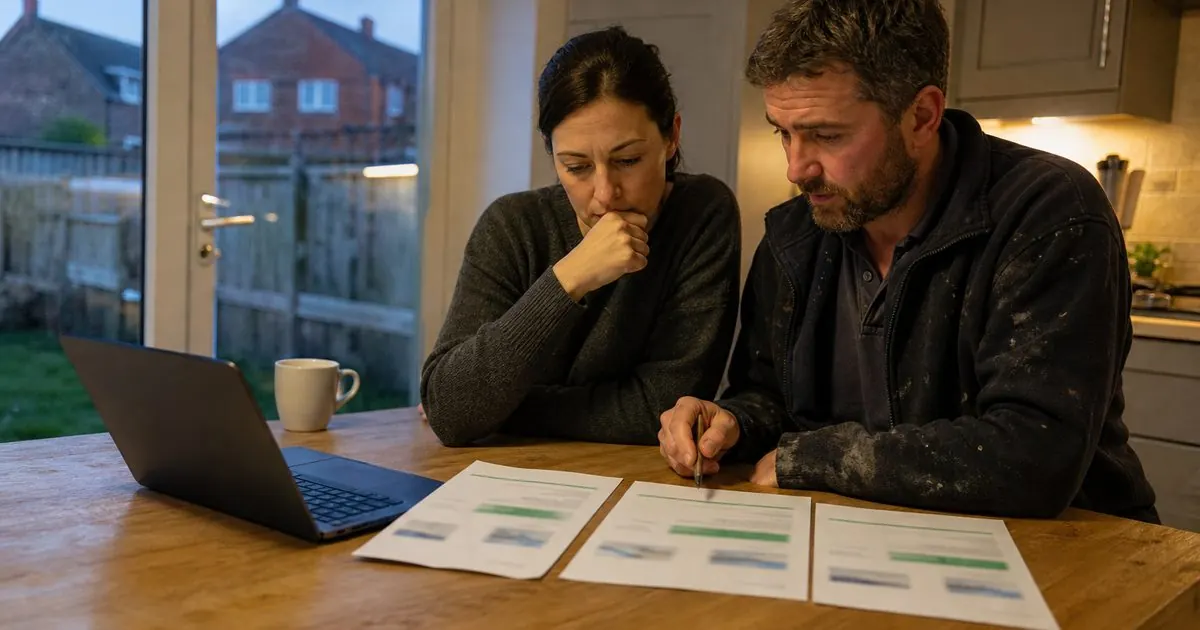
Every independent kitchen company knows the conversation. The buyer loves your design, then mentions that a national chain or trade counter has quoted half the price for "the same kitchen". Sometimes it really is a cheaper product. More often it's a different job: carcasses only, fitting not included, no project management, and a worktop templater the customer has to chase themselves.
You can't win that fight on price, and you shouldn't try. What you can do is make the difference so visible that the right buyers choose you before they ever get to the comparison, and the ones who do compare can see what they are actually comparing. This guide covers how.
Accept who you are not for
The first step is honest positioning. The big sheds are good at what they do: volume, availability, low prices on standard ranges. Some buyers want exactly that, and they are not your customers. Trying to win them pulls your marketing towards price, and price-led marketing attracts more price shoppers.
Your buyers are the ones who:
- Are doing a bigger project, often with an extension or knock-through.
- Want one company responsible from design to the last plinth.
- Care about the details: drawer boxes, worktop joins, how the corner unit works.
- Have been burnt before, or know someone who has.
- Are short on time and want it handled.
Write your ads, website and sales process for them, and stop apologising for not being cheap.
Show what's actually in your price
Buyers compare the number at the bottom. Your job is to show them what sits above it. A simple comparison on your website, in your brochure and in your quote follow-up does a lot of work:
| What the buyer gets | Typical supply-only quote | Your full project |
|---|---|---|
| Design | Basic plan from a sales assistant | Designer visit, measured survey, 3D design |
| Survey and measure | Customer measures, or charged extra | Professional measure, checked again before order |
| Fitting | Customer finds their own fitter | Your own fitting team, one point of contact |
| Plumbing and electrics | Not included | Coordinated as part of the project |
| Worktop templating and fitting | Arranged separately | Included and managed |
| Waste removal and making good | Not included | Included |
| Aftercare | Product warranty only | Your aftercare and workmanship guarantee |
Adjust it to your real offer. Don't knock any named competitor. Just describe what a supply-only route usually involves, and let the buyer draw the conclusion.
Film the parts buyers never see
Most kitchen marketing shows the finished room. The finished room is the one thing a chain can also show in a glossy brochure. What they can't easily show is your process. Film it:
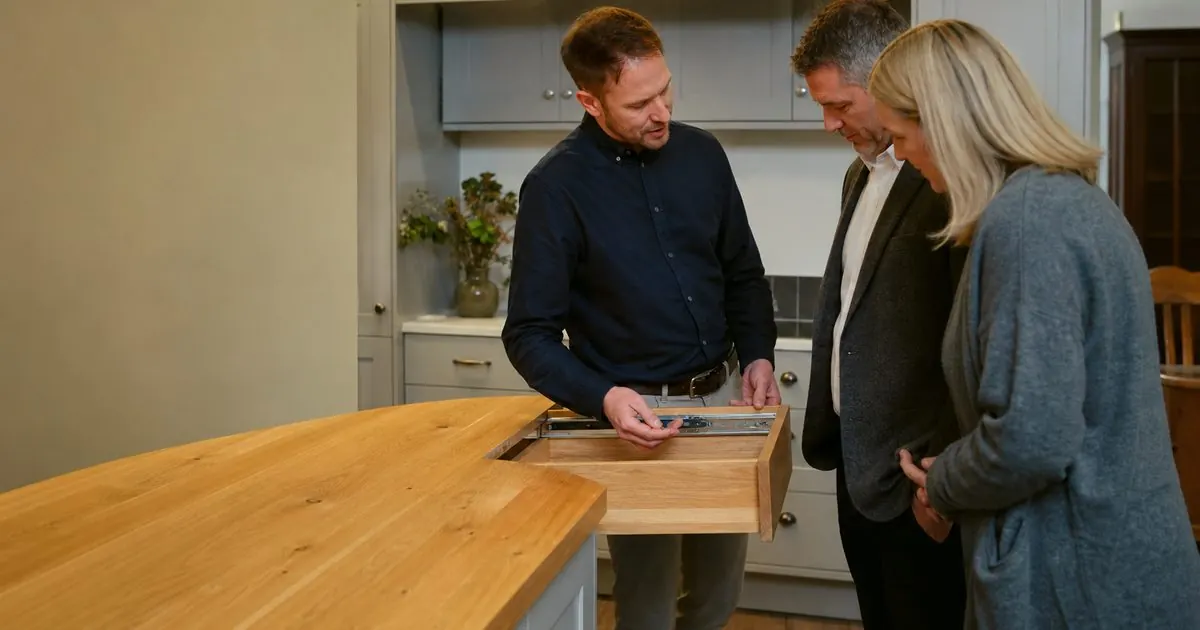
- The design visit. Your designer in a real customer's room, measuring, talking through options, sketching ideas.
- The build quality. Close-ups of a drawer box, a soft-close runner, a carcass back panel, an edge band. Explain in plain words why it matters in year five, not just on day one.
- The fitting. Your fitters scribing a filler panel to a wonky wall, levelling a run, protecting the floor.
- The project manager. A short clip of them walking a customer through the schedule.
- The finished room and the customer. A real person saying what it was like to have one company handle everything.
This kind of footage works as ads, on your website and as follow-up after a design visit. For shot lists and interview questions, see showing finished rooms.
Use reviews that talk about the process
Five-star reviews saying "lovely kitchen" don't separate you from anyone. Reviews that mention the designer by name, how a problem was solved or how tidy the fitters were do. You can prompt for them without writing them for the customer. When you ask for a review, ask a question: "What was it like having us manage the whole project?" People answer the question they are asked.
Put the best of these next to your prices and on your landing page, not hidden on a reviews tab.
Aim your ads at the right buyer
Targeting and creative both help:
- Creative that signals your level. Show finished projects with islands, larders, painted or bespoke finishes and real homes. Avoid discount-led headlines.
- Talk about the whole project. "From design to the last plinth, one team" speaks to the buyer who doesn't want to project-manage.
- Qualify on the landing page. Ask about project type (new kitchen only, or with an extension or structural work), timing and budget band. The buyers you want are happy to answer.
- Retarget people who watched your process videos. They have already shown interest in how you work, not just what it costs.
Handle the comparison when it comes
Some buyers will still bring you a cheaper quote. Don't get defensive. Offer to help them compare like for like, using a checklist that covers design, measure, fitting, plumbing, electrics, worktops, appliances, waste and aftercare. Fill it in together.
Sometimes the other quote really is cheaper for the same scope, and you should let it go gracefully. Often it isn't, and the buyer realises they would have ended up managing four trades themselves. Either way, you have been the most helpful person in the process, which is how independents win.
How we help
We build marketing for kitchen companies around what makes them different: filmed design and fitting content, landing pages that show the full scope of your price, ads aimed at project buyers rather than bargain hunters, and follow-up that keeps you in touch during a long decision. Leads are exclusive to you, and we work with one kitchen company per area. See our kitchens page and videography service.
If the chains are setting your buyers' price expectations, book a video call. We'll look at how your marketing shows the difference.
Questions owners ask
Should I lower my prices to compete with national kitchen chains?
Usually not. Cutting price to match a supply-only or fit-it-yourself quote turns you into a weaker version of them. Make the difference in your price visible instead: design time, survey, project management, your own fitters, aftercare. Then aim your marketing at buyers who care about those things.
What if a customer shows me a cheaper quote?
Ask to compare it line by line using a checklist. Most cheaper quotes leave things out: installation, worktop templating, appliances, plumbing, electrics, waste removal or making good. Once the buyer sees the full comparison, the gap is often much smaller than it looked, and the value of one firm handling everything is clearer.