Every solar and heat pump installer says the same things. Quality panels. Experienced team. Lower bills. Fully certified. The homeowner hears it from all three firms quoting and has no way to tell who means it. So they fall back on the one thing they can compare: price.
Confidence does not come from better adjectives. It comes from evidence the buyer can see, understand and check. This article covers how to turn "trust us" into "see for yourself" at every stage of the sale.
Why telling stopped working
Homeowners buying solar or a heat pump are making a decision they cannot judge from experience. Most have never bought one before and will never see inside the inverter or the cylinder. They know they are in a market where some firms oversell. So any claim you make, however true, gets mentally filed under "salesman says".
Showing works because it moves the claim from you to something else: a photo, a number they can follow, a neighbour, an independent register. The test for every piece of your sales process is simple. Could the customer verify this without taking your word for it?
Telling vs showing
| Telling | Showing |
|---|---|
| "We do a thorough survey" | Twenty annotated photos of their roof, loft and consumer unit sent with the quote |
| "You'll save money" | The estimate with the workings: usage, generation, tariff and assumptions written down |
| "We're local and trusted" | Three finished jobs within ten miles, with the customer's first name and village |
| "Our team is tidy" | A 40-second clip of an install day, start to finish |
| "We're MCS certified" | Your certificate number and a link to look you up on the MCS website |
| "Heat pumps work in older houses" | A case study of a 1930s semi like theirs, with the owner talking |
Six ways to show the value
1. Show them their own house
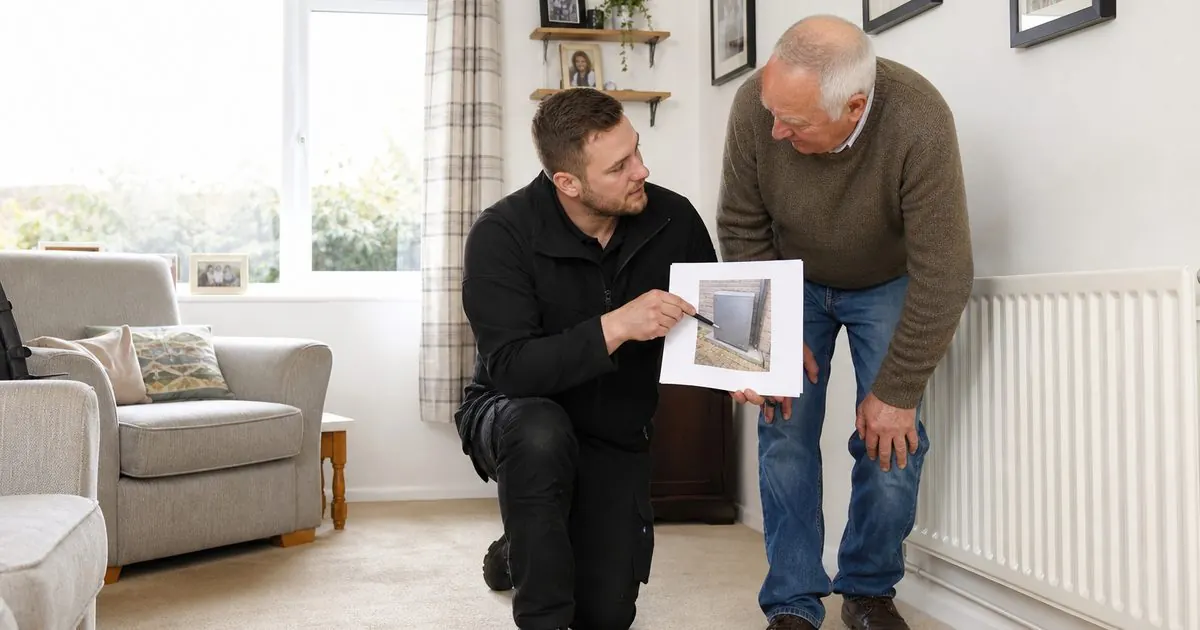
The most persuasive evidence is about the customer's own home. At the survey, take more photos than you need and send the best of them back, marked up:
- the roof with the proposed panel layout and any shading noted
- where the inverter, battery and isolators will go
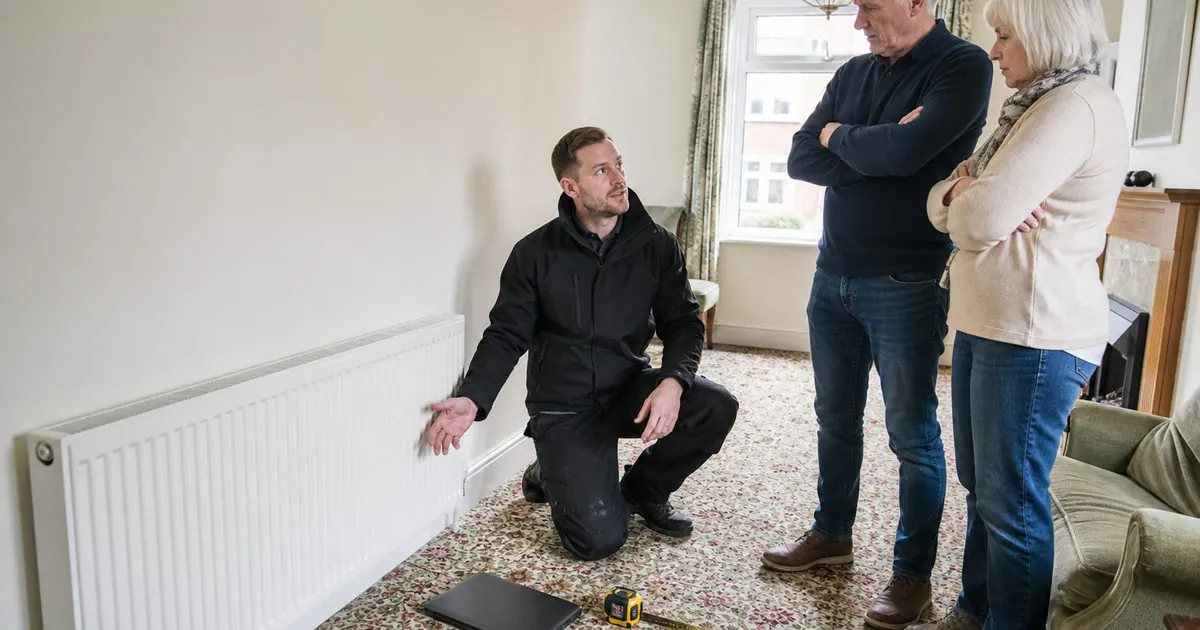
- for heat pumps, where the outdoor unit will sit, the cylinder location and which radiators you plan to change
A buyer looking at their own loft with your notes on it knows you were paying attention.
2. Show the workings, not just the answer
A single savings figure invites suspicion. The same figure with its workings invites trust. Here is an illustrative layout for a solar and battery estimate:
| Input | Value used | Where it came from |
|---|---|---|
| Annual electricity use | 4,100 kWh | Customer's last 12 months of bills |
| Estimated generation | 3,400 kWh a year | Design software, based on roof pitch, orientation and shading |
| Share used in the home (with battery) | 65% | Our estimate for a household home most daytimes |
| Import price | 26p per kWh | Customer's current tariff |
| Export rate | 12p per kWh | Customer's chosen export tariff |
These numbers are examples only. The point is the format: every input is visible, so the customer can change one and see what happens. When the figure is honest and the assumptions are clear, a buyer who reads it closely trusts it more, not less. If battery payback questions come up a lot, our piece on answering "is a battery worth it?" goes deeper.
3. Show people like them
Generic reviews help a little. Specific ones help a lot. Build a small library of case studies sorted by:
- house type and age (terrace, semi, detached, bungalow, pre-war, new build)
- heating system replaced (gas, oil, LPG, electric storage heaters)
- area (town or village)
- situation (retired, working from home, family, EV owner)
Then match them to the buyer. "You mentioned you're in a 1930s semi on oil. Here's Sue in a similar house near Uttoxeter, a year on." Reviews matter too, and quantity comes from habit: Creativ UK grew their reviews from 37 to 211 by asking every customer on every job. Our guide to getting more Google reviews covers the asking.
4. Show the people who will turn up
Buyers are letting strangers onto their roof and into their airing cupboard. A short video of the surveyor or installer introducing themselves, sent before the visit, does more for confidence than any "about us" page. See meet-the-team videos for how to shoot these quickly.
5. Show the process
Uncertainty about disruption kills deals, especially for heat pumps. Show what happens and when:
- Survey and design
- Quote and any grant or finance paperwork
- Install day or days, with what is switched off and for how long
- Commissioning, handover and how to use the controls
- Certificates and paperwork, and what happens if something goes wrong
A one-page timeline with photos of each step turns "how much hassle will this be?" into a question already answered.
6. Let them check you independently
Point buyers to places you do not control. Tell them they can look you up on the MCS installer search, name your consumer code, and link to independent review platforms. Inviting the check signals you have nothing to hide. Our list of trust signals every installer website needs covers what to display.
Example wording for the sales conversation
Showing is a habit in how reps talk, not just a set of assets. Some phrases that help:
"Rather than me tell you it'll be tidy, here's a short clip from a job in Stone last month."
"I've put every number behind that estimate on page two. If your usage changes, you can see exactly what that does."
"Don't take my word for it. Here's our MCS number, and the link to check it."
"You asked about older houses. I'll send you Mark's video tonight. His house is very similar to yours."
Notice what these avoid: pressure, superlatives and promises.
Build a proof pack before every appointment
Before each survey or sales call, the rep should have ready:
- two or three case studies matched to the buyer's house and situation
- a short video of a similar install
- the MCS and consumer code details with links
- recent reviews that mention the same product
- a timeline of the install process
If your CRM tags each lead with house type and heating system, matching proof to buyers can be done in minutes. Track which pieces were sent before the deals that closed, and you will soon see which proof actually moves people.
Where video fits
Almost every item above works better on video: the customer a year on, the install day, the surveyor saying hello. That is why the system we build starts with filming. We come to you for a full shoot day on site, once a quarter, and turn real jobs and real customers into the proof your reps send. Our videography page explains the shoot, and for heat pump installers it is often the difference between a buyer who is curious and one who is confident. If you want closers who use this proof on your booked appointments, see sales closing. Book a call and we will look at what proof you already have and what is missing.
Sources
Questions owners ask
What is the quickest way to make a solar quote more convincing?
Put the customer's own house in it. Survey photos of their roof, the proposed panel layout, where the inverter and battery will go, and the assumptions behind the generation estimate. A quote about their home is far more believable than a brochure about solar in general.
How do I prove I'm a legitimate installer?
Give buyers things they can check without you: your MCS certification, which they can look up on the MCS website, your consumer code membership, reviews on independent platforms, and the addresses or areas of recent local jobs. Then show the real people who will turn up, on video if you can.