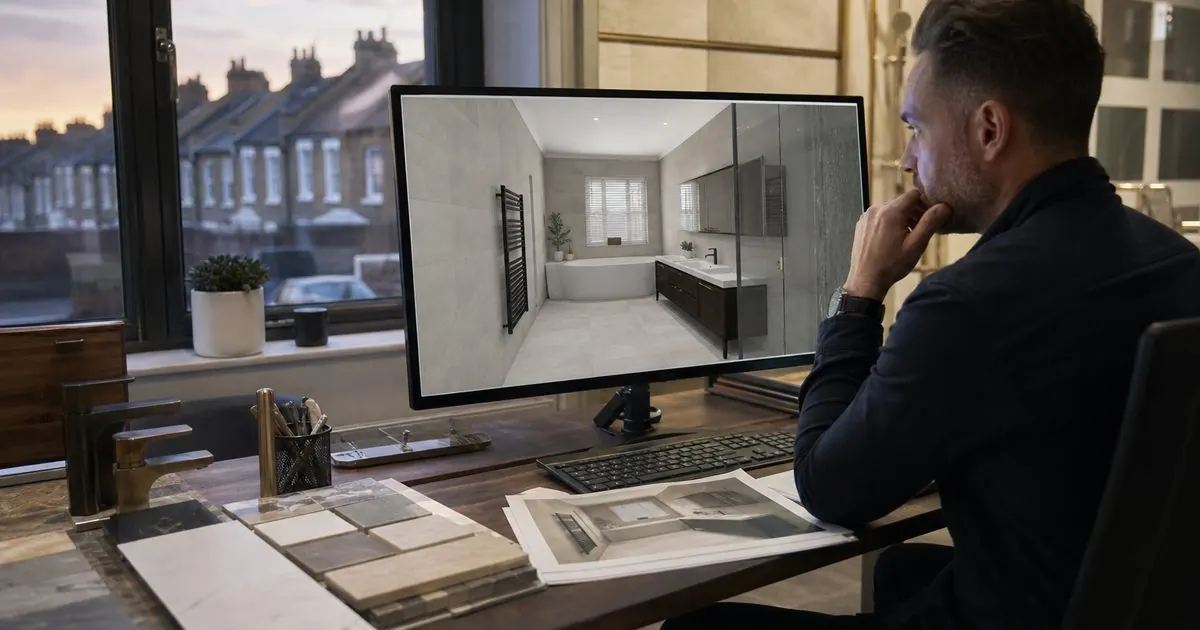
It is one of the most frustrating things in the bathroom trade. Your designer spends hours on a layout, picks the tiles, solves the awkward boxed-in pipe, presents a lovely 3D drawing, and the customer thanks you warmly. Two months later you see your design on a neighbour's Facebook post, fitted by someone who charged less because they didn't do any of the thinking.
Some of that will always happen. But when it is happening often, it is usually because the design process gives away the valuable part too early, to too many people, with nothing asked in return. Here is how to tighten it without becoming the company that charges people just to say hello.
Why your designs walk out of the door
Look at your last ten designs that didn't convert and you will usually find a mix of these:
- No qualification before design. The buyer had a budget half your typical job, or was always going to buy fit-only, and nobody checked.
- The design was emailed, not presented. A PDF with dimensions and product codes is a ready-made shopping list for a cheaper fitter.
- The quote was itemised for shopping. Every product listed with its code and price invites the buyer to source it online and look for a fit-only quote.
- No follow-up. One call a week later, then silence. The buyer drifted to whoever kept in touch.
- No commitment asked for. Hours of skilled work were given away with no small step from the buyer in return.
Step 1: Qualify before anyone draws anything
Design time is your most expensive sales resource, so protect it. Before booking a design, you should know the project type, whether you are supplying the products, the rough budget band, and when they want the work done. The questions to ask, and how to route each type of enquiry, are covered in price shoppers vs design buyers.
If an enquiry doesn't fit a full design, offer something lighter: a fixed package, a quote from photos, or a short showroom chat. Not everyone needs the full treatment.
Step 2: Split the design into stages
A lot of firms solve this by separating the free part from the valuable part.
| Stage | What the buyer gets | What you ask for |
|---|---|---|
| Consultation (free) | A conversation, a look at the room or photos, layout ideas, a ballpark range | Their time and honest answers about budget and timing |
| Detailed design (fee or deposit) | Measured survey, full 3D design, product selection, fixed quote | A design fee or deposit, credited in full against the order |
| Order | The installation | The balance of the deposit, as per your terms |
The design fee doesn't need to be large. Its job is to separate serious buyers from browsers, and to make sure that if your work is used elsewhere, you were at least paid for it. Crediting it against the order means buyers who go ahead pay nothing extra.
How you word it matters. "Our detailed design service is £X, and every penny comes off your bathroom when you go ahead" lands far better than "there is a design charge".
Step 3: Present in person, send a summary
Walk the buyer through the design, ideally in the showroom where they can touch the tiles, or on a video call if they can't come in. Explain why you made each choice: why the shower is on that wall, why that tray, why that tile size. This is where your expertise becomes visible and the gap between you and a fit-only firm becomes obvious.
Afterwards, send a summary: the visual, the scope of work, what is included, the price and the next step. Keep the full technical drawings and product schedule for after the order or deposit.
Step 4: Quote the job, not a shopping list
Itemising is good for trust. Itemising product codes is good for comparison shopping. Strike a balance:
- Break the price into clear sections (strip-out, plumbing, electrics, tiling, products, making good) so the buyer sees where the money goes.
- Describe products by type and finish ("wall-hung vanity, 800mm, matt oak effect") rather than listing exact codes and retail prices.
- Include what a cheaper quote often leaves out: waste removal, project management, guarantees, aftercare.
Step 5: Follow up like you mean it
Most lost designs are not lost to a competitor on day one. They are lost to silence. A set sequence, run partly by your team and partly by automation, keeps you in the conversation:
- Day 1: a thank-you message with the summary and a short video recap from the designer.
- Day 3: a call to ask what they thought and what is holding them back.
- Day 7: a relevant customer story, a similar bathroom you fitted, with the customer talking about the process.
- Day 14: a check-in on timing, plus your next available install dates.
- Day 30 and monthly after: a light-touch update until they give you a clear yes or no.
The full method for chasing quotes that go quiet, across every trade, is in quotes that go quiet.
Step 6: Record why you lost
Every design that doesn't convert should get a lost reason in your CRM: price, went fit-only, timing, chose a competitor, project cancelled, no response. After three months, the pattern tells you what to fix. If most are "price", look at your ads and qualifying. If most are "no response", look at your follow-up. If most are "went fit-only", look at how and when you share the design.
How we help
We help bathroom and kitchen firms tighten the whole journey: qualifying funnels so designers see the right buyers, CRM pipelines that track every design to a result, automated follow-up that keeps you in touch, and, where it suits, sales closers who chase booked designs on your behalf. See our bathrooms page for how the system fits.
If too many of your designs end up fitted by someone else, book a video call. We'll look at where in your process they are leaking.
Questions owners ask
Should bathroom companies charge for design?
Many charge for the detailed design but not the first consultation, and credit the fee against the order. That keeps the first step easy while making sure the hours of detailed work go to buyers who are serious. Whether you charge or not, be clear up front about what is free and what is not.
Should I email the full design and quote to the customer?
Present it in person or on a video call first, then send a summary. If you email a detailed drawing with every product code listed before you have spoken, you have made it easy to take your design elsewhere. Walking them through it also lets you answer doubts while they are fresh.