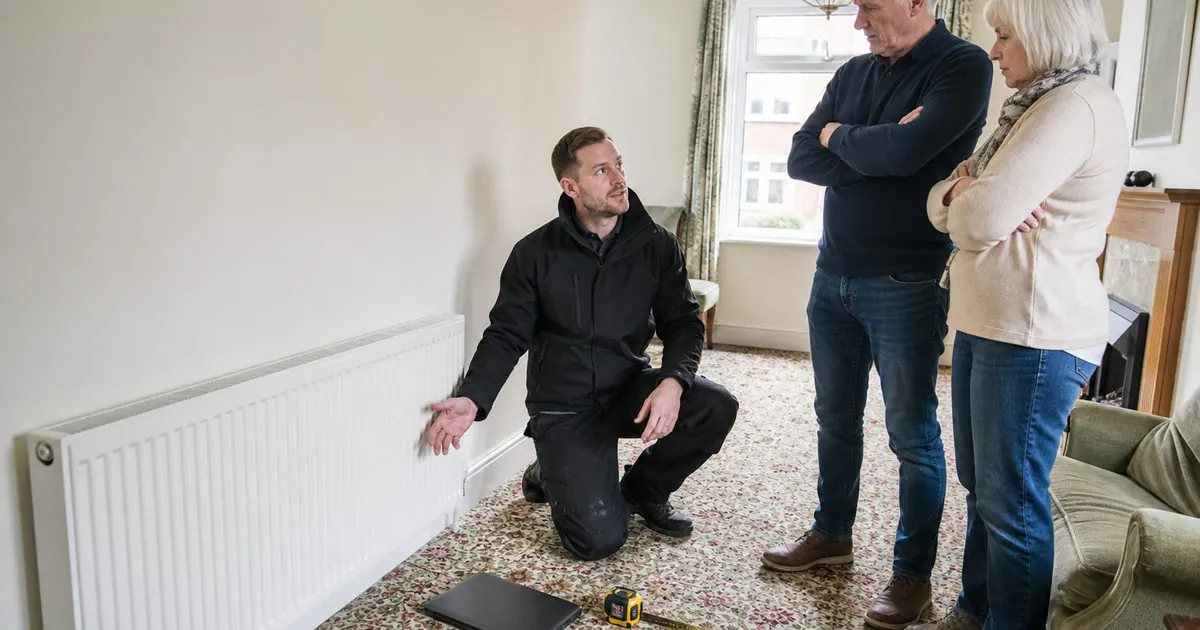
A homeowner who books a solar or heat pump survey has said yes to one thing: letting a stranger into their house to look around. They have not said yes to you. Between the booking and the knock on the door, most of them are quietly checking whether you are who you say you are, and whether the visit is going to turn into two hours of pressure.
Trust built in that window decides whether the survey happens, whether both decision-makers are in the room, and how the quote is received afterwards. This post sets out what homeowners are worried about at that stage, what to send them and when, and how to make sure the visit itself backs it up.
Your website matters too, and we cover that in trust signals every installer website needs. This post is about the days just before the visit.
What the homeowner is worried about
Ask any surveyor and they will tell you the same worries come up again and again before a visit:
- "Is this a real company?" Energy is a sector where people have had cold calls and doorstep pitches. They want proof you are local, established and accountable.
- "Is this going to be a hard sell?" Many people have had a salesman sit in their kitchen until late. They are bracing for it.
- "Will it even work on my house?" Heat pump buyers worry about old houses and small radiators. Solar buyers worry about shading, roof direction and whether the numbers stack up.
- "What is it going to cost?" If they have no idea, they assume the worst, or a number from an ad that was too good to be true.
- "Who is actually coming?" A name, a face and a time make a visit feel safe. "One of our team will be with you between 8 and 5" does not.
Each of those can be answered before the survey. Most installers answer none of them.
The trust plan: what to send and when
Here is a simple sequence for the days between booking and the visit. Adjust the timing to how far ahead you book, but keep the order.
| When | What to send | Worry it answers |
|---|---|---|
| Within minutes of booking | Confirmation from a named person, with date, time window and a direct number | "Is this a real company?" |
| Same day | 30 to 60 second video of the surveyor who is coming, saying hello and explaining the visit | "Who is actually coming?" "Is it a hard sell?" |
| Next day | What happens on the survey, how long it takes, what they need to have ready | "What am I letting myself in for?" |
| 2 to 3 days before | A customer video from a home like theirs, ideally a nearby town | "Will it work on my house?" |
| 2 days before | Realistic price range for typical homes, with any grant shown the way it will appear on the quote | "What is it going to cost?" |
| Day before | Reminder, plus "Will both of you be there?" | Decision-makers in the room |
| On the day | "On my way" message with the surveyor's name and van | "Who is that at the door?" |
Send these by WhatsApp or text where the customer has agreed to it, with email as backup. Short, plain, one point per message.
Get the surveyor on camera
The single most useful trust tool here is a short video of the person who will knock on the door. Not a slick advert. Just them, standing next to the van or in a customer's garden, saying something like:
"Hi, I'm Dan, I'll be coming to look at your home on Thursday. I'll spend about an hour checking your roof and fuse board and asking about your bills. You'll get a written quote afterwards, there's no pressure on the day, and if solar doesn't make sense for your house I'll tell you."
That 40 seconds answers three worries at once. It works because it is specific, and because it sets a promise the surveyor then keeps. If you want more on this kind of content, see meet the team videos for installers.
This is a big part of why we film on site for clients. We come to you for a full shoot day once a quarter, and as well as the ads we capture surveyor introductions, customer stories and install footage you can use in exactly this sequence. Our videography service covers how that works.
Show a home like theirs
General testimonials help. A customer video from a similar house in a nearby town helps far more. A heat pump buyer in a 1960s bungalow wants to see a 1960s bungalow that stayed warm through January. A solar buyer with an east-west roof wants to hear from someone else with an east-west roof.
Tag your customer videos by house type, system type and area. When a survey is booked, the follow-up sends the closest match. If you only have a handful, start with the three most common house types in your patch.
Put a price range on the table early
Silence on price makes people nervous, and nervous people cancel. You do not need to quote before you have seen the house. You do need to give a sensible range with the reasons it moves.
For heat pumps, show the range with the Boiler Upgrade Scheme grant already deducted, because that is how it will appear on the real quote. GOV.UK says the grant value is taken off the amount the homeowner pays, and as of November 2026 it is £7,500 for an air source heat pump, with an extra £1,500 available until March 2027 for homes heated by oil or LPG with no mains gas connection. For solar and batteries, explain the main things that change the price: system size, battery size, scaffolding and roof access.
For more on pricing conversations, see handling the "too expensive" objection.
Make your credentials checkable
Saying "fully accredited" builds no trust. Giving someone a way to check does. In the "what happens on the survey" message, include:
- Your MCS certification number and a link to where they can look you up.
- The consumer code or trade body you belong to, with a link.
- Your company number and a real address.
- A link to your Google reviews.
Most people will not click. The fact that they could is what matters.
Then make the visit match the messages
All of this falls apart if the survey does not match what you promised. Brief every surveyor on the trust plan so they know what the customer has been told. Then check these five things after every visit:
- Did they arrive in the time window, and send the "on my way" message?
- Did the visit take roughly the time we said?
- Did they explain what they were checking as they went?
- Did they leave without pushing for a signature on the day (unless the customer asked to go ahead)?
- Did the customer get the written quote when we said they would?
A short text the next day asking "How was Dan's visit?" tells you quickly if any of this is slipping, and good answers become reviews.
A pre-survey trust pack checklist
If you do nothing else, put these in place:
- A named person confirms every booking.
- A surveyor video for each person who does visits.
- One plain "what happens on the survey" message.
- Three customer videos covering your most common house types.
- A price range message, with any grant shown correctly.
- Checkable credentials in writing.
- An "on my way" message on the day.
Most of this can be automated from your CRM once it is written, so it goes out on time for every booking, not just when the office remembers.
Want help building it?
Book a free video call with Tom. We will look at what your customers currently see between booking and survey, and show you how the solar and battery or heat pump system handles it in your area.
Sources
Questions owners ask
What should I send a customer before a solar or heat pump survey?
A confirmation from a named person, a short video or photo of the surveyor who is coming, a plain explanation of what happens on the visit and how long it takes, a realistic price range, and a list of what to have ready, such as recent energy bills. Add one customer video from a nearby home.
How do I stop homeowners thinking the survey is a hard sell?
Say what the visit is and is not, in writing, before it happens. Tell them how long it lasts, that they will get a written quote afterwards rather than a price on the doorstep, and that there is no obligation. Then make sure the surveyor actually behaves that way, because one pushy visit undoes the messaging.