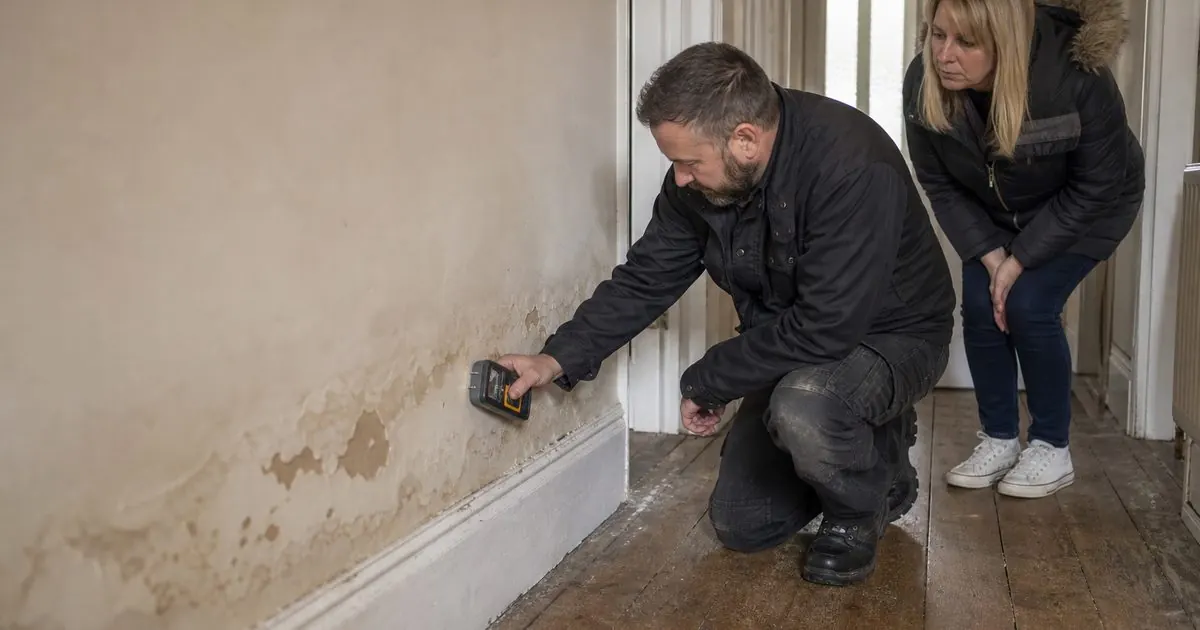
Damp firms have a specific problem. The phone rings, the survey gets booked, the surveyor drives out, and an hour later the answer is "it's condensation, open a window and get a better extractor fan." Good advice, honest work, no job. Do that ten times a week and your marketing looks busy while the order book stays thin.
Most damp companies judge their marketing on cost per click or cost per enquiry. Neither tells you whether you are paying for treatment jobs or for free advice visits. The fix is to track every lead all the way to a paid job, and to tune the marketing towards the enquiries that actually become work.
The damp funnel is different
A typical damp enquiry goes through more stages than most trades:
- Enquiry (call, form or message)
- Survey booked
- Survey attended
- Diagnosis: condensation, penetrating damp, rising damp, timber decay, or something else
- Quote sent (or advice only)
- Job sold
- Job completed and paid
The diagnosis step is what makes damp different. Plenty of surveys end at step 4 with an advice-only outcome. That is not a sales failure; it is the nature of the work. But if you do not record it, you cannot see which ads and channels bring condensation call-outs and which bring treatment and tanking jobs.
Record the survey outcome, every time
Add one required field to every survey in your CRM: outcome. Keep it simple:
- Treatment job quoted
- Small job quoted (ventilation, repointing, gutter repair)
- Advice only (condensation, lifestyle)
- Referred elsewhere (roof, plumbing leak)
- No access or no-show
After a month you will see patterns you could only guess at before.
The numbers to track
| Number | How to work it out |
|---|---|
| Cost per survey booked | Channel spend divided by surveys booked from it |
| Survey show rate | Surveys attended divided by surveys booked |
| Treatment quote rate | Treatment quotes divided by surveys attended |
| Survey-to-job rate | Jobs sold divided by surveys attended |
| Average job value | Total sold value divided by jobs sold |
| Cost per job | Channel spend divided by jobs sold |
Here is the kind of thing this reveals. These numbers are illustrative only:
| Channel | Cost per survey | Survey-to-job | Cost per job |
|---|---|---|---|
| Google search ("rising damp treatment") | Higher | High | Lowest |
| Facebook ads (mould photos) | Lowest | Low | Higher |
| Estate agent and surveyor referrals | None in cash | High | Lowest |
A channel with the cheapest surveys can easily produce the most expensive jobs. Our Installer Flow reporting works this out by channel automatically, but you can start with a spreadsheet as long as every lead has a source and every survey has an outcome.
Know where your best jobs come from
Damp enquiries come from a few very different people, and they convert differently:
- Homebuyers and sellers. A mortgage valuation or survey flags damp, and the sale depends on a report or a treatment quote. These buyers are under time pressure and need a written report quickly.
- Landlords and letting agents. Tenants report mould, and landlords need a diagnosis and a fix. Damp and mould in rented homes is under more scrutiny than ever. Awaab's Law came into force for social housing on 27 October 2025, requiring social landlords to investigate significant damp and mould within 10 working days and make the home safe within 5 working days. The government has committed to extending it to the private rented sector; as of November 2026, check GOV.UK for when that applies. Government guidance on the health risks of damp and mould also sets out what landlords are expected to do.
- Homeowners with a visible problem. Peeling plaster, a musty smell, black mould in a bedroom. A mix of real treatment work and condensation.
- Homeowners after a DIY fail. They tried a mould spray, it came back. Often condensation, sometimes not.
If your records show that homebuyer and landlord surveys convert at twice the rate of general mould enquiries, that is where your budget and your messaging should go.
Tuning ads towards treatment jobs
Google Ads
Search terms tell you what the person wants. "Rising damp treatment", "damp proof course injection", "tanking basement" and "damp survey for mortgage" signal real jobs. "How to get rid of mould", "mould spray" and "condensation on windows" mostly signal people looking for a DIY fix.
- Bid harder on treatment and survey-for-sale terms.
- Add DIY phrases as negative keywords, or send them to a helpful advice page rather than a survey booking form.
- Import booked surveys and sold jobs back into Google Ads, so it learns which clicks become work. See offline conversion tracking.
Our Google Ads page explains how we structure campaigns around the jobs that pay.
Your enquiry form
Ask two or three questions that separate the work before you book a surveyor:
- What have you noticed? (Tide marks low on the wall, black mould on ceilings and corners, wet patches after rain, a musty smell under the floor)
- Is this for a house sale or purchase?
- Are you the owner, landlord or tenant?
Tenants with mould are a real need, but the decision-maker is the landlord. Collect their details and ask for the landlord or agent contact, rather than sending a surveyor to someone who cannot approve the work.
Should you charge for surveys?
Free surveys fill the diary. Paid surveys, credited against the work if it goes ahead, filter out casual enquiries and pay for the surveyor's time on advice-only visits. Many damp firms offer free surveys to homeowners and a paid written report for homebuyers, who need the document anyway. Whatever you choose, test it against the numbers above: if a paid survey halves your bookings but keeps the same number of jobs, it is a win.
Use advice visits as a reputation engine
An advice-only visit is not wasted if you handle it well. The homeowner just had an honest expert tell them they do not need to spend thousands. That is a review waiting to happen, and a referral to the neighbour who really does have rising damp. Ask for the review before you leave, and tag them in the CRM for a check-in if the problem comes back.
Start this week
- Add a source and an outcome field to every lead and survey.
- Pull last quarter's jobs and work out cost per job by channel, even roughly.
- Move budget towards the channels and search terms with the lowest cost per job.
- Add qualifying questions to your enquiry form.
If you want a damp proofing campaign built around jobs rather than call-outs, with reporting that shows cost per survey and cost per job, book a call with us and we will check your area.
Sources
- GOV.UK: Millions of tenants safe from black mould through Awaab's Law (27 October 2025)
- GOV.UK: Damp and mould, understanding and addressing the health risks for rented housing providers
Questions owners ask
Should damp proofing companies charge for surveys?
There is no single right answer. Free surveys bring more bookings but more condensation call-outs that never become treatment jobs. A paid survey, credited against the work if they go ahead, filters out casual enquiries. Test both and compare cost per job, not just survey volume.
What is a good survey-to-job rate for damp work?
It depends heavily on where the enquiries come from. Homebuyer and landlord surveys often convert better than general homeowner enquiries about mould. Measure your own rate by channel for three months; the gap between channels usually tells you more than any industry average.